The Limits and Economic Effects of Cuba’s Market Reforms
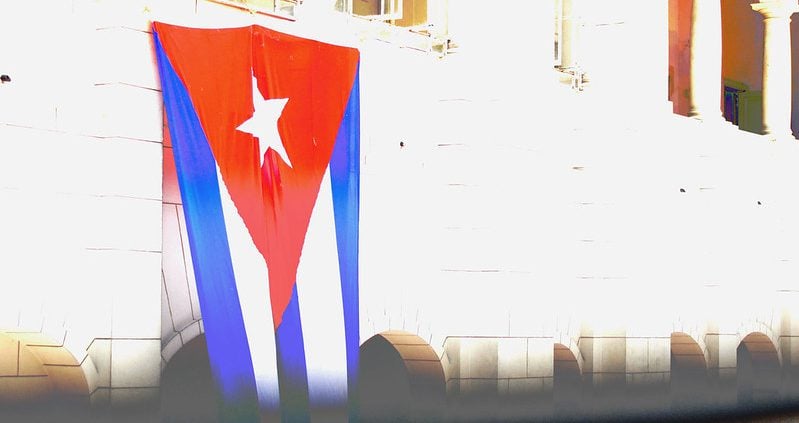 On June 18, 2026, Cuban lawmakers approved a collection of 176 free-market and decentralization reforms, marking the most significant transformation to Cuba’s socialist model since the 1959 revolution led by Fidel Castro. These reforms principally seek to authorize private real estate development, private banks, private enterprise (effectively lifting the previous 100-employee limit on private businesses and mandatory intermediaries), and to dissolve the requirement that foreign investors form joint ventures with the state.
The U.S. Embargo and Cuba’s Economy
The United States (U.S.) has maintained a comprehensive economic embargo on Cuba since 1962, originally implemented by President John F. Kennedy. President Donald Trump strongly enforced and expanded these restrictions during both his first and second terms, introducing several “maximum pressure” campaigns to isolate the Cuban government. The Trump administration’s pressure campaign toward Cuba forms part of “a broader strategy to assert U.S. primacy in the Western Hemisphere and limit the influence of adversaries such as China and Russia,” according to the Council on Foreign Relations.
When the embargo was first implemented, Cuba efficiently adjusted through trading opportunities with Soviet Bloc countries. According to a 2001 study from the U.S. International Trade Commission, “Soviet economic assistance, which peaked at nearly $6 billion annually in the 1980s, largely offset any adverse effects of U.S. sanctions and enabled the Cuban economy to grow.”
However, in 1991, upon the collapse of the Soviet Union and consequent loss of Soviet assistance, Cuba experienced an extended economic crisis called Período Especial (“Special Period”). Deprived of vital trade subsidies and cheap oil, the country’s GDP plummeted by 35%, bringing about severe food and fuel shortages, leading to widespread power blackouts and famine.
Since the Special Period, the U.S. embargo has cost the Cuban economy nearly $144 billion, as estimated by the Cuban government. Humanitarian organizations such as the Washington Office on Latin America, a United States nongovernmental organization (NGO) working for social and economic justice in Latin America and the Caribbean, argue that expanded sanctions and travel restrictions have contributed to shortages in fuel, medicine and food. As of 2025, a reported 89% of Cubans live in extreme poverty, according to a survey by the Cuban Observatory of Human Rights (OCDH), a Madrid-based group that has received U.S. government funding. Notably, that same OCDH survey found Cubans themselves cited power outages, food scarcity and low wages as their top concerns, while only 3% named the U.S. embargo as a primary worry. The continued impact of the embargo provides important context when evaluating the extent to which Cuba’s market reforms can improve conditions, as the embargo has not been lifted alongside the reforms — though Cubans’ own reported priorities suggest domestic factors weigh heavily on daily life as well.
Economic Effects of Cuba’s Market Reforms on Banking
Cuban Prime Minister Manuel Marrero stated that new private banks will operate under the regulatory supervision of the Central Bank of Cuba and theoretically on “equal terms” with existing state commercial banks. The reforms also authorize private and foreign capital institutions to set up operations on the island and provide microcredits directly to its growing entrepreneurial sector.
Due to U.S. secondary sanctions, many global banks are reluctant to conduct business with Cuban financial institutions. However, the banking reforms provide alternative channels for international investors, remittance companies and foreign vendors to route transactions through private entities, which significantly lowers the risk of triggering U.S. compliance penalties. If these changes attract greater foreign capital into the newly privatized banking sector, they could increase the financing available to domestic businesses and support expansion within the economy, potentially creating more employment and income opportunities for Cuban households.
Reviving Real Estate and Tourism
In his speech at the Extraordinary Plenary Session of the Central Committee of the Communist Party of Cuba (PCC), Miguel Mario Díaz-Canel Bermúdez, first secretary of the Central Committee of the PCC and president of the republic, announced plans to “develop a productive, regulated real estate market” that includes leasing idle state-owned properties, renting commercial and industrial spaces, and opening transparent bidding to state, private, cooperative and mixed-ownership entities.
Although the reforms are intended to stimulate tourism and economic activity, widespread flight cancellations persist due to U.S. sanctions, fuel shortages and the departure of major international hotel chains such as Blue Diamond Resorts (Canada), Meliá Hotels International and Iberostar (Spain). In January 2026, the U.S. government imposed additional tariffs on imports from countries that directly or indirectly supply oil to Cuba. Following the action, Cuba experienced a 58.4% decrease in international visitors during the first five months of the year compared to the same period in 2025, according to the Oficina Nacional de Estadística e Información. These external pressures may limit the effectiveness of Cuba’s efforts to support the economy through revitalizing tourism despite the introduction of private and mixed-ownership opportunities.
Retail and Food Services
The sector of Cuban food and retail services will undergo substantial change under Cuba’s market reforms alongside the shifts in the financial, tourist and real estate sectors. The government is eliminating “la libreta,” the state-issued booklet established in 1962 that entitled each Cuban household to a ration of heavily subsidized goods, and replacing it with a system of subsidized assistance exclusively for the “socially disadvantaged,” according to IPS News.
Simultaneously, state-owned enterprises and agricultural cooperatives will become autonomous, gaining authority to set their own worker pay scales, keep or reinvest their profits and directly partner with private companies. MiPymes, or MSMEs (private micro, small and medium-sized businesses), no longer have to navigate state intermediaries to purchase goods from abroad, allowing for direct imports of agricultural products, retail merchandise and other goods.
While the reforms are expected to increase the availability of imported goods through private trade, they may also deepen existing economic inequalities. Because MiPymes price imported goods in dollars at unregulated market rates, their shelves remain out of reach for millions of Cubans still living on fixed peso salaries or small pensions. For example, according to reporting from Barron’s, a liter of cooking oil at one Havana MiPyme costs $3, which makes up half of the monthly pension of retired security guard Joaquín Velázquez.
The Prospects for Economic Recovery
The economic effects of Cuba’s market reforms may rewire how business is conducted on the island, but they are unlikely to transform the country’s financial reality in isolation. By expanding the role of private enterprise, the government has created new opportunities for investment and commercial activity, yet many of the conditions that have contributed to Cuba’s economic crisis remain in place. As inflation continues to erode purchasing power, the benefits of greater market liberalization may remain out of reach for many Cubans. Nevertheless, greater access to private financing and fewer restrictions on businesses could allow the reforms to generate new sources of income and economic activity even under significant external and domestic constraints. If effectively implemented, the reforms could make Cuba’s emerging private economy a greater source of economic opportunity for its population.
– Nilani Mathur
Nilani is based in Longmeadow, MA, USA and focuses on Business and Politics for The Borgen Project.
Photo: Flickr
