Bilingual Education in South Africa Reducing Systemic Poverty
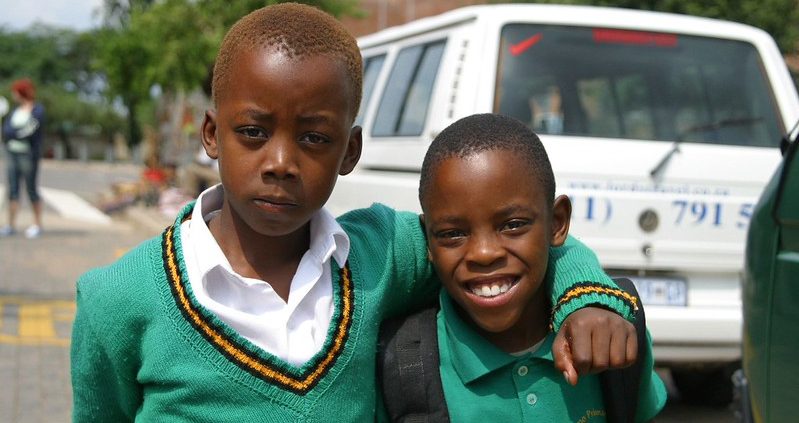 In July 2026, a group of teachers gathered to discuss ways to improve education in South Africa. They addressed issues such as textbooks, artificial intelligence (AI), race and bilingual learning. Two PhD candidates, Samkelo Matutu and Ignacious Leeuw, led an exercise during the gathering. They asked each teacher to pretend they had just arrived in Japan and gave them a math lesson entirely in Japanese. When asked about their feelings afterward, the teachers expressed frustration, confusion and fear of failure due to an inability to grasp complex concepts over a language barrier. Matutu and Leeuw then explained that South African students, who must transition entirely to English learning by grade four, experience similar frustrations. For these students, the consequence of failure impacts their actual lives. The candidates proposed alleviating these concerns by advocating for bilingual education in South Africa.
Poverty and Inequality in South Africa
In 1994, South Africa officially became a democracy. After centuries of white minority rule rooted in colonialism, every South African citizen received the right to vote. Apartheid laws, designed to maintain economic inequality based on race, were lifted, and the nation entered a new era. However, despite the promise of democracy, systemic inequalities from years of oppression remained, making South Africa one of the most unequal countries in the world. As of 2023, 37.9% of South Africans lived below the national poverty line, down from 46.7% in 2015. Of those in poverty, the majority live in regions that suffered the most from Apartheid regulations or ancestral homelands, and most of them are Black.
Access to education is a key metric for determining poverty due to its pivotal role in shaping futures. Higher levels of education increase the likelihood of achieving better-paying jobs and living above the poverty line. In South Africa, the quality of education mirrors the pattern of poverty. Schools in former Apartheid regions are underfunded, lack resources and pose dangerous environments for students due to improper infrastructure. Education is partially determined by lineage, with Black students receiving fewer opportunities and resources than their white counterparts, perpetuating inequality and poverty in ancestral South African regions.
Bilingual Education in South Africa
Colonialism has significantly impacted South Africa’s education system. In poor regions such as Limpopo, 91% of students cannot read for meaning, while 85% cannot in the Eastern Cape. Of 100 students who start school, only 14 go on to university. These low success rates make escaping poverty nearly impossible without serious, systemic reform.
The implementation of bilingual education offers a powerful solution. After completing Grade R and the first three grades, South African students are expected to study entirely in English. Studies suggest successful study in a secondary language requires six to eight years of preparation, yet grade four students must make the jump to English. As a result, South Africa’s learning gap emerges in grade four, where 81% of learners struggle to read for meaning. Using this evidence, the South African government initiated bilingual education through the Basic Education Laws Amendment (BELA) and Mother Tongue-Based Bilingual Education (MTbBE) Acts, implemented in 2025.
BELA and MTbBE
Under the BELA act, several educational reforms are listed. The act seeks to promote inclusive learning by regulating and empowering educators and students. Policies require Grade R to create a more equal foundation for all students, the government to control educator appointments, language-based discrimination to be banned, and schools to revise their language policy every three years. The MTbBE act, while covering less ground, is one of the most essential educational reforms in South African history. It requires instructors to use multiple languages during instruction to prevent comprehension issues beginning in grade four. Additionally, it calls for increased training for instructors to better prepare them for bilingual instruction.
These acts together make bilingual education a regulated and influential resource to increase opportunities and educational quality for all students. They aim to make education more equal by allowing all South African students to learn in a language comfortable to them, rather than just the white minority.
Expanding Equality with Bilingual Education
Bilingual education in South Africa has proven its capacity to improve learning outcomes. Students who learn in multiple languages are more likely to retain comprehension of both languages, have increased vocabulary levels and perform better on standardized assessments. The opportunity to learn bilingually reveals the oppressive history of English-centered education and its role in maintaining economic inequality. Including instruction in students’ native languages offers a way to fight this inequity. Bilingual education is not only a way to combat systemic poverty but also the lasting impacts of colonialism. It improves learning and future outcomes among impoverished South Africans and offers potential to break the cycle of poverty rooted in colonial rule and Apartheid-era policy. Bilingual education is a key part of building a more equal future.
– Aubrey Wallen
Aubrey is based in Alexandria, VA, USA and focuses on Good News for The Borgen Project.
Photo: Flickr
