Growing Climate Resilience in Kiribati and Vanuatu
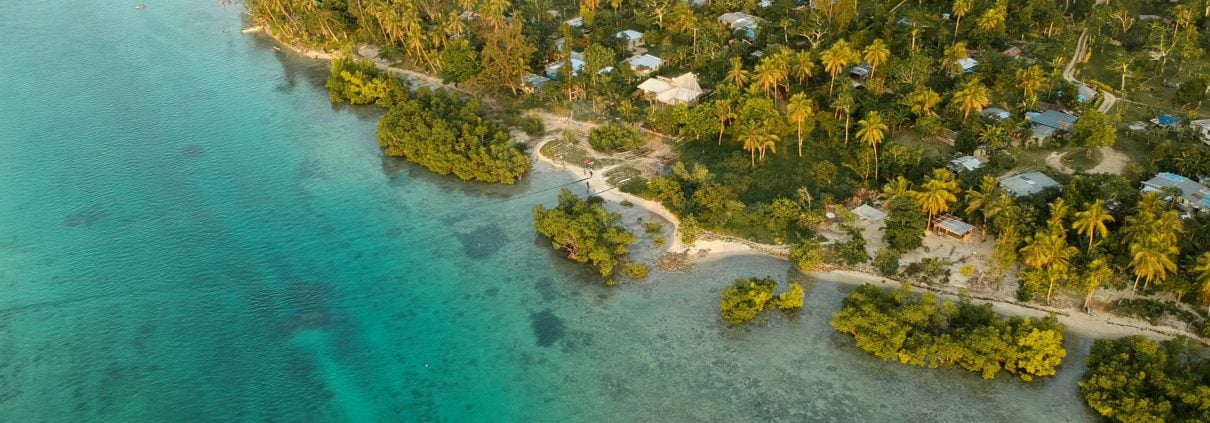 Over the past decade, a changing climate has increasingly affected the Pacific island nations of Kiribati and Vanuatu. In response, local communities and aid organizations are working to build resilience.
This effort has drawn support from global organizations such as the World Health Organization (WHO) and the International Federation of Red Cross and Red Crescent Societies (IFRC), along with government agencies from South Korea and the European Union. Together, they have taken a range of steps to strengthen climate resilience in Kiribati and Vanuatu.
Changing Climate in Kiribati and Vanuatu
Small, developing island nations like these contribute little to global emissions. According to the IFRC, Kiribati and Vanuatu together produce just 0.02% of global emissions, yet they face some of the most severe consequences of a warming climate. In 2025, Vanuatu’s gross domestic product was $1.35 billion, while Kiribati’s was $350 million. None of Kiribati’s 33 islands rise more than four meters (about 13 feet) above sea level at their highest points, leaving them vulnerable to flooding and saltwater intrusion. Rising seas also make drought more common.
These nations rely heavily on the sea for food and income, particularly fishing. When ocean temperatures rise, however, fisheries suffer, as has been the case in Vanuatu. Increasingly severe storms have also damaged food supplies. In 2015, Cyclone Pam destroyed much of Vanuatu’s food crop — an estimated 96%. Many families in these nations live in extreme poverty and cannot afford enough food. As food scarcity worsens, so does malnutrition among the most vulnerable. Damage to infrastructure also reduces tourism, cutting island-wide income and further straining the economy.
With a population of around 135,000, Kiribati recorded about 4,000 displacements from natural disasters across 2023 and 2024, according to the nation’s 2024 household income and expenditure survey. More than a quarter of the population reported either damage to their homes or a sharp drop in agricultural output. These figures underscore the urgency of climate resilience efforts in Kiribati and Vanuatu.
Recent Climate Resilience in Kiribati
In 2021, the Korea International Cooperation Agency (KOICA), part of the Government of the Republic of Korea, provided $6 million to the WHO and the Kiribati Ministry of Health and Medical Services to drive the Te Mamauri project.
Te Mamauri aimed to improve conditions at health centers, schools and other public buildings on Marakei, one of Kiribati’s outer islands. Because the outer islands are especially exposed to natural disasters, their health care systems have suffered. Over four years, the WHO installed solar lamps at health centers to provide reliable lighting, as many had lacked a sufficient power supply.
Environmental health teams also inspected water systems at schools and other community sites, repairing faulty pipes to improve Marakei’s water access during droughts. By the project’s close in 2025, the WHO reported that 800 health workers benefited directly, with further effects reaching across the outer islands.
Coming Together
In 2025, the IFRC joined the Vanuatu and Kiribati Red Cross Societies to launch a locally led climate resilience program funded by DG Clima, the European Union’s climate action department. The program emphasizes local participation and community knowledge. Vanuatu Red Cross Secretary-General Dickinson Tevi said a risk-assessment process would guide the partners toward “risk-informed solutions to the challenges” their communities face.
The program follows a risk-informed, ecosystem-based approach intended to remain effective and adaptable across both nations. Community members and volunteers help identify local risks and set priorities, including island-council climate policies, integrated climate-and-health assessments, and broader efforts to build safety and resilience across the Pacific.
The IFRC reports that the approach has encouraged collaboration both between the two nations and among local residents, supporting their capacity to act and, in turn, advancing poverty reduction. The IFRC has also said it plans to expand the program to Belize and Guyana.
– Aren Lau
Aren is based in Brooklyn, NY, USA and focuses on Good News and Global Health for The Borgen Project.
Photo: Unsplash
