Being Poor in Madagascar: The Poverty Paradox of a Nation
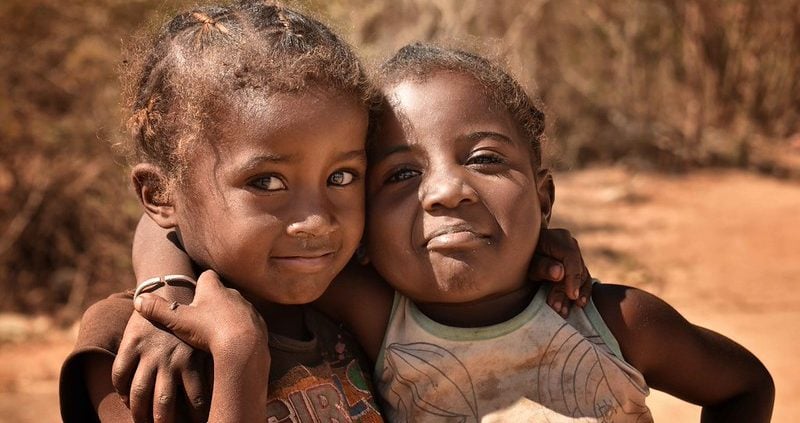 The mention of Madagascar may cue images of DreamWorks Pictures’ 2005 animated comedy for many. However, far removed from this fictional imagery is the fourth largest island in the world, Madagascar, a country with one of the world’s highest poverty rates, at about 80%. For the majority of its more than 30 million people, being poor in Madagascar means surviving on less than $2.15 per day. The United Nations often describes the country’s poverty crisis as the result of a convergence of shocks.
Government Instability and Infrastructure
Since gaining independence in 1960, Madagascar has remained an impoverished nation despite a wealth of natural resources. A consistently fragile governmental system has resulted in little investment in developing the nation’s infrastructure. Accusations of corruption have been a constant issue surrounding the country’s governance, with Madagascar ranking 148th out of 180 countries on the Corruption Perceptions Index in 2025.
Frustration over failures to provide basic amenities like water led to nationwide protests in 2025, when the youth movement Gen Z Madagascar demanded the removal of President Andry Rajoelina. Rajoelina fled the country and was impeached, and the military then seized power. Despite this, Madagascar remains one of the poorest countries in the world. With a gross domestic product (GDP) per capita of about $550 and inflation rates of more than 8%, the sluggish economy is reflected in the nation’s underdeveloped infrastructure.
Madagascar’s poor quality of road networks is an area where this underdevelopment is stark. Both national and local roads are mainly dirt tracks, with more than 17 million rural residents not living within two kilometers of an all-season road. This creates issues for those in rural communities accessing essentials such as water, as well as reducing Madagascar’s agricultural productivity. National electrification also remains low, with only 36% of the population connected to electricity, and those connected facing consistent issues. The consequences of this electrical instability have seen production costs rise, as well as businesses unable to expand.
Food Insecurity
In Madagascar, about three-quarters of households rely on agriculture to survive. However, recurrent climate shocks have drastically reduced agricultural production, with rural communities in the southern region experiencing the worst effects. Scarred landscapes have been further damaged by drought, destroying rain-dependent crops.
Frequent cyclones and flooding in the southeastern regions have had similarly devastating consequences. Frezina Iarina, a 30-year-old mother from a remote village in Madagascar, has felt these consequences firsthand, as the European Commission documented her struggles in 2024. Iarina had to work 10 hours a day as a laborer, being paid four cups of rice, after losing her small plot of land to Cyclone Freddy in 2023. She told of how a diet of only rice and cassava had led to three of her youngest children showing signs of malnutrition. This resulted in them having to be fed fortified peanut paste by members of Action Contre la Faim, one of the European Union’s humanitarian partners.
These events, combined with limited market access, mean that roughly 1.7 million people in Madagascar are facing high levels of food insecurity. With nearly 40% of children under five affected by malnutrition, many of them are also being denied an education, as they are required to work in fields alongside their parents.
Aid and Being Poor in Madagascar
A handful of organizations are providing humanitarian assistance to try to relieve some of the suffering that being poor in Madagascar creates.
- The World Food Programme’s (WFP) Mission – WFP is adopting an integrated approach, identifying women and children as two vulnerable groups it feels are in critical need of nutritional support.
- Feedback Madagascar Meets Mary’s Meals – After working with more than 500,000 people in the region for more than 30 years, Feedback Madagascar has identified the need for holistic support. By collaborating with Mary’s Meals, a school feeding program, the schoolchildren of Madagascar are able to receive one nutritious meal a day.
- Female Focused Farming – Women-led solidarity networks are empowering women by giving them access to land and teaching them sustainable farming techniques. One of these is agro-ecology, a technique that aims to reduce dependence on chemical fertilizer and costly foreign seeds. These programs have helped to create a more climate-proof agricultural environment and enabled more than 37,000 families to grow their own food locally.
Future Outlook
Despite the current situation in Madagascar remaining bleak, with nearly 1.9 million people assisted by WFP in 2025, there is hope that the future does not have to be. Rural development, through improving both the country’s road systems and farming methods, can ease the pressure on urban labor markets. However, both internal systemic change and help from outside governments and organizations are needed.
There is evidence that these changes are already taking place, with the government promoting agro-ecology through drought-resistant seeds. Continuation of these practices can help to finally reduce poverty and potentially free Madagascar from this decades-long paradox.
– William Snow
William is based in Chepstow, Wales and focuses on Good News and Technology for The Borgen Project.
Photo: Flickr
