DRC Cobalt Reform and Community Justice
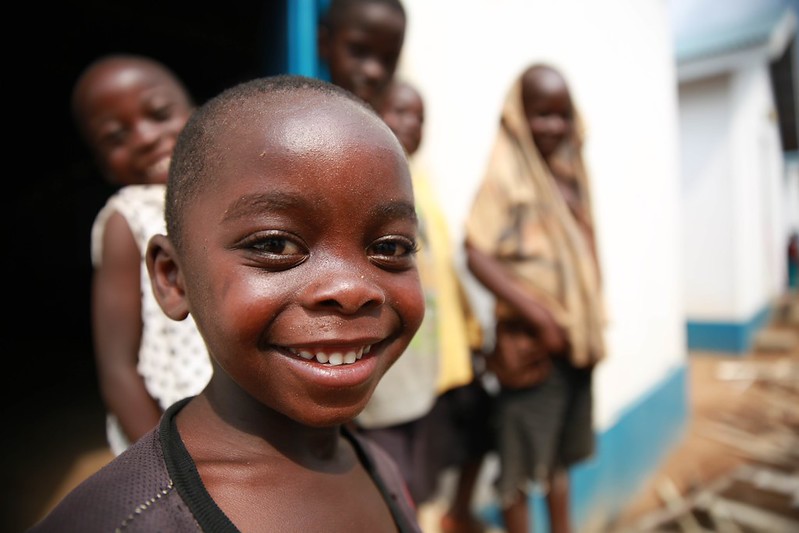 The Democratic Republic of the Congo (DRC) is the second-largest country in Africa. Ongoing fighting between rebel groups and government forces, systemic corruption, recurring health crises and the mismanagement of resources have contributed to a severe humanitarian emergency. As a result, an estimated 27 million people are experiencing extreme poverty in the DRC.
The DRC is rich in natural resources, supplying more than 70% of the world’s cobalt, which is classified as a “critical mineral” by the United States, the European Union (EU) and other governments. Yet 74% of Congolese citizens live in poverty. Around 150,000 artisanal miners work in hazardous conditions, with cooperatives, often controlled by politicians, taking up to half of their earnings.
Additionally, an estimated 40,000 children work in these mines. Communities living above cobalt reserves remain among the world’s most energy-poor, highlighting the urgent need for cobalt reform in the DRC. With fair revenue sharing, stronger environmental protections and targeted funding, the global clean energy transition can be built on more just foundations.
A Nation Rich in Resources, Poor in Opportunity
Cobalt is a critical material for lithium-ion batteries, aerospace alloys and renewable energy systems. It plays a central role in the electric vehicle (EV) revolution and defense applications, making it one of the most strategically important minerals today. The DRC dominates global supply, holding about 60% of known reserves and producing 271,300 tonnes in 2024.
However, artisanal and small-scale mining accounts for 15–30% of the country’s cobalt output, often involving hazardous conditions, child labor and environmental harm. Cobalt reform in the DRC is vital to protect Congolese lives. Companies such as Ford and Tesla are using blockchain technology to trace cobalt through supply chains.
However, only 20% of industrial mines in the DRC currently meet international labor standards. Artificial intelligence (AI) and automation are also being deployed to improve mine safety and efficiency. In recycling, companies such as Redwood Materials have developed methods to recover up to 95% of cobalt from used EV batteries. Additionally, the EU now mandates a 70% cobalt recovery rate by 2030.
Human Cost of the Cobalt Supply Chain
A report from the University of Nottingham’s Rights Lab, published in August 2025, exposes the scale of forced labor and exploitation in the DRC’s cobalt mining sector. The research surveyed 1,431 artisanal miners across two provinces: 36.8% were in forced labor, 9.2% in child labor and 6.5% in debt bondage. Additionally, 87.8% entered mining because they had no other means of survival and 70% said they would quit if they could.
Average daily earnings were just $3.28, with women earning significantly less ($1.84) than men ($3.52). None had written work agreements and no trade unions existed for them to join. The report notes that, despite these conditions, tech and EV companies continue to market their DRC cobalt supply chains as fully audited and human-rights compliant.
The report’s key recommendation is an independent due diligence initiative led by Congolese academics, civil society and mining communities to properly hold the industry to account.
Breaking the Cycle: New Paths Forward in the DRC Cobalt Reform
In the DRC’s second-largest city, Lubumbashi, young people like Patricia Kayombo are breaking free from the cycle of dangerous artisanal cobalt mining. Kayombo, an apprentice mechanic, used to live in a household where everyone worked the mines, suffering from dust-related health problems, with no other option. Now, Kayombo is training to become an auto mechanic and “dreams of furthering her skills and one day becoming a trainer to teach other girls.”
The African Development Bank’s PABEA-COBALT project ($82 million) is driving this change, with two main goals: returning children to school and retraining young miners and their parents in agribusiness and vocational trades. The program has returned more than 13,500 children to school, retrained 8,200 young workers and helped more than 10,500 parents start new livelihoods in agriculture. With investment and viable alternatives, Congolese youth can find dignity and opportunity far from the mine pits.
From Raw Ore to Economic Sovereignty
The DRC lifted its seven-month export ban, in place since February 2025 and replaced it with a quota system starting on October 16, 2025. The quotas cap exports at roughly 96,600 tons for 2026 and 2027. This is well below the approximately 204,000 tons mined in 2024 and will be adjusted quarterly based on market conditions.
The original ban was introduced to address a global supply glut that had been pushing cobalt prices down since 2022. The DRC aims to process more cobalt domestically rather than export it as raw ore and is actively partnering with both Western and Chinese investors. These moves reflect the DRC’s attempt to convert its vast mineral wealth into greater economic leverage amid intensifying geopolitical competition over critical minerals.
With greater economic sovereignty, the DRC may finally be seen as a respected partner, which, in turn, could save the lives currently at risk in the country.
Final Remarks
The DRC remains at the intersection of geopolitical ambition and human suffering. Its cobalt is integral to the clean energy transition, yet the communities extracting it remain among the world’s most impoverished. The tools for cobalt reform in the DRC exist: fairer contracts, domestic processing, independent oversight and investment in alternatives. But they require Western and Chinese partners to treat the DRC as a sovereign stakeholder rather than merely a supplier.
– Anisa Begum
Anisa is based in Birmingham, UK and focuses on Business and Global Health for The Borgen Project.
Photo: Flickr
