5 Oxfam Innovations Fighting Poverty
 Oxfam is a global organization focused on ending poverty and inequality. It provides emergency relief during crises, like natural disasters or conflicts, while also working on long-term solutions such as fair wages, gender equality and climate action. For more than 80 years, Oxfam has partnered with communities around the world to promote dignity and opportunity, while also pressing governments, corporations and financial institutions to create fairer systems. Here are 5 Oxfam innovations fighting poverty:
SuperAdobe
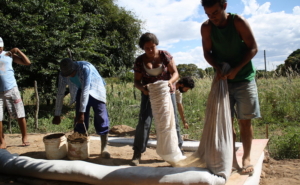
Oxfam introduced a new type of shelter, called SuperAdobe, in Jordan’s Za’atari refugee camp. Built from basic, low-cost resources like sand-filled bags and barbed wire, these structures provide a practical alternative to the metal caravans many refugees currently live in. SuperAdobe homes are built to stay cool during scorching summers and retain heat through the cold winter months.
The construction method behind SuperAdobe relies on layering sand-filled bags, stacked in either circular or elongated forms. Between each row, barbed wire is laid to strengthen the walls and hold them in place. To improve durability, materials like lime, cement or asphalt can be blended into the soil. The technique mirrors the way clay coils are shaped together in pottery; only here is it used on a larger scale to form entire buildings.
This versatile system can be adapted to create rounded designs such as domes, arches and vaults, as well as traditional rectangular structures. Beyond housing, the approach is also suited for practical applications, including silos, water storage systems, erosion control and even infrastructure projects like roads or bridges.
BlocRice
In Cambodia, an Oxfam initiative called BlocRice is changing how rice farmers engage with global markets. The program is designed to strengthen farmers’ ability to advocate for fair compensation by giving them a stronger voice in price negotiations. At its core, the project introduces digital contracts that directly link members of farming cooperatives with international exporters and European buyers.
By formalizing these agreements through technology, the system not only ensures transparency but also provides farmers with tools that enhance both their economic security and their social standing. Through the BlocRice system, buyers agree to purchase rice at the going market rate with an additional premium, giving farmers both a steady outlet for their harvest and greater financial predictability.
The program also establishes a shared digital platform where all parties involved can track agreements in real time. For some farmers, the additional premium translated into close to $100 in extra income.
TWB Glossary App
In Bangladesh’s Cox’s Bazar, where close to a million Rohingya refugees have sought safety, aid workers struggled to overcome language barriers. Although the Rohingya language shares similarities with local dialects, the differences often made communication difficult, especially when it comes to ensuring refugees could voice their own concerns.
To bridge the gap, a multilingual Glossary App was developed through a collaboration between Oxfam, Translators Without Borders and UNICEF. Covering five languages spoken in the camps, Bangla, Burmese, Chittagonian, English and Rohingya, the tool is now helping humanitarian organizations improve outreach and better respond to community needs.
Hydroponics
Survival in the Algerian Sahara is a daily battle against extreme conditions; temperatures soar past 122 degrees, sandstorms sweep the land and farming is virtually impossible. Sahrawi refugees have endured life in five camps near Tindouf, where one in four struggles with chronic malnutrition.
While international food aid provides some relief, it cannot solve the crisis alone. Oxfam innovations in fighting poverty created a more sustainable option through a hydroponics initiative. By cultivating plants without soil, the program supplies feed for the goats that many families rely on for meat, milk and income. Each greenhouse produces around 132 pounds of fresh feed daily, enough to sustain 20 goats, marking a promising step toward greater food security in the camps.
Led by Sahrawi refugee and Oxfam engineer Taleb Brahim, the initiative turns simple structures, like mud-built domes or repurposed shipping containers, into small-scale greenhouses for livestock feed. Inside, rows of shelves hold shallow trays where barley seeds are spread and kept moist until they sprout. They are then transferred into larger tubs and irrigated daily through a solar-powered pumping system. This low-cost, sustainable method transforms barren spaces into reliable sources of fresh feed.
Sanitation
Oxfam faced a pressing challenge in Bangladesh: how to manage human waste when a sudden surge of people in temporary shelters overwhelmed existing latrines. Rohingya camps experienced outbreaks of severe diarrhea, alongside respiratory illnesses and skin conditions such as scabies, all stemming from inadequate hygiene and sanitation.
To address the growing problem, the Oxfam team established a large-scale centralized sanitation facility capable of safely handling the waste of up to 150,000 individuals. The system operates with zero environmental harm, marking the first successful implementation of such a large-scale waste management solution in a refugee camp.
Final Remarks
Oxfam innovations are fighting poverty. From sustainable housing, effective communication and the cultivation of small-scale greenhouses, Oxfam is empowering communities to build a better future. With continued support and innovation, a more equitable world is within reach.
– Gabriella Luneau
Gabriella is based in Raleigh, NC, USA and focuses on Good News and Global Health for The Borgen Project.
Photo: Flickr
