How Enhanced Rock Weathering in Africa Is Turning Heads
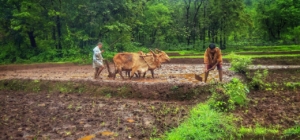 In Africa and the global south, a new process is gaining the attention of agriculture and environmental initiatives. Smallholder farmers are witnessing their maize harvests flourish while simultaneously removing carbon from the atmosphere. This is not the result of a new fertilizer or a genetically modified seed. It comes from a novel climate technology that turns ordinary volcanic rock into a powerful tool for poverty reduction and environmental renewal.
The new technology, Enhanced Rock Weathering (ERW), offers a dual solution to two of Africa’s most pressing challenges: unstable climatic conditions and food insecurity. ERW captures carbon dioxide (CO2) directly from the atmosphere by accelerating a natural geological process. At the same time, minerals from the rock revitalize depleted, acidic soils, leading to dramatic increases in crop yields and farmer incomes.
How It Works
The science behind ERW is surprisingly simple. The natural weathering of rocks regulates Earth’s climate by pulling CO2 from the air. ERW turbocharges this process by increasing the surface area of available rock. Finely crushed silicate rock, typically basalt, is spread across agricultural fields.
When rainwater mixes with CO2 in the atmosphere, it forms a weak acid that inevitably falls to the ground and reacts with the rock dust. This reaction converts the CO2 into stable bicarbonate ions that are eventually washed into rivers and oceans, where the carbon is locked away for a projected 10,000 years.
Initial Outcomes of Enhanced Rock Weathering in Africa
While the climate benefits are global, the local impact is life-changing. Many African farmers have struggled with degraded, acidic soils that reduce crop growth for years. With ERW, the basalt dust acts as a slow-release natural fertilizer, replenishing the soil with essential nutrients like calcium, magnesium and phosphorus. It also raises the soil’s pH, making it less acidic and more fertile.
The results are starting to turn heads. In collaboration with ERW company Mati Carbon, farmers in India are reporting increased rice yields “in excess of 20%” with Mati Carbon’s CEO, Shantanu Agarwal, stating that results will be even more pronounced on the most degraded soils.
A recent pilot study in Kenya conducted by the climate-tech startup Flux in collaboration with the United Nations Convention to Combat Desertification proves Mati Carbon right. The study found that applying basalt dust to maize fields increased grain yields by an average of 47.5%, with some farms noting a yield increase of more than 200%. For the participating farmers, this translated into an economic gain of more than $326 per hectare, per harvest, a transformative sum for families living in subsistence conditions.
The Carbon Credit Connection
Another beautiful aspect of these new programs is their business model. All the profits from increased crop yield go straight to the farmers. Companies like Flux and Mati Carbon sell the carbon credits to climate-conscious corporations, then provide the rock dust to farmers free of charge.
The farmers benefit immediately from healthier soils and bigger harvests and credit purchasers solidify their commitment to the environment. Enhanced rock weathering is gaining traction with a sustainable business model, concrete outcomes and increasing interest from the corporate sector.
Into the Future
Mati Carbon, the company that recently won the $50 million XPRIZE for Carbon Removal, aims to support 30,000 smallholder farmers by the end of 2025. Nairobi-based Flux has also set an ambitious goal of generating $300 million in additional income for African farmers by 2030. Early indicators of enhanced rock weathering in Africa point to a win-win situation. However, there are still concerns about the cost of crushing and spreading.
As the technology scales from pilot projects in Kenya, Zambia and Tanzania to larger initiatives across the continent, it promises to turn millions of hectares of African farmland into catalysts for both environmental restoration and human prosperity.
– Levi Ravnsborg
Levi is based in Summerland, BC, Canada and focuses on Good News and Technology for The Borgen Project.
Photo: Pixabay
