Food Security in the U.S. Virgin Islands
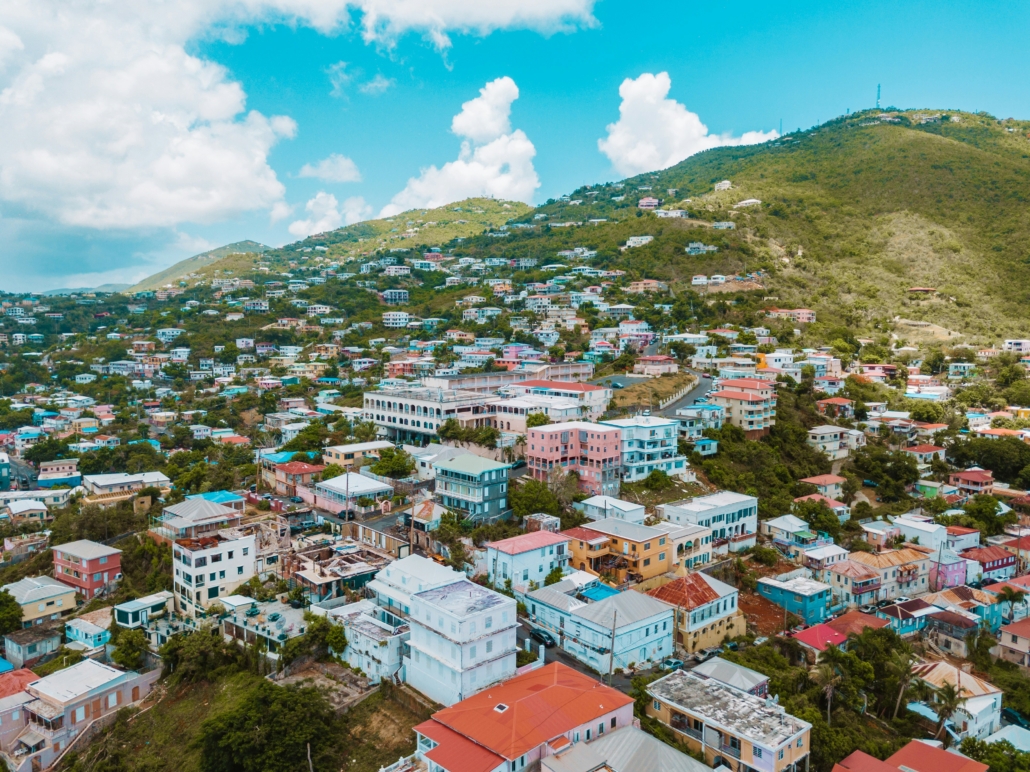
The U.S. Virgin Islands (USVI), an unincorporated United States territory, comprises the three Caribbean islands of Saint Thomas, Saint John and Saint Croix. They span 737 square miles of hilly, rugged and mountainous terrain, with little flat land and less than 3% arable. The islands are sparsely populated (a total of 104,477) with low density. The USVI is a high-income country based on tourism due to its beautiful beaches and subtropical climate. Although on the whole its climate is attractive, the islands also experience frequent hurricanes, e.g., the back-to-back Category 5 Hurricanes Irma and Maria in 2017. Here is information about food security in the U.S. Virgin Islands.
Food Security in the U.S. Virgin Islands
Several factors challenge food security in the U.S. Virgin Islands. These include climate (hurricanes and drought), poor soil quality, limited crop diversification, lack of value-added processing, high cost of food production and limited food distribution networks. The government offers no programs or incentives to encourage the development of agricultural or food businesses. The U.S. Virgin Islands import almost all food consumed (97%). A recent study of USVI food systems also noted infrastructure issues, especially related to water capture and storage; and sociocultural factors (e.g., lifestyle, history of slavery, land ownership questions).
Adding to food security challenges in the U.S. Virgin Islands is the islands’ extent of poverty, reported by the 2020 Decennial Census to be 23% (19% on St. John, 21% on St. Thomas and 25% on St. Croix).
In November 2022, the country’s food insecurity was acknowledged in USVI Governor Bryan’s proclamation of November 12-20, 2022, as “Hunger and Homelessness Awareness Week.” The proclamation thanked those who provided services and called upon everyone to partner financially and/or volunteer to provide aid to eliminate hunger and homelessness.
USVI Hunger: US Assistance
Likely due to its size, the USVI is not included in global assessments such as the Global Hunger Index and the Global Nutrition Report. But that does not mean that hunger is nonexistent in the islands. As a U.S. territory, the Virgin Islands benefits from various assistance programs—SNAP (Supplemental Nutrition Assistance Program/food stamps), school meal programs, food programs for low-income students and families.
When the U.S. Congress cut SNAP benefits in December 2022, it was reported that the reduction of average SNAP benefits to $6/person/day affected almost 11,000 USVI households. The steepest drop was for many older adults. The cuts were due to ending Emergency Allotments related to COVID-19 and meant that USVI lost $2.1 million in assistance. These cuts had a domino effect down the food chain, on farmers and ranchers, food manufacturers, truckers, retailers and their employees. In the spring of 2025, this assistance was in jeopardy, the extent of impact depending on the budget to be approved by the U.S. Congress.
Addressing Food Security
Virgin Islands Good Food (VGF), established in 2012, is a nonprofit whose mission is “to cultivate a unique and nourishing food system for innovation, economic development, and agricultural growth,” connecting consumers, the government and private industry. Its work includes, but is not limited to, market creation and access, education and services and assistance for farmers. In February 2024, VGF hosted the first Island Food Systems Summit at the University of the Virgin Islands. U.S. Department of Agriculture representatives and representatives from the National Black Food & Justice Alliance participated with other partners and Virgin Island farmers and producers. They discussed multisector collaboration, farmer empowerment, disaster response strategies and youth engagement in food systems, in an overall effort to increase food security and sustainability.
For 20 years, the University of the Virgin Islands has observed World Food Day as an educational initiative aiming to eradicate hunger in the Virgin Islands. The university’s School of Agriculture focuses on food security and especially children’s access to nutritious meals. World Food Day 2024 included a seedling giveaway and educational workshops on cooking, composting and gardening. The School of Agriculture also organizes food drives to support local organizations such as My Brother’s Table and the Lighthouse Mission.
In January 2025, Governor Bryan signed into law the Virgin Islands Comprehensive Land and Water Use Plan. The framework of the Comp Plan focuses on:
- Development guidance
- Responsible land and water resource use, consistent with environmental protection
- Preservation of environmentally sensitive areas, coastlines and historic sites
- Prioritization of investments to improve community services and infrastructure
Self-Sufficiency and Food Security in the U.S. Virgin Islands
In February 2025, the USVI Delegate to Congress, Stacey Plaskett, encouraged the islands to increase agricultural independence, which could lead to greater food self-sufficiency and thus reduce the country’s total reliance on food imports. “We here in the Virgin Islands, we don’t just need to tighten our belts,” Plaskett said. “That’s austerity measures that we know we need, but we need to create self-sufficiency, food security, to come up with innovative ways that we will make up that gap for our students and for our elders.”
Although hunger is not a significant problem for the Virgin Islands, its dependence on imports is. One can see the recognition of the need for self-sufficiency for food security in the several examples above—government legislation, the role of the University of the Virgin Islands and Virgin Islands Good Food and other nonprofits. Intersectoral activities can work effectively to improve farming communities, the supportive infrastructure and food security overall.
– Staff Reports
Photo: Unsplash
