The DFC in Africa
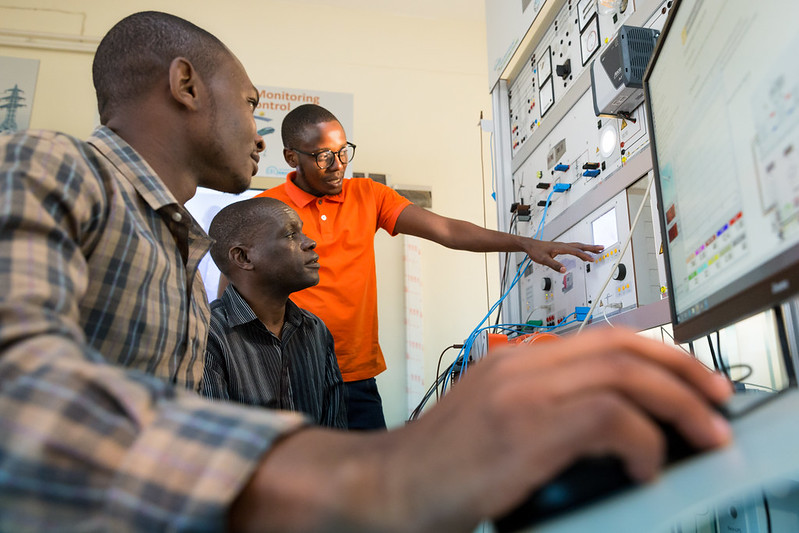 Starting in 2020, through the Better Utilization of Investments Leading to Development (BUILD) Act, the U.S. International Development Finance Corporation (DFC) was created by merging the Overseas Private Investment Corporation (OPIC) and USAID’s Development Credit Authority to expand the U.S. capacity for private sector-led growth in emerging markets. The DFC focuses on funding initiatives in Africa and around the world that improve sectors such as health care and infrastructure. While similar to USAID, the DFC operates as a separate entity.
Health Care Investments
The DFC has invested in health care in Africa by providing $1 million in equity to Kasha Global Inc., a women-founded and women-led e-commerce platform operating in Rwanda and Kenya. Kasha focuses on three core health care themes: access to health products, access to health information and job opportunities for low-income women. Both Kenya and Rwanda face high levels of period poverty due to the cost of sanitary products and a lack of education about menstrual health. In Rwanda, a single pack of sanitary towels costs between 700 Rwandan francs (about 71 cents) and 1,000 Rwandan francs ($1), roughly equivalent to a day’s wage for many women. In Kenya, the cost of sanitary pads can represent a significant portion of a woman’s daily income. A pack of sanitary pads typically costs between 70 to 75 Kenyan shillings (about $0.50 to $0.55), which could be a substantial expense for many.
The high cost of sanitary products forces many women to choose between purchasing them or meeting basic needs like food. As a result, menstrual products are often considered a luxury. With funding from the DFC, Kasha has expanded its operations in both rural and urban areas of Kenya and Rwanda, increasing access to and education about sanitary products. This investment has helped address issues related to women’s care and has improved health outcomes in the region.
Africa Health Care Network
The DFC is helping to improve infrastructure and expand access to health care by providing funding to the Africa Health Care Network (AHN), the largest operator of dialysis centers in East Africa. A $5 million loan from the DFC enabled AHN to significantly expand dialysis centers and services across sub-Saharan Africa, particularly in Kenya, Rwanda and Tanzania. While part of a broader strategy to mitigate the impacts of COVID-19, the funding has also strengthened healthcare infrastructure in the region and improved access to lower-cost care. Without this investment, many communities in these countries would lack access to critical dialysis services.
Renewable Energy Projects
The DFC has invested in renewable energy projects in Senegal and Ethiopia to improve health care infrastructure resilience. In Senegal, DFC supported the 158-megawatt Taiba N’Diaye wind power plant near Dakar, which now supplies about 15% of the country’s power. Indeed, this cleaner, more reliable electricity helps stabilize operations in hospitals and clinics, improving patient care.
In Ethiopia, the DFC committed $1.55 million for the technical development of the Tulu Moye Geothermal project, located about 100 kilometers from Addis Ababa. The project involves building a 50-megawatt geothermal power plant, which will become Ethiopia’s first independent power plant. Once completed, it will stabilize the country’s power grid and ensure a consistent electricity supply for healthcare facilities.
DFC in Africa: Strengthening Infrastructure
While not a direct health care investment, the DFC’s support for renewable energy aligns with a broader strategy to improve health care access by strengthening infrastructure. Ethiopia’s commitment to harnessing renewable energy further reflects in the World Bank’s Geothermal Sector Development Project, which underscores the role of sustainable energy in supporting critical services like healthcare. The DFC’s approach highlights its commitment to innovative investment strategies that enhance healthcare access for vulnerable populations while also bolstering infrastructure development.
The DFC continues to play a crucial role in bridging the gap between private investment and global development. By funding health care, infrastructure and renewable energy projects, the DFC is not only improving lives but also fostering long-term economic stability in emerging markets. As the demand for sustainable solutions grows, its strategic investments will remain essential in driving progress and expanding access to vital services worldwide.
– Oliver Hedges
Oliver is based in Lancaster, UK and focuses on Global Health for The Borgen Project.
Photo: Flickr
