Protecting the Future: USAID Programs in the Pacific Islands
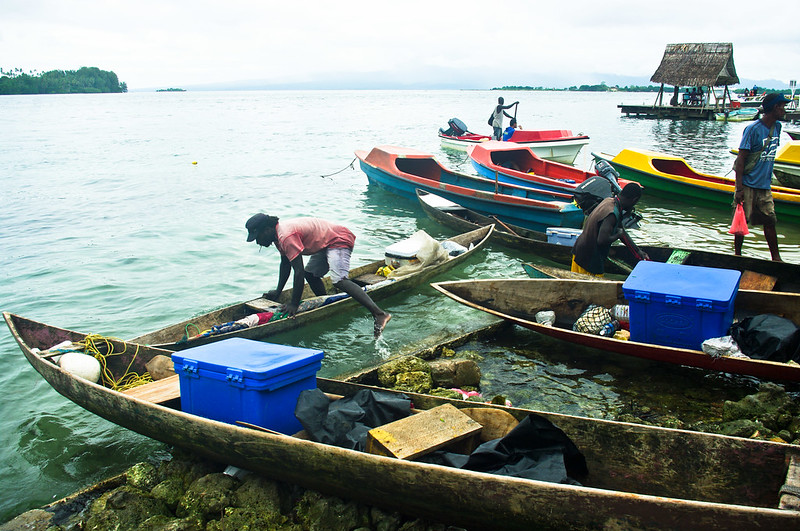 The Pacific Islands are composed of 12 countries, including Papua New Guinea, Fiji and Samoa, each with its own vibrant culture and environment. However, according to the United Nations Department of Economic and Social Affairs, a quarter of Pacific Islanders cannot attain basic needs, especially as natural disasters drastically destroy livelihoods and food security. Nonetheless, the United States Agency for International Development (USAID) programs in the Pacific Islands address development, illegal fishing and adverse weather conditions.
Protecting Biodiversity: OurFish OurFuture
Illegal, unreported and unregulated (IUU) fishing threatens the livelihoods of coastal communities and ocean ecosystems. It costs the global economy between $26 and $50 billion annually, harming local and international economies. In the tuna industry in the Pacific Islands, commercially caught Pacific tuna generated $22 billion in 2012 and 2014, while IUU fishing generated $616 million a year. IUU fishing affects more than the economy; it also affects fish populations and oceanic biodiversity, as it accounts for one out of every five fish caught.
The OurFish Our Future program works to combat IUU fishing. It is five years long, spanning from 2021 to 2026 and provides $15 million to address the factors of IUU fishing that degrade coastal biodiversity and impact food stability. This program focuses on the Federated States of Micronesia, Palau, Papua New Guinea, the Republic of the Marshall Islands, the Solomon Islands and Vanuatu.
The program brings together communities, providing opportunities for all ages and genders to participate in the design and implementation of security programming. Its ecosystem approach to fisheries management (EAFM) contributes to policies that will “improve coastal fisheries data systems, improve enforcement capacities and strengthen collaboration of enforcement authorities.”
Fostering Development: Pacific American Fund
As a result of the Pacific Island Countries’ (PICs) geography, they are vulnerable to environmental disasters perpetuated by changing climatic conditions, instability in government and present gender inequities, all while maintaining a critical role in the global economy. PICs are small and isolated, which leaves them prone to tsunamis, floods, earthquakes, droughts and volcanic activity that destroys their buildings and crops. PICs also suffer from unsafe living conditions, including unclean water, pollution and harmful chemicals, which lead to a rate of 70% of deaths related to noncommunicable diseases such as cancer and chronic respiratory diseases.
The Pacific American Fund (PAF) is a “five-year grant facility that addresses critical development challenges.” It supports the countries of the Federated States of Micronesia, Fiji, Kiribati, Nauru, Palau, Papua New Guinea, the Republic of Marshall Islands, Samoa, Solomon Islands, Tonga, Tuvalu and Vanuatu. The PAF aims to “improve the quality of life in vulnerable communities and improve access to services for remote communities in the region” through increased preparation for natural disasters and climate change, economic development and access to health care and education. One of its programs is small-scale construction in the Malita Province to improve and adapt the environment for increased trade and expansion into agribusiness.
Agribusiness in the Solomon Islands
The Solomon Islands are prone to natural disasters that affect their economy, requiring their communities to seek agribusiness advancements to protect and revive their economy. In October 2023, tropical cyclone Lola caused severe damage, affecting more than 22,000 people and 100 buildings and damaging water sources. Furthermore, many of the crops were destroyed, including breadfruit trees, which are one of the Solomon Islands’ main sources of carbohydrates. This left locals scared of starvation as they relied on their local agriculture for sustenance.
USAID programs in the Pacific Islands include the Solomon Islands Strengthening Competitiveness, Agriculture, Livelihoods and Environment (SCALE) plan. SCALE is a five-year, $25 million project focused on developing the agribusiness sector in the Solomon Islands. Additionally, SCALE Trade and Investment (T&I) “focuses on reducing the cost and steps of obtaining business permits and licenses; strengthening trade and investment facilitation; and improving agribusiness value chain growth.”
SCALE engages community members in its program through its T&I plan. It aims to increase its exports and the role of women in trade. SCALE T&I oversaw the creation of the Advisory Committee for Agribusiness in Malaita Province, which will work with the Solomon Islands Chamber of Commerce. USAID programs in the Pacific Islands, such as SCALE, improve conditions of poverty by providing funding and opportunities for locals to work, innovate and protect against environmental factors.
Impact of USAID Programs in the Pacific Islands
USAID programs in the Pacific Islands strengthen their economic and environmental resilience through advancing policies and funds. Through USAID help, PICs have accessed more than $500 million in climate financing to prepare for adverse climatic conditions and natural disasters. USAID programming supports local development, marine ecosystems and access to affordable energy. Its work in the Pacific Islands will continue through these long-term programs to ensure stability.
One success story from USAID’s programs for Pacific Islanders came through its partnership with Aquaculture Technologies of the Marshall Islands. USAID provided a $1.7 million grant to allow the company to manufacture its own fish feed and to train individuals such as Sonya. Sonya remained in the Solomon Islands after her family moved because she wanted to pursue aquaculture and secure a stable future in her home country.
Sonya now manages the fish hatchery and nursery, inspiring more women to become trained as independent aqua farmers and fish feed manufacturers. The Marshall Islands now produce 400 pounds of moi fish per week, which supplies local businesses and is exported.
– Astrid Burns
Astrid is based in Roseland, NJ, USA and focuses on Technology and Politics for The Borgen Project.
Photo: Flickr
