The Socioeconomic Situation of Children in Syria
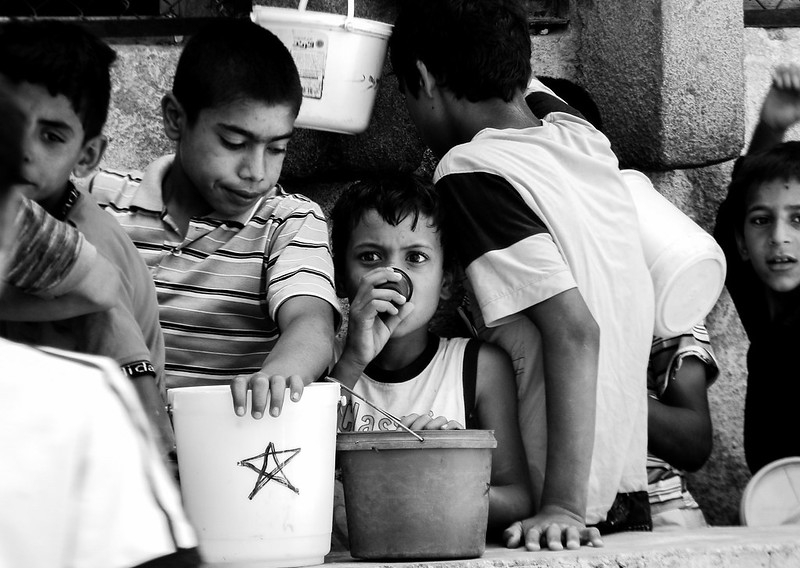 For a little more than a decade, the children of Syria have continued to bear the blows of the country’s socioeconomic and political crisis. In 2022, the United Nations Children’s Fund (UNICEF) revealed that around 2.4 million Syrian children no longer attend school, while an additional 1.6 million children were tethering with the idea of dropping out. The lack of adequate funding from the Syrian government has only worsened this epidemic since the national budget for education dropped from 7.1% in 2021 to 3.6% in 2022. Poverty within the family unit thus forces all members to become active contributors, children included.
Children Bear the Burden
Syria remains a country deeply devastated by the ravages of war, with more than 90% of its population living in poverty. A study conducted in 2022 by UNICEF concluded that an estimated 14.6 million Syrian civilians were in need of humanitarian aid. The most affected of this group of individuals was children, with more than 6.5 million in need of assistance.
Syrian children bear the burden of the conflict as many are forcibly pulled from school and thrust into the labor force in an attempt to salvage their family’s crumbling economic state. The Syrian Response Coordination Group detailed that child labor remains an ongoing issue in Syria, specifically among the displaced. The group reported that more than 37% of children between the ages of 14 and 17 are active participants in the labor force.
The humanitarian group also reveals that of the 85% of Syrian children who no longer attend school, 318,000 sought work. Though the exact professions vary, some include physically compromising trades. Young boys occupy positions in these dangerous trades, while young girls tend to take up work in agricultural fields. Bassel Muhammad, a shopkeeper in Idlib City, tells Syria Direct, “No business is empty of children, to say nothing of street vendors.” Muhammad then shares that he has employed two children, one 13 and the other 15, both of whom have left school to provide for their families.
A Changed Generation
Though child poverty persists in Syria, various initiatives have been taken to combat it. In 2013, UNICEF and World Vision joined forces to create No Lost Generation, a program that campaigns for the rights of Syrian youth. With the financial support of various donors, nongovernmental organizations (NGOs) and United Nations (U.N.) agencies, the initiative focuses on education and child protection.
Another initiative advocating for the rights of Syrian children is Mart Team, a Damascus-based charity. Through its campaign “Aqlamouna Amalouna,” meaning “Hope in our pens,” the charity aims to provide aid to students in need. In an interview conducted by Arab News, Marwan Alrez, the General Manager of Mart Team, states, “Parents have told us that schools demand hefty fees, prompting many of them to remove their children from school and force them into the labor market in order to contribute to household earnings.”
Alrez reveals that the average cost of school supplies for a single student is around 200,000 Syrian pounds, an estimated equivalent of $16. This places a great strain on the average Syrian household since many employed individuals only earn 185,940 Syrian pounds (about $14.8) monthly. Alrez’s charity initiative has helped an estimated 300 primary students meet their needs, whether for school supplies or school fees.
World Vision has also focused on the cause of Syrian children and developed six educational-based projects. These projects provide children in need with lunches, hygiene packages and school supplies. Furthermore, the Syrian government has noted this growing issue and has asked that schools be more lenient with their demands, whether regarding uniform policies or certain school supplies.
Final Remark
Adele Khor, UNICEF Regional Director for the Middle East and North Africa, proclaims, “A generation of children in Syria have already paid an unbearable price for this conflict.” Despite all of the admirable efforts from various groups, the Syrian children’s plight remains an issue.
– Yasmine Nowroozi
Yasmine is based in Laval, Quebec, Canada and focuses on Global Health and Politics for The Borgen Project.
Photo: Flickr
