Direct Cash Transfers: Is There a Case for Giving Directly?
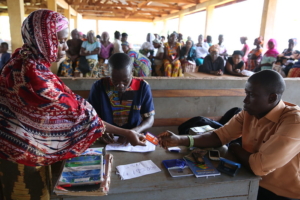 Direct cash transfers provide an alternative method of delivering Overseas Development Assistance (ODA). However, arguments over their effectiveness and impact in comparison to development projects are rife.
Conventional and Alternative Modes of ODA
Traditional foreign aid efforts often come in the form of building new schools, providing water wells in rural areas of developing countries and infrastructure projects to boost employment to kickstart economies.
However, increasingly in recent years, the case for new approaches to providing ODA has gained traction, most catalyzed by the suboptimal use of foreign aid funding.
Direct Cash Transfers as a Viable Option
Direct Cash Transfers could be one solution to this problem, an opinion held by Rory Stewart, former President and now advisor of the international non profit organization, GiveDirectly. Founded in 2009, GiveDirectly has disbursed $700M+ in cash directly to about 1.5 million people living in poverty. GiveDirectly currently has a presence in Bangladesh, DRC, Kenya, Liberia, Malawi, Mozambique, Morocco, Nigeria, Rwanda, Turkey, Uganda, USA and Yemen.
According to Stewart, who is the former UK Member of Parliament (MP) for Penrith and the Border:
“Unconditional cash transfers have been proven to deliver support to those that need it with unprecedented speed and scale, meaning we now have the opportunity to do something historic.”
Assumptions are often made regarding how this money is likely to be utilized by those receiving it. GiveDirectly claims that it is most often used for “medicine; cows and goats and chickens; school fees; water; solar lights; tin roofs; irrigation; motorcycles to jumpstart taxi services; businesses to generate income; and more.” But how credible are these claims?
A Compelling Case for Direct Cash Transfers
In their efforts to demonstrate the effectiveness of their work, GiveDirectly highlights evidence from multiple sources. For example, according to research conducted in a study by ODI,
“Evidence was extracted from 165 studies, covering 56 cash transfer programs in low- and middle-income countries … There is strong evidence that cash transfers are associated with reductions in monetary poverty.”
GiveDirectly also calls upon the opinion of fellow non profit, Give Well, who dedicate their efforts to highlighting to donors the best channels for their cash. According to Give Well, “Cash transfers have the strongest track record we’ve seen for a non-health intervention, and are a priority program of ours.”
Claims of misuse for direct cash transfers are also disregarded by a paper produced by the World Bank in 2017. After reviewing quantitative evidence from 19 studies on the effect of direct cash transfers, and a further 11 studies measuring what the recipients of direct cash transfers spent the money on, the paper found that cash transfers significantly reduced spending on ‘temptation goods.’
The statistics paint only part of the picture. Many ODA projects still boast tremendous success in improving living standards in developing countries, improving education levels and boosting economic progression. However, these statistics have led many to believe that there must be a better way to allocate foreign aid budgets.
Although traditional means of providing ODA will likely continue to be allocated a significant proportion of Western foreign aid budgets, the efforts of GiveDirectly certainly provide a compelling case for direct cash transfers to take up a larger percentage of aid budgets in the future.
– Ethan Leyden
Photo: Flickr
