Agricultural Investments in Vietnam
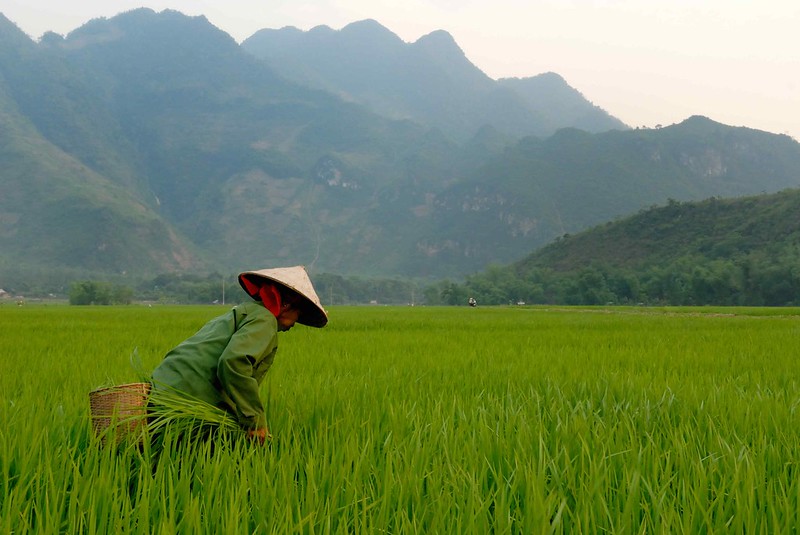
Agriculture, forestry and fishery have been at the root of the Vietnamese economy for thousands of years. Recently, a trend of borrowing from banks like LienVietPostBank, AgriBank and BIDV by struggling farmers has allowed them to escape the poverty caused by the scars of war and colonial oppression.
These loans enable farmers to purchase reliable equipment and materials to grow their crops and yield a wider profit margin, hire more workers and cycle more capital to create stable income and community. The World Bank reported a drop in poverty from 16.8% to just 5% from 2010 to 2020.
Now the force of this agriculture boom is proving to be a vital element in the propulsion of the economy after the COVID-19 pandemic. In 2021, a whopping 1,640 new agriculture businesses emerged. This is largely due to the agricultural investments in Vietnam.
Why the Buzz?
As a country with a long history of food shortage due to war, Vietnam is especially wary of movements in the food supply. As the COVID-19 pandemic hurt business and now the threat of the Russian-Ukraine war shocks economies globally, agriculture is emerging as the key economic pillar of society. In 2020, the country ranked among the top five exporters of aquatic products, rice, coffee, tea, cashews and cassava.
When the pandemic started to affect other sectors such as service, construction and industry, many in the southern provinces returned to work in agriculture and that industry flourished. The pandemic stunted poverty reduction but did not set it back. Most of the growth has come from the establishment of small-scale farms that maintain themselves by becoming food secure and self-sufficient. Most of the new farms are less than 1 hectare and provide ample sustenance for the families who work them.
According to the International Fund for Agriculture Development, economic growth in small-scale agriculture is two to three times more effective at reducing poverty than in other sectors. Agro-focused banks keep close contact with their loan recipients, monitoring income and circumstances that might affect the crop, as well as consumer trends. This has created a community atmosphere where people are working alongside agricultural investors in Vietnam, effectively lifting many out of poverty.
The Effects of Agricultural Investments in Vietnam
Vietnam News reported that Vietnam’s agriculture industry comprises more than 14,000 businesses, 78 unions, 19,100 cooperatives, more than 30,000 production groups and 19,600 farms. The success of poverty reduction and business growth in agriculture is due to many factors such as increased governance capacity, capital investment, socio-economic planning policies and other public services. The recent investment and the government’s sustained efforts to keep the agriculture business in good standing have played great roles in this reduction. Moreover, the multi-industrial approach has provided basic health care and early education through new government policies. There has been a remarkable decline in those living on less than $1.25 per day from 63.7% in 1993 to 16.9% in 2008.
This massive shrinking of the poor is a great stride. While there is still a rocky road ahead for the growing country, the uptick in food security due to agricultural investments in Vietnam is a promising guidepost for increasing the quality of life in the country.
– Shane Chase
Photo: Flickr
