Constructing the Thwake Dam in Kenya
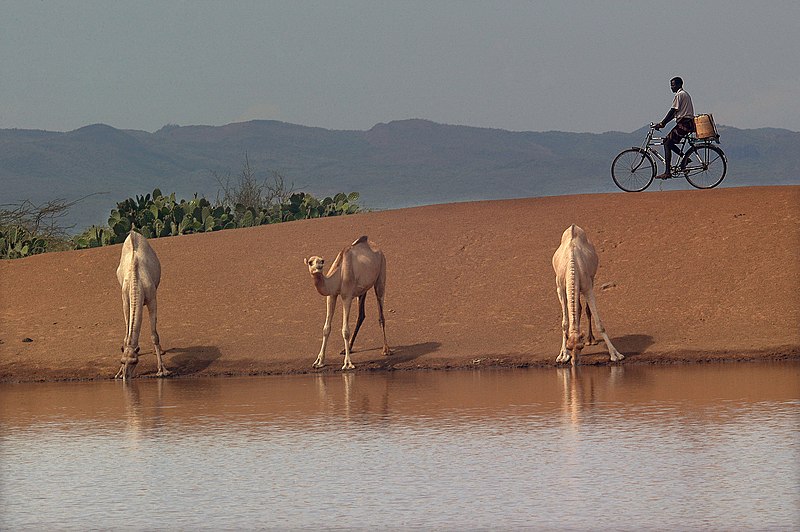 Severe, extended droughts and contamination due to runoff waste has impacted Kenya’s ongoing water crisis. UNICEF estimates that only 59% of Kenyans have access to clean water in 2022. While access to basic drinking water has increased in the last decade, Kenyans’ access to basic sanitation has decreased from about 34% to 29%. The Kenyan government and private sectors are working together on a multiphase project called the Thwake Multipurpose Water Development Program (TMWDP) in a reformative attempt to build rural water connections and deliver new economic opportunities to the country. Here is some information about the Thwake Dam in Kenya and how it will promote water security in the country.
The Thwake Multipurpose Water Development Program
The TMWDP efforts occur between Kenya’s Makueni and Kitui counties, which are among the areas that drought affects the most. The low annual average rainfall in the project zone is confirmed to be about 500 mm per year, which is a major factor driving unreliable water access. For the Kenyans in these areas, it is not uncommon to travel more than 10 km each day just to receive water for livestock and domestic use.
After receiving approval from the Kenyan government in 2013 under financing from the African Development Fund, the TMWDP offered a timeline consisting of four phases. The first and most crucial phase currently under process is the construction of the Thwake Dam, spanning 1.5 km along the merging point of the Thwake and Athi rivers that intersect Makueni and Kitui counties. In November 2017, the county governments of Makueni and Kitui contracted the Chinese Gezhouba Group Company (CGGC) to construct the dam.
The Thwake Dam, which the Kenyan government estimates will be constructed by the summer of 2022, will supply 150,000 cubic meters of water daily for more than 1 million Kenyans in Makueni, Kitui and Machakos counties. The dam will be a major contributor to completing phase 1 of the project, providing 681 million cubic meters (MCM) of water storage. Following phase 1, the project aims to increase water supply for human consumption by 34 MCM, for power and downstream irrigation by 625 MCM, and 22 MCM for upstream irrigation. African Development Bank Group President Dr. Akinwumi Adesina stated his support for the project while attending a celebration of Madaraka Day in Nairobi, Kenya, highlighting its ability to transform lives by providing electricity, water supply and irrigation to 40,000 hectares of land.
Benefits of the Thwake Dam and Kenya Vision 2030
The Thwake Dam is already proving to be beneficial for Kenya’s labor force where the majority of workers operate in the informal economy without secure contracts or benefits. The project has hired more than 1,100 local Kenyans for dam construction and sources materials like cement and steel from nearby industries. CGGC managing director Frank Keeh stated his support for socio-economic growth in Kenya, referring to the project as an “economic game-changer” for the people.
The TMWDP targets more than 1 million people who will benefit from the Thwake Dam once it is operational. In specific, the African Development Bank Group mentions the 674,700 Kenyans who live in rural Makueni and Kitui, as well as the additional 640,000 projected to live in Konza, described as a world-class city with a thriving information, communications and technology (ITC) sector. Similar to the Thwake Dam, Konza Technopolis is a flagship project of Kenya’s Vision 2030, a long-term development plan to create “a globally competitive and prosperous country with a high quality of life by 2030.” Both projects will help Kenya Vision achieve its goal of an average economic growth rate of 10% per year until 2030.
Looking Ahead
The Thwake Dam serves to benefit Kenya’s water-insecure regions to bolster sustainable and inclusive economic growth within the country. By supplying and storing over 681 MCM of treated water, the Thwake Dam will contribute to improving health care and sanitation across three counties. The dam will also promote the agricultural sectors by assisting in irrigation and combatting lengthy dry spells. The work done by the TMWDP acts as a pillar for Kenya Vision 2030’s goal to transform Kenya into an economically prosperous middle-income country by the end of the decade.
– Evan Lemole
Photo: Wikipedia Commons
