• Link to X
  • Link to Facebook
  • Link to Instagram
  • Link to TikTok
  • Link to Youtube
  • About
    • About Us
      • President
      • Board of Directors
      • Board of Advisors
      • Financials
      • Our Methodology
      • Success Tracker
      • Contact
  • Act Now
    • 30 Ways to Help
      • Email Congress
      • Call Congress
      • Volunteer
      • Courses & Certificates
      • Be a Donor
    • Internships
      • In-Office Internships
      • Remote Internships
    • Legislation
      • Politics 101
  • The Blog
  • The Podcast
  • Magazine
  • Donate
  • Click to open the search input field Click to open the search input field Search
  • Menu Menu
Blog - Latest News
Food & Hunger, Food Security

What a Waste

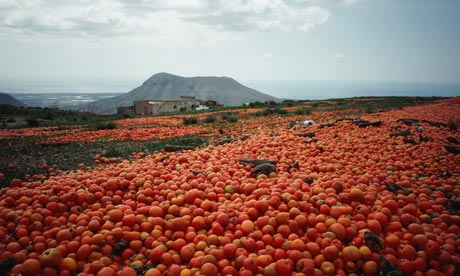
Food-waste-Surplus-tomato-global_poverty_world_hunger_opt
Here’s an interesting stat: one-third of all food grown globally is lost to spoilage and waste. Without any increases in crop yield or technology, 50% more people could be fed by the food already produced.

When faced with the realities of poverty and global hunger, the obvious fix is to produce more. Genetic modification, hybrid-seeds, increased fertilization… These are the solutions that come to mind and are being promoted throughout the world as well as being introduced to developing regions where food shortages are most acute. But in many cases, increased yields due to these methods won’t actually lead to any real gains in production. Not in areas where fruits already rot on the vine due to a lack of pickers to harvest them, or where a lack of serviceable infrastructure prevents farmers from efficiently transporting their product to market.

If this food spoilage and waste could be eliminated, or even reduced, the benefits could far outweigh those of slow, albeit persistent, methods of improving crops and yield. This change though will require a concerted effort. Currently, the majority of agricultural funding is channeled into research and development, with the focus being on production. The cynic could claim this is because the industry has an economic interest in increasing output, as it would lead to increased sales of seeds and other of their own products. But regardless of the reason, it is a route that needs exploring.

On February 19th, the U.S. State Department hosted a conference on ‘Food Security and Minimizing Post-harvest Loss: Markets, Applied Research, and Innovation.’ This conference was a positive step, as it demonstrated the administration’s acknowledging the seriousness of this issue, while also bringing together scientists and politicians from all over the world to address it. More steps like this need to be taken, and funding needs to be provided for research into food storage. If we can save even a portion of that lost third, the gains will be immediately apparent.

– David Wilson
Source: Mother Earth News
Photo: Guardian

June 13, 2013
Share this entry
  • Share on Facebook
  • Share on X
  • Share on WhatsApp
  • Share on Pinterest
  • Share on LinkedIn
  • Share on Tumblr
  • Share on Vk
  • Share on Reddit
  • Share by Mail
https://borgenproject.org/wp-content/uploads/borgen-project-logo.svg 0 0 Borgen Project https://borgenproject.org/wp-content/uploads/borgen-project-logo.svg Borgen Project2013-06-13 04:00:382020-06-26 21:29:43What a Waste

Get Smarter

  • Global Poverty 101
  • Global Poverty… The Good News
  • Global Poverty & U.S. Jobs
  • Global Poverty and National Security
  • Innovative Solutions to Poverty
  • Global Poverty & Aid FAQ’s
Search Search

Take Action

  • Call Congress
  • Email Congress
  • Donate
  • 30 Ways to Help
  • Volunteer Ops
  • Internships
  • Courses & Certificates
  • The Podcast
Borgen Project

“The Borgen Project is an incredible nonprofit organization that is addressing poverty and hunger and working towards ending them.”

-The Huffington Post

Inside The Borgen Project

  • Contact
  • About
  • Financials
  • President
  • Board of Directors
  • Board of Advisors

International Links

  • UK Email Parliament
  • UK Donate
  • Canada Email Parliament

Get Smarter

  • Global Poverty 101
  • Global Poverty… The Good News
  • Global Poverty & U.S. Jobs
  • Global Poverty and National Security
  • Innovative Solutions to Poverty
  • Global Poverty & Aid FAQ’s

Ways to Help

  • Call Congress
  • Email Congress
  • Donate
  • 30 Ways to Help
  • Volunteer Ops
  • Internships
  • Courses & Certificates
  • The Podcast
Link to: Kenyan Girls Protected from Cervical Cancer Link to: Kenyan Girls Protected from Cervical Cancer Kenyan Girls Protected from Cervical Cancer Link to: Radio Station Supports Polio Vaccinations Link to: Radio Station Supports Polio Vaccinations Radio Station Supports Polio Vaccinations
Scroll to top Scroll to top Scroll to top