5 Innovations in Poverty Eradication in Malawi
 Situated in Southern Africa in between the borders of Mozambique, Zambia and Tanzania, is Malawi, a nation with 50% of the population living below the poverty line. Many reciprocal factors drive such high poverty rates — the country’s low agriculture productivity, insufficient infrastructure development and the lack of new technologies’ adoption as well as vulnerability to natural disasters. Although Malawi is already undergoing a series of governmentally-induced five-year consecutive plans called the Malawi Growth and Development Strategy, there are other actors coming up with innovative solutions to progressing toward poverty eradication in Malawi.
5 Innovations in Poverty Eradication in Malawi
- E-Madzi Automated Water Kiosks: One in three Malawians, or 5.6 million people, do not have access to running water in their households and their only source of clean water is water kiosks. Although this is a common solution across the country, most kiosks are only open for three hours in the morning and three hours in the evening. Moreover, people can only pay for the service in cash and the waiting time is usually quite long. That is why the Lilongwe Water Board and the World Bank financed and installed E-Madzi water kiosks, which are fully automated and usable with an e-card. The project was launched in June 2017 with only four kiosks in Lilongwe, the capital of Malawi. However, the area has obtained 35 more kiosks in 2020. The automated kiosks give access to water at any time of the day, consequently decreasing long waits and water waste while reducing 65% of the water costs. This fact makes daily water sourcing more convenient and secure.
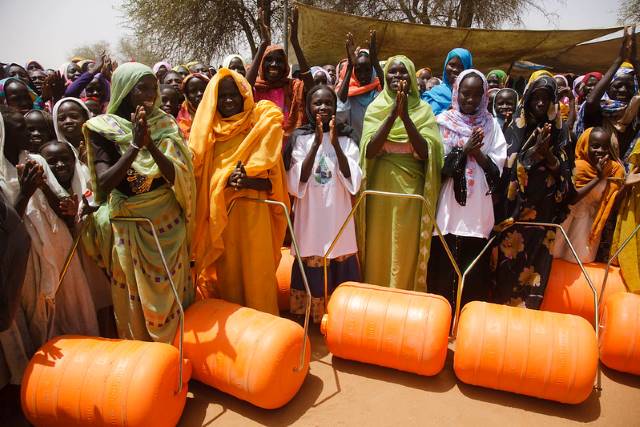
- Hippo Roller: It is very common for Malawians, mostly women and children, to shoulder the burden of carrying significant amounts of water from its source, such as a water kiosk, to the household. The Hippo Roller is a 90-liter water transport device enabling transportation of up to five times more water than standard 20-liter bottles. First introduced in Malawi in 2014, the Hippo Roller has allowed families to improve their health and hygiene, irrigate more crops for their own use and generate more income. Moreover, the Hippo Roller allows women and children time to go to school or obtain paid employment.
- Wonderbag: In many rural and remote areas of Malawi, cooking food on an open fire is the most common way of nourishment. This natural cooking process, though, is very time-consuming and detrimental to both human health and the environment as it releases burning charcoal and fuel into the atmosphere. In fact, smoke-related diseases kill more than 4 million people every year. Wonderbag is a non-electric slow cooker that allows the food to cook for up to 12 hours, all thanks to a foam-insulated bag securely wrapped around a cooking dish. According to Wonderbag’s founder and CEO, Sarah Collins, Wonderbag has made it possible to minimize health issues from indoor air pollution by reducing the amount of wood, charcoal and burning fuels by 70%. She told The Borgen Project that “Women save up to $18 per month on charcoal as they only need to use $2 worth per month, and not $20. This is a reduction of [ more than] two trees per household per annum.” Additionally, records determine that using Wonderbag saves on average 1,300 hours per year, during which girls and women can develop productive skills and increase their potential and autonomy. Furthermore, factories and sewing collectives that work together with Wonderbag on its production, provide local women with paid employment opportunities.
- Socially Progressive Innovation and Entrepreneurship Programme: Researchers from the University of Strathclyde Glasgow have been using satellite images and machine learning to predict the most efficient water points in Malawi. Such satellite observations are proving to be effective as they are not only precise and accessible in a matter of hours but also offer long-term measurements through the ability to access past data and analyze the historical evolution of impact.
- Second Agriculture Sector Wide Approach Support Programme: The Government of Malawi and the World Bank Group created the Second Agriculture Sector Wide Approach Support Programme to link farmers with nearby markets through rural road improvement. It benefits 200,000 households by bridging the gap between actual and possible crop yields as the majority of agricultural workers tend to live in remote areas with few roads and means of transport. With better and more accessible roads, it is easier for local farmers to reach markets, sell their produce and regularly increase their earnings. Since its launch in 2018, the Programme has succeeded in improving 1,000 km of rural roads and employing more than 14,500 people, with women accounting for 56%.
Looking Ahead
Poverty in Malawi is an issue that entails much more than the lack of income. It manifests itself in malnutrition, low hygiene, limited access to education, low chances for productive development, discrimination and a lack of social participation. Creative approaches and the implementation of innovative solutions toward poverty eradication in Malawi allow the country to improve its current social and economic situation efficiently and sustainably.
– Natalia Barszcz
Photo: Flickr
