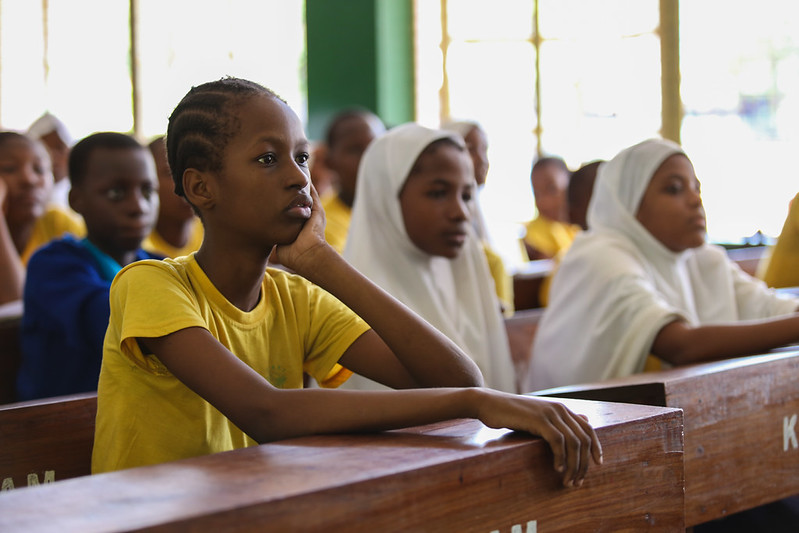
Tanzania has made major efforts to expand access to education, especially through fee-free basic schooling and increased public investment. The country’s education system now reaches millions more children than it did a generation ago. However, serious challenges remain in secondary completion, teacher shortages, learning quality and girls’ education. These education gaps matter because schooling is one of Tanzania’s most important tools for ameliorating poverty and improving long-term economic mobility. Tanzania’s population hit 70.5 million in 2025, making the scale of education delivery particularly difficult.
Success Stories and Challenges
Tanzania’s fee-free basic education policy has helped bring more children into school. Through its education portfolio, pre-primary enrollment in mainland Tanzania increased from 37% to 89%, while lower-secondary enrollment increased from 46% to 53%. These gains show that policy and public investment can broaden access when school costs are reduced. Still, access is not universal; 3.2 million children ages 7-17 are out of school, including 1.2 million who have never attended school. Additionally, many adolescents lack the skills needed for “personal empowerment, civic engagement, and productive roles in the economy of the future.”
The biggest education obstacle is keeping students in school beyond the primary level. Recent education data show that lower-secondary enrollment remains far below primary enrollment, limiting students’ access to vocational training, higher education and formal employment. This hurts poverty reduction because secondary education is often the bridge between basic literacy and real economic mobility. Girls face additional barriers, as more than half of out-of-school children ages 7-17 are girls. Poverty, early pregnancy, child marriage, menstruation-related challenges and school safety concerns all affect whether girls remain in school.
Tanzania is investing more in education, but not yet enough to meet sector goals. Policy Forum’s 2024/25 post-budget analysis reports that the education budget reached TZS 6.166 trillion, up from TZS 5.969 trillion in 2023/24 and TZS 5.732 trillion in 2022/23. However, this represented only 12.5% of the national budget, below regional and international benchmarks that call for roughly 15-20% of public spending on education. Furthermore, teacher shortages remain a major concern. In 2024, there was a shortfall of nearly 269,000 teachers across pre-primary, primary and secondary education. Without more trained teachers, expanded enrollment can lead to overcrowded classrooms and weaker learning outcomes.
Taking Action
Several programs are trying to close these gaps. UNICEF and the Education Above All Foundation launched a five-year campaign in Kigoma, Tabora and Songwe to enroll and retain more than 100,000 out-of-school children. UNICEF and partners have also supported second-chance learning through IPOSA and ZIPOSA, assisting more than 80,000 adolescents, 68% of them girls. Finally, Global Affairs Canada, UNICEF and UNFPA are investing CAD $14.7 million over five years to reach more than 1.2 million adolescents ages 10-19 with health, education and empowerment services.
Overall, Tanzania’s education reforms are critical to poverty reduction. The country has expanded access and increased spending, but the next step is stronger outcomes: more teachers, better secondary completion, safer schools for girls and learning that leads to employment.
– Jeff Zhou
Photo: Flickr
