How Democracy Can Help Reduce Poverty in Sudan
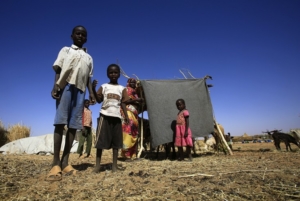
At the end of June 2020, the United States Agency for International Development (USAID) announced that it would assist Sudan in its democratic transition by committing $356.2 million to aid. The funding comes as a result of Sudan’s successful revolution at the end of 2018. To curb an economic crisis, the former government took steep measures, decreasing fuel and bread subsidies. This ultimately resulted in protests in Khartoum, the capitol. At its core, the protests demanded a higher standard of living for all of Sudan’s people. In April 2019, at the peak of the demonstrations, a coup removed President Omar al-Bashir. A transitional government made up of shared civilian and military councils now aims to promote a pro-democracy movement to eventually hold elections. It also hopes to help reduce poverty in Sudan.
An Ideal Government
Specifically, the civilians want a government that will support a better quality of life for everyone. This would curb the number of people living in poverty, thus reducing poverty in Sudan. A transition to democracy often provides a country representation of the people, increased social rights, economic gain and collaboration. However, failing to prioritize a financial gain can result in a corrupt government followed by a reduced faith in democracy. The transitional government’s commitment to accountability and transparency is of the utmost importance while democracy is forming.
The Poverty Issue
With a transitional government in place for three years, the country is looking to shift its way of thinking to better its citizens’ lives. According to the Minister of Finance, Ibrahim Elbadawi, around 65% of Sudanese lived below the poverty line. On top of that, ever since conflict began growing in 2014, 5.8 million people required humanitarian assistance. With additional funding, these numbers can decrease.
The money granted by USAID will go towards conducting valid elections, building more vital institutions and growing political engagement. This will significantly benefit disadvantaged people like women, children and religious groups. Primarily, USAID works in South Kordofan, Blue Nile and the Darfur region to assist. USAID has a Rapid Response Fund run through the International Organization for Migration on a larger scale. It allocates money for short-term funding to national and international relief agencies.
The Help of USAID
Programs that USAID provides to Sudan fall under the themes of food security, conflict and human rights. A database system through USAID’s Famine Early Warning Systems Network tracks crucial data on food security and potential crises. Then, they are relayed to Sudan and other donors. In conjunction with the database, during the fiscal year of 2016, USAID donated $175.1 million to food security programs through the U.N. World Food Program and UNICEF benefiting Sudan. Aside from the database, USAID works to better human rights in the area. In partnership with U.N. Women and the U.N. Population Fund, USAID advocates for promoting women’s rights and gender-based violence prevention. Additionally, other programs target youth and women groups in Sudan “to reduce vulnerabilities to conflict and build leadership skills to foster peacebuilding. They also improve livelihoods and help create enabling conditions for development.
With more funding from USAID, Sudan’s transitional government can not only strengthen its growing democracy but also help reduce poverty in Sudan. As civilians see the potential of democracy in Sudan, they will invest more faith in the transition and thus receive more.
– Adrianna Tomasello
Photo: USAID
