8 Facts About Health in Guinea-Bissau
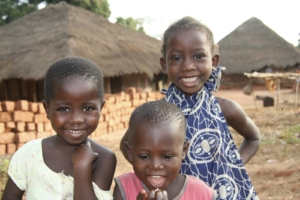
A former Portuguese colony with almost 2 million inhabitants, Guinea-Bissau is a small country located on the Atlantic coast in West Africa. The nation achieved its independence in 1973 but remains one of the most impoverished countries in the world, ranking 178th on the Human Development Index. Health in Guinea-Bissau is a complex issue as more than two-thirds of the country’s population lives in poverty. Today, Guinea-Bissau struggles with providing quality health services to its citizens. With the country spending an average of just $91 per person per year on healthcare, international aid could provide the country with an opportunity to modernize and expand its healthcare system. Here are eight notable facts about health in Guinea-Bissau.
8 Facts About Health in Guinea-Bissau
- The infant and maternal mortality rates are alarmingly high. While the infant mortality rate has decreased fourfold over the last 30 years, it still remains the fourth highest in the world at 85.7 per 1,000 live births as of 2015. The maternal mortality rate ranks as the 18th highest in the world at 549 deaths per 1,000 live births. An increase in the measles vaccination rate links to recent reductions in infant mortality. In order to lower the maternal mortality rate, the country needs more trained midwives, hospital buildings for child-delivery and better education for women and girls about pregnancy and childbirth.
- The nation’s COVID-19 response has been strict and largely effective so far. Guinea-Bissau had just over 2,200 recorded cases of COVID-19 and only 34 COVID-19-related deaths at the end of August 2020. The government ended a mandatory nighttime curfew in late July 2020 after success in mitigating the spread but it still requires citizens to wear masks in public spaces.
- Guinea-Bissau has seen continued success in immunization against measles. In 1990, just 53% of infants from 12 months to 23 months received a measles vaccine. By 2010, that number rose to 76% and today, 86% of Guinea-Bissau infants receive a measles vaccine.
- Life expectancy is rising but remains below the global average. Guinea-Bissau is far behind the global average life expectancy of 72 years. In 2018, the nation’s average life expectancy at birth was only 58 years. Despite this, the average life expectancy in Guinea-Bissau is 11 years longer today than it was in 1990 at just 47 years. Compared to the rest of Sub-Saharan Africa, the country is nearing the regional average of 62 years. If Guinea-Bissau remains at peace and healthcare access improves, life expectancy should continue to rise.
- The country sees repeated cholera outbreaks and continues to be at a high risk of further outbreaks. Guinea-Bissau has experienced six large outbreaks of cholera over the last 30 years. The largest outbreak came in 2005 when cholera infected 25,111 people and 399 died. The conditions in the country have not changed substantially from the most recent outbreak in 2012, leaving Guinea-Bissau vulnerable to further outbreaks.
- The birth rate has consistently decreased for 30 years. The birth rate in Guinea-Bissau decreased from 6.6 births per woman in 1990 to 4.5 births per woman in 2018.
- Trained doctors do not tend to stay in Guinea-Bissau for long. There are only three pediatricians, one anesthetist and 34 midwives in the entire country to serve a population of over 700,000 children and 1.1 million adults. Doctors leave the country at high rates in search of better living conditions and higher wages across the world.
- Rural populations lack access to healthcare. Around 50% of Guinea-Bissau’s population lives in rural areas with extremely limited access to healthcare. However, international aid organizations like Doctors Worldwide Turkey provide free services to the rural population for brief periods of time.
To improve health in Guinea-Bissau, the nation needs international aid and assistance in building and organizing its struggling healthcare system. Once back on its feet, Guinea-Bissau can work to improve even more areas of life.
– Jeff Keare
Photo: Flickr
