• Link to X
  • Link to Facebook
  • Link to Instagram
  • Link to TikTok
  • Link to Youtube
  • About
    • About Us
      • President
      • Board of Directors
      • Board of Advisors
      • Financials
      • Our Methodology
      • Success Tracker
      • Contact
  • Act Now
    • 30 Ways to Help
      • Email Congress
      • Call Congress
      • Volunteer
      • Courses & Certificates
      • Be a Donor
    • Internships
      • In-Office Internships
      • Remote Internships
    • Legislation
      • Politics 101
  • The Blog
  • The Podcast
  • Magazine
  • Donate
  • Click to open the search input field Click to open the search input field Search
  • Menu Menu
Blog - Latest News
Food Aid, Food Security

Effects of Food Aid Reform
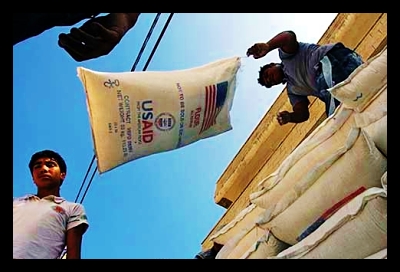
Effects of Food Aid Reform

Since the proposed changes to the US system of food aid, many have voiced concerns about the shift away from domestic agriculture and towards local food supplies in developing countries. But how will food aid reform affect US shipping and agriculture?

Devex journalist, John Alliage Morales, reports after the US Agency for International Development (USAID) Administrator Rajiv Shah testified before the Senate Appropriations Subcommittee on State and Foreign Operations held May 7, 2013. Shah defended President Obama’s proposal to reform the $1.5 million US Food Aid Program: it would only affect about 300 employees in the shipping industry and 0.2 percent of American agricultural exports.

The six-decade old food aid program was designed primarily to help American farmers by purchasing their surplus, and American shipping companies by requiring at least 75 percent of the goods to be transported to countries in need on U.S.-flagged vessels.

Under Obama’s proposal for fiscal year 2014, the government would still buy food from farmers, but only up to 55 percent of the total, allowing the USAID to source the remaining 45 percent from local or regional markets closer to the crisis areas. USAID estimates that the $1.8-billion new program could reach an additional four million people simply by freeing up money spent on shipping and other costs.

Responding to queries from senators on the reform’s impact to local agriculture, Shah said: “We think the net change would be close to 0.2 percent of total value of U.S. agriculture export.”

“There are other sources of market demand,” added the USAID chief, who stressed that it is “inaccurate” to say that no one will buy the agricultural produce that would no longer be purchased by the government.

Ten years ago, USAID bought and shipped 5.5 million metric tons of food, but today this figure is down to 1.8 million metric tons. In addition, shipping costs have tripled over the same period of time, eating away about 25 percent of the budget, which could have been used to buy more food.

Shah noted that if the reform is approved by Congress, only about eight to ten ships or about 300 employees of the shipping industry will no longer benefit from the food aid program. That accounts for 0.2 percent of the total 15,000 workers in the American maritime shipping sector, he added.

“Of course, we expect that those ships will have other business activities, some of which will come from Department of Defense, some of which will come from elsewhere that they can pursue,” the official said.

– Maria Caluag

Source: Devex
Photo: US News

May 21, 2013
Share this entry
  • Share on Facebook
  • Share on X
  • Share on WhatsApp
  • Share on Pinterest
  • Share on LinkedIn
  • Share on Tumblr
  • Share on Vk
  • Share on Reddit
  • Share by Mail
https://borgenproject.org/wp-content/uploads/borgen-project-logo.svg 0 0 Borgen Project https://borgenproject.org/wp-content/uploads/borgen-project-logo.svg Borgen Project2013-05-21 08:00:492020-06-21 22:23:35Effects of Food Aid Reform

Get Smarter

  • Global Poverty 101
  • Global Poverty… The Good News
  • Global Poverty & U.S. Jobs
  • Global Poverty and National Security
  • Innovative Solutions to Poverty
  • Global Poverty & Aid FAQ’s
Search Search

Take Action

  • Call Congress
  • Email Congress
  • Donate
  • 30 Ways to Help
  • Volunteer Ops
  • Internships
  • Courses & Certificates
  • The Podcast
Borgen Project

“The Borgen Project is an incredible nonprofit organization that is addressing poverty and hunger and working towards ending them.”

-The Huffington Post

Inside The Borgen Project

  • Contact
  • About
  • Financials
  • President
  • Board of Directors
  • Board of Advisors

International Links

  • UK Email Parliament
  • UK Donate
  • Canada Email Parliament

Get Smarter

  • Global Poverty 101
  • Global Poverty… The Good News
  • Global Poverty & U.S. Jobs
  • Global Poverty and National Security
  • Innovative Solutions to Poverty
  • Global Poverty & Aid FAQ’s

Ways to Help

  • Call Congress
  • Email Congress
  • Donate
  • 30 Ways to Help
  • Volunteer Ops
  • Internships
  • Courses & Certificates
  • The Podcast
Link to: World Briefing: Bosnia 101 Link to: World Briefing: Bosnia 101 World Briefing: Bosnia 101 Link to: World’s Top 5 Largest Refugee Populations Link to: World’s Top 5 Largest Refugee Populations World’s Top 5 Largest Refugee Populations
Scroll to top Scroll to top Scroll to top