Revolutionizing Health Sector Communication with mHero
Communication is key when it comes to developing a well-performing healthcare system. Ineffective communication within healthcare systems “increases the likelihood of negative patient outcomes,” overall costs for healthcare systems, and “patient utilization of inpatient and emergency care.” Meanwhile, sound health sector communication ensures the maintenance of overall health and helps prevent diseases and premature death. Thus, it is important to ensure that healthcare systems across the globe are well equipped and supported. Recent developments in mobile technologies have made it easier to do so and transformed health-sector communication in several countries.
mHERO
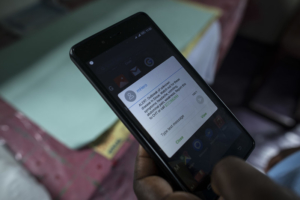
A recently developed mobile application, called mHERO, has become one of the latest mobile applications to demonstrate the powerful and wide-reaching role that technology plays in health-sector communication. Created in 2014 by IntraHelath International and UNICEF, mHERO is a mobile-based application used by healthcare workers and ministries of health in order to communicate and coordinate effectively and efficiently. The application was developed during the 2014 Liberian Ebola outbreak after recognizing the need for a way to communicate urgent messages to frontline healthcare workers, to collect data concerning outbreaks development, and to provide support and training.
Messages sent through the application are transmitted through basic text or SMS. The app is compatible with most cellular devices. By merging existing health information systems, such as Integrated Human Resources Information System (iHRIS) and Fast Healthcare Interoperability Resources (FHIR), with popular communication platforms, such as RapidPro, Facebook Messenger and WhatsApp, mHERO acts as a cost-efficient, accessible and sustainable resource for many healthcare systems.
Implementation in Liberia 2014
The 2014 West African Ebola outbreak overwhelmed the Liberian healthcare sector. The absence of effective communication channels blocked the supply of vital information from health officials to health workers. UNICEF and IntraHealth International created mHERO to address the communication challenge. The application was initially designed to suit the needs of the Liberian healthcare system, utilizing the technology that was already available in the country. It then became the responsibility of the ministry of health to effectively manage and maintain the application’s implementation and its continued use.
Liberia utilized mHERO to validate healthcare facility data, to update health workers and to track which facilities need additional resources. Today, health officials use mHero to coordinate the country’s response to COVID-19. mHERO has become an integral part of the Liberian healthcare system, maintaining a vital role in health-sector communication.
Development and Reach
Guinea, Mali and Sierra Leone followed Liberia’s lead with the mHero integration process. The implementation guidelines and intent of use in these countries have generally remained the same as Liberia’s. Mali, however, has implemented the application with a need to train and develop the skills of healthcare workers.
Uganda, as of 2020, has also incorporated mHERO into its healthcare system with the intent of reducing the spread of COVID-19. The application has allowed for easier COVID-19-related communication between ministries of health, health officials and healthcare workers.
Uganda employes a developed form of the application with an extension called FamilyConnect. The extension sends “targeted lifecycle messages via SMS to pregnant mothers, new mothers, heads of household and caregivers about what they need to do to keep babies and mothers safe in the critical first 1,000 days of life” as long as they have been registered with the Ministry of Health’s Reproductive, Maternal, Newborn, Child and Adolescent Health (RMNCAH). Mothers can register themselves or can choose to have registration done by a community health worker.
Future Plans
UNICEF and IntraHealth International want to expand access to mHERO. Counties in East and West Africa have indicated an interest in implementing the application. UNICEF and IntraHealth International intend to continue to support the ministries of health and healthcare systems in which mHERO has already been implemented. They also hope to find new ways to encourage ministries of health “to understand the interoperability of the technology, the processes for implementation and best practices to using mHero data.”
Overall, mHERO has substantially improved health-sector communication within several countries, proving the application’s potential for revolutionizing health-sector communication throughout the world. Developments can be made to expand the application’s capabilities and reach, as proven in Uganda. The application is a sustainable and cost-efficient resource for healthcare systems and helps reduce the chances of premature death along with the spread of diseases and misinformation. It provides crucial support to healthcare workers, especially during times of epidemics, increasing the overall quality of healthcare and life.
– Stacy Moses
Photo: Flickr
