• Link to X
  • Link to Facebook
  • Link to Instagram
  • Link to TikTok
  • Link to Youtube
  • About
    • About Us
      • President
      • Board of Directors
      • Board of Advisors
      • Financials
      • Our Methodology
      • Success Tracker
      • Contact
  • Act Now
    • 30 Ways to Help
      • Email Congress
      • Call Congress
      • Volunteer
      • Courses & Certificates
      • Be a Donor
    • Internships
      • In-Office Internships
      • Remote Internships
    • Legislation
      • Politics 101
  • The Blog
  • The Podcast
  • Magazine
  • Donate
  • Click to open the search input field Click to open the search input field Search
  • Menu Menu
Blog - Latest News
Global Poverty

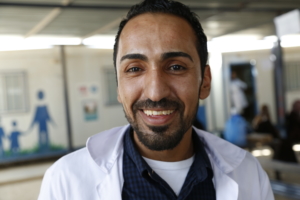
Improvements in Healthcare in Syria
Improvements in Healthcare in Syria
The Syrian Arab Republic (more commonly known as Syria) is a Middle Eastern country fraught with danger and grief. It has claimed the news headlines for the past decade. Its violent civil war has led to a shattered government with little to no control over its infrastructure and a diminished ability to provide services to its 17.5 million citizens. Proper healthcare in Syria, especially care focused on women and children, has been a service that suffered. UNICEF is a leading organization that is spearheading efforts in Syria to improve healthcare for women and children. These efforts have led to significant improvements in the health and well-being of both women and their children as years have passed.

Improvement in Numbers and Data

One of the easiest ways to identify the improvements in healthcare in Syria lies within the raw data. The life expectancy of Syrian citizens is one major indicator of healthcare improvements. In addition, life expectancy at birth is steadily increasing in Syria. It reached 71.8 years in 2018 after several years of declining numbers after 2006. This indicates a slow but steady return to its peak in 2005 when life expectancy was 74.43 years of age.  This new incline could be due to a variety of factors. However, healthcare is definitely an important piece of the puzzle in improving life expectancy in a nation’s population.

Both infant deaths and neonatal deaths are steeply declining in Syria. Infant deaths have nearly halved since 2000, with numbers of deaths falling from 10,099 to 5,994 in 2018. Moreover, neonatal deaths have lowered from a peak of 8,804 in 1982 to an all-time low of 3,740 in 2018. These two statistics indicate that even at the earliest stages of life when people are the most vulnerable, healthcare in the Syrian Arab Republic is positively progressing in protecting the fitness of its citizens.

Improvements in Female and Child Care

Both women’s and children’s healthcare have seen an uptick in quality in the past few years. UNICEF supported primary healthcare in Syria for more than 2.2 million women and children despite the country’s crisis and war. For instance, the opening of 61 clinics targeted at displaced or deprived communities allowed for 56,000 vulnerable people (20,000 of whom were children) to receive vaccinations and newborn care. Additionally, UNICEF has provided guidance to hundreds of thousands of people, among them 600,000 caregivers, on proper dietary balance and diversity. This effort led to 1.8 million women and children receiving screening for malnourishment. Among those, 11,500 children were able to receive life-saving treatments for malnutrition. With this new training and healthcare infrastructure beginning to take root in hard to reach places within Syria. Women and children will hopefully have an even better standard of life to look forward to.

The data and efforts to date have significantly impacted Syria’s healthcare system. However, it is important to note that all of this progress is occurring despite a lack of assistance from large funding sources. Therefore, it is imperative that Syria receives enough support via other means to ensure that this progress can continue without experiencing delay or derailment. This is a nation in trouble. However, with aid and care from people and organizations like UNICEF, healthcare in Syria could finally know relief.

– Domenic Scalora
Photo: Flickr
July 29, 2020
Share this entry
  • Share on Facebook
  • Share on X
  • Share on WhatsApp
  • Share on Pinterest
  • Share on LinkedIn
  • Share on Tumblr
  • Share on Vk
  • Share on Reddit
  • Share by Mail
https://borgenproject.org/wp-content/uploads/borgen-project-logo.svg 0 0 Kim Thelwell https://borgenproject.org/wp-content/uploads/borgen-project-logo.svg Kim Thelwell2020-07-29 14:38:312024-05-29 23:18:49Improvements in Healthcare in Syria

Get Smarter

  • Global Poverty 101
  • Global Poverty… The Good News
  • Global Poverty & U.S. Jobs
  • Global Poverty and National Security
  • Innovative Solutions to Poverty
  • Global Poverty & Aid FAQ’s
Search Search

Take Action

  • Call Congress
  • Email Congress
  • Donate
  • 30 Ways to Help
  • Volunteer Ops
  • Internships
  • Courses & Certificates
  • The Podcast
Borgen Project

“The Borgen Project is an incredible nonprofit organization that is addressing poverty and hunger and working towards ending them.”

-The Huffington Post

Inside The Borgen Project

  • Contact
  • About
  • Financials
  • President
  • Board of Directors
  • Board of Advisors

International Links

  • UK Email Parliament
  • UK Donate
  • Canada Email Parliament

Get Smarter

  • Global Poverty 101
  • Global Poverty… The Good News
  • Global Poverty & U.S. Jobs
  • Global Poverty and National Security
  • Innovative Solutions to Poverty
  • Global Poverty & Aid FAQ’s

Ways to Help

  • Call Congress
  • Email Congress
  • Donate
  • 30 Ways to Help
  • Volunteer Ops
  • Internships
  • Courses & Certificates
  • The Podcast
Link to: Illicit Trade in Kenya: 5 Things to Know Link to: Illicit Trade in Kenya: 5 Things to Know Illicit Trade in Kenya: 5 Things to Know Link to: 5 Challenges to Mental Health in Africa Link to: 5 Challenges to Mental Health in Africa 5 Challenges to Mental Health in Africa
Scroll to top Scroll to top Scroll to top