5 Facts About Hunger in Peru
Peru is considered an upper middle-income country and is located in South America. It has a population of around 31 million people. Furthermore, Peru is ranked number 82 on the Human Development Index, meaning that it falls under the “high human development” category. Based on these positive remarks about Peru, most would assume that this country does not face any negative issues. However, when considering one of the most detrimental global issues, what does this information reveal about hunger in Peru?
5 Facts About Hunger in Peru
- Peru has a Global Hunger Index (GHI) of 8.8. The GHI measures countries on four indicators: undernourishment, child wasting, child stunting and child mortality. A score of 8.8 means that Peru has a relatively low level of hunger. In fact, all four indicators have decreased from 2000-2019. This is because the proportion of undernourished in the population fell from 21.8% in 2000 to 9.7% in 2019.
- The GHI for Peru depicts a steady decrease in food insecurity and hunger for the nation. One of the main explanations for this reduction is Peru’s economic growth, especially in the mining and export sectors. As a result, Peru has seen more social and economic investment that have driven down high levels of hunger and poverty. The World Food Programme was originally providing direct aid and food supply to Peru since 1968. It has currently shifted its involvement to investment in local resources and communities in order to maintain Peru’s economic stability.
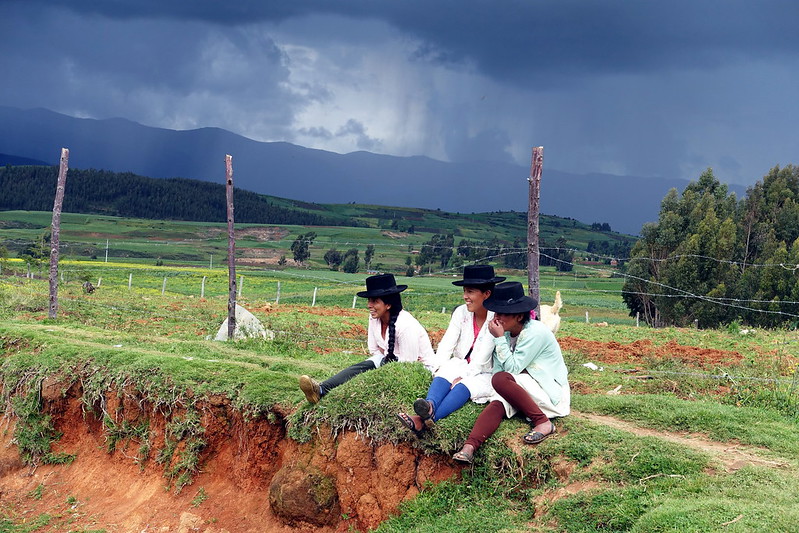
- However, despite Peru’s economic growth over the years, the country still retains a high level of income inequality and food insecurity. These high levels mostly occurs in rural areas throughout the country. For example, remote, rural areas that rely heavily on agricultural work are incredibly vulnerable to malnutrition and high mortality rates. The Food Security Portal divulges that 38% of people living in these remote areas do receive a proper caloric intake; 18% consists of children who experience chronic undernutrition. Certain parts of Peru may see a decrease in food insecurity. However, this way of life is not the reality for the entire country.
- Similarly, many of the rural regions are also plagued by extreme poverty, heightening the hunger problem even more. Specifically, 73% of this rural population does not have access to a clean water source. Additionally, 53% of the population works in the agricultural sector, limiting its ability to build up credit and obtain comprehensive job training. As a result, these citizens have a much harder time receiving consistent, well-paying jobs outside of agriculture. This can affect hunger in Peru for many reasons. These conditions create obstacles for families who need adequate income to buy food while prioritizing shelter, clothing, medical bills, education and more.
- When hit with COVID-19, Peru needed to ensure that its citizens were not only quarantining but were quarantining with a healthy lifestyle. Thus, the World Food Programme worked with local communities to improve communal kitchens and grocery stores as food kits for families in need are produced and distributed. Additionally, many chefs and other distinguished members of society created a large social media campaign. Doing this teaches people how to cook healthy meals while being in quarantine.
While hunger in Peru has been steadily declining over the years, the pervasive inequalities between rural and urban areas cannot be ignored. Food insecurity for rural areas largely stems from these intense income inequalities. If these gaps are not remedied, then hunger in Peru may become a bigger issue than before.
– Sophia McWilliams
Photo: Flickr
