Top 10 Facts about Living Conditions in Macedonia
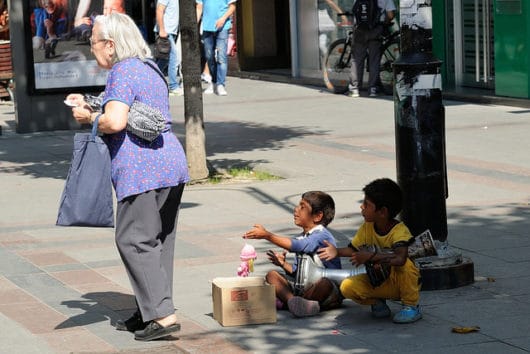
Macedonia is a small country, only slightly larger than the state of Vermont, located in Southeastern Europe, Balkan to be precise. Often overlooked by major world powers, Macedonia has a population of only 2.07 million but boats a rich and ancient history, similar to that of Greece. In the text below, the top 10 facts about living conditions in Macedonia are presented.
Top 10 Facts about Living Conditions in Macedonia
- Macedonia’s population includes a large minority of Romani people, also known as Roma or Gypsies. The Roma often face discrimination and underrepresentation and are often unable to get public sector positions. In 1994, the Macedonian government included the Roma language in its census, and in 1996, four primary schools included the Roma language in their curriculum. Roma representation in government improved by 0.1 percent to 0.6 percent from 2000 to 2010. After a demonstration on the streets of Skopje, the country’s capital, there are now more than 500 Roma students in universities and 50-60 young adults with a college degree.
- Almost 15 percent of Macedonia’s population, mostly Roman, lives without legal homes, which means that they do not have access to basic services, such as water or electricity, or even an official ID. Without an ID, these people cannot get insurance, social protection or immunization. Local organizations such as Roma SOS partner with nonprofit organizations, such as Habitat for Humanity, to help people get micro-loans and understand the legalization process.
- Since Macedonia gained its independence in 1991, there has been a debate with Greece over the use of the name Macedonia. In January 2019, the Macedonian parliament has approved the name change to North Macedonia and are awaiting the vote of the Greek parliament to make the name official. This name change will bring the country closer to membership in the North Atlantic Treaty Organization (NATO). As a member of NATO, Macedonia would have assured security and further resources to improve the lives of their citizens.
- Five percent of Macedonian children are not attending primary school and 32 percent are not attending secondary school. Poverty often affects children’s school attendance. Thirteen percent of children in the poorest quintile do not attend primary school, compared to almost no such cases in the richest quintile. The gap increases for secondary school as 64 percent of children in the poorest quintile do not attend them, compared to only 7 percent of children in the richest quintile. However, the completion rate for primary school is high, at 74 percent, with a 98 percent transition rate to lower secondary school.
- In 1996, Macedonia introduced Continuous Medical Education (CME) that creates health care guidelines and equips facilities. Currently, every citizen has access to primary care through the state. However, those living illegally would not have a state issued ID, thus no state health care. The state health care system that takes taxes from all people working and living in Macedonia, provides free preventive, diagnostic and curative medical services. This includes hospitalization and consultation with specialists and doctors. The private health care system is often too expensive for the average citizen, though it can provide better or quicker treatment and more medical options.
- The leading causes of death in Macedonia are circulatory diseases, that made up 57 percent of all deaths in 2004, malignant neoplasm, injuries/poisoning, respiratory diseases and diseases of the endocrine system. Macedonia’s average total life expectancy is five years less than that of countries in the EU and Macedonia’s healthy life expectancy is almost eight years behind that of Greece. These differences stem from a higher rate of cardiovascular diseases caused by high tobacco use, and uncontrolled hypertension and hypercholesterolemia.
- Unemployment in Macedonia is at its all-time lowest, dropping from 21.1 percent in June 2018 to 20.8 percent at the end of 2018. In comparison, unemployment in Greece was at 20.20 percent in April 2018. The average monthly wage for a Macedonian worker is $667.55. While Macedonia lags behind many of the U.N. countries, the country has improved in this field since the lowest monthly wage recorded was $370.96.
- In 2015, 21.5 percent of Macedonian citizens were living below the poverty line which put Macedonia in 80th place in a ranking of 139 countries. Families with five or more members, or almost 48.5 percent of Macedonians, are most affected by poverty. However, Macedonia has made progress with its market economy, and as the unemployment rate lowered, it pulled the poverty level from around 31 percent in 2011 to its current rate.
- Food and water supply in Macedonia is relatively good, as only 4 percent of the population struggles with undernourishment and 83 percent of the drinking water supply is considered safely managed. Agriculture accounts for 13 percent of the GDP in Macedonia. The government owns most of the pastures and farmland, manages and improves them through the Law on Pastures that regulates carrying capacity, drinking pools, construction of shelters, clearing of vegetation and more.
- In 2011, 1.8 percent of children were under the proper weight for their height, while 4.9 percent of children were under the proper height for their age and 12.4 percent of children were overweight. The Global Nutrition Report states that Macedonia experiences two main forms of malnutrition- overweight and anemia. About 23 percent of women suffer from anemia, which is a deficiency of red blood cells in the body. Though these issues exist, Macedonia has made progress to lower the overall undernourishment from 8 percent of the population to 4 percent.
These top 10 facts about living conditions in Macedonia show that while the country faces many struggles with ethnic relations and political issues, it has also made significant progress within the last decade with improvements to health care and the economy. Macedonia has resolved its long-lasting name dispute with Greece and it is on the right track of joining NATO and EU, which will benefit all citizens of the nation.
– Natalie Dell
Photo: Flickr
