Top 10 Facts About Girls’ Education in Nepal
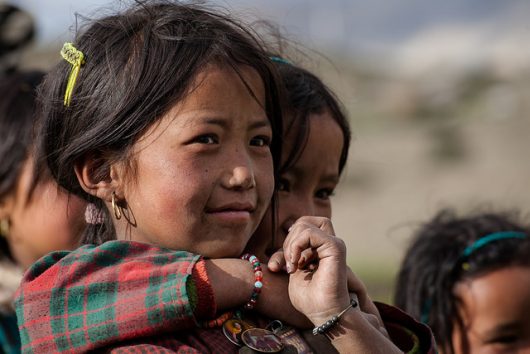
Nepal is one of nine Asian countries carrying the status of “least developed.” Any instability the country faced was intensified by the 2015 earthquake that killed over 6,000 people. One of the sectors tied to country’s much-needed development is, of course, education. To get a sense of the status of the education system in the country, in the text below the top 10 facts about girls’ education in Nepal are presented.
Top 10 Facts about Girls’ Education in Nepal
- In 2015, 48.05 percent of women older than 15 did not have any form of education. Of the total population aged 15 and older, 36.15 percent did not have any education. This rate increases with age as 91.61 percent of women in the age group from 60 to 64 did not have any form of education.
- Gender-separate bathrooms are only available in one-third of schools in Nepal. This deters some from attending school over concerns of modesty or, sometimes, inability to follow religious guidelines that require separation of toilets.
- A project conducted in recent years found that 72 percent of students in Nepal saw their peers involved in gender-related violent situations though only 55 percent took action against it. Thus, schools cannot be considered a safe space for female students.
- Forty-one percent of Nepali women between ages 20 and 24 are married before the age of 18. Child marriage is most prevalent among less educated, poor women. Improving female education may improve the childhood marriage rate.
- The practice of chhaupadi often prevents women from attending school. Chhaupadi involves the banishing of girls who are menstruating to sheds where they are forced to suffer alone and risk catching illnesses. This dangerous practice, which was legally banned in 2005, still persists.
- Only about 11.8 percent of Dalit (lowest caste in Nepal) women are in secondary school. This indicates that education is both an issue of gender and class division.
- In Nepal, 44 percent of primary school teachers are female. This is the most encouraging fact about girls’ education in the country since this suggests that there is something near gender equality in teaching professions. This fact may be encouraging to young school girls.
- Only about 25 percent of women in Nepal enroll in higher education and their presence is particularly weak in technical and vocational education programs. Instead, there are large numbers of women in, for example, health-related professions such as nursing. In other words, professions are somewhat gender-segregated in the country.
- Though the quality of education in Nepal is not high, school enrollment rates are increasing across genders. Since 1990, the primary school enrollment rate has increased from 64 to 96 percent. Nepal is working to improve its education system by providing wider access to education.
- The Government of Nepal has developed the School Sector Development Plan (SSDP) that will last from 2016 to 2023. This plan is part of the country’s goal of graduating from the status of a least developed country by the year 2022. The plan will look to instigate growth in the Nepali education program and ensure quality education for all citizens.
In recent years, Nepal has faced great hardship. After the 2015 earthquake, the country faced the unwieldy challenge of rebuilding much of its infrastructure, including education facilities. Organizations like USAID supported this effort by helping the government establish temporary learning centers across the country.
Though Nepal faces great challenges, many are encouraged by some of the country’s efforts toward bettering its education system and promoting gender equity.
These 10 facts about girls’ education in Nepal suggest that though the country has a long way to go before being considered as well-developed, progress is being made in the education sector.
– Julia Bloechl
Photo: Flickr
