Girls’ Education in Bulgaria Requires Much Improvement
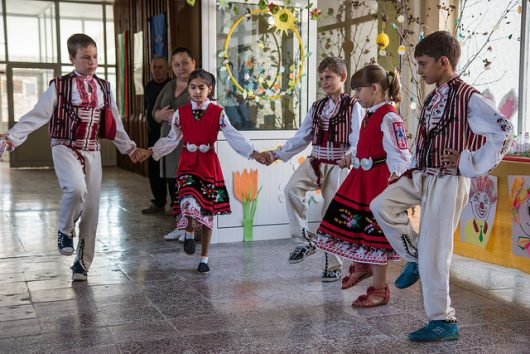
The Republic of Bulgaria is an upper-middle-income southeastern European country on the Black Sea. In 1946, Bulgaria became a People’s Republic, with Communist domination remaining until 1990. Its population of almost 6.8 million is evenly disbursed across the country, with larger populations in the urban areas (76.7%).
Education System
Between ages 7 and 16, education in Bulgaria is compulsory and is free in state-owned and municipal schools. Primary education comprises four years, followed by four years of middle, or junior high school, education. There are two options for subsequent secondary education: comprehensive high school or vocational school. Specialized high schools, colleges and universities offer higher education.
Education Outcomes by Gender
- Secondary School Completion Rates. The lower secondary school completion rate (through middle school) is virtually the same for girls (95.2%) and boys (96.8%). Adult literacy is very high in Bulgaria and is virtually identical for women and men: 98.2%, females and 98.7%, males.
- Tertiary Education and Job Outcome. There is a gender difference in the higher education attainment rate, with women completing at a significantly higher rate (43% for women as compared to 29% for men). This gap is similar to the average for women in OECD countries. The gap is reversed, however, when looking at the employment of women as compared to men. The employment rate for those with a tertiary qualification is almost the same for men (92%) and women (88%). But men with less than an upper secondary education (i.e., high school) are employed at twice the rate (63%) of women (31%). There is also a wage differential between women and men. Young women who have completed higher education earn 78% of the wage of their male peers.
Impact of Gender Quotas
Dating back to the 1960s, Bulgaria has aimed for 50/50 gender quotas in its school system, aiming for classroom gender balance. Initially, the intention was to increase the number of girls entering STEM fields (science, technology, engineering and math), which are typically dominated by men. Critics have recently suggested, however, that the quota system is restricting the entrance of qualified girls into top high schools. It is alleged that admissions officers may feel pressured to admit boys, even those with lower scores than girls, to balance gender representation. This, even though girls make up 56% of the student population.
One subsequent result of the quota system may be that women are forced into female-dominated careers (e.g., health care, teaching, sales) with typically lower salaries than male-dominated sectors such as IT and engineering. Still, women hold 29% of IT positions in Bulgaria, the highest male-to-female ratio in Europe. One conclusion is that “while quotas can help with educational access, they may not be enough to address broader social inequities.”
Education and Roma Girls
Referred to disparagingly as Gypsies, Roma are the often persecuted, largest ethnic minority in Eastern Europe. The Bulgarian Roma population is reported to be 4.1%, but since official statistics often underestimate their count, the population may be as high as 9-11%.
Systemic barriers to Roma education in Bulgaria include economic challenges (63.2% of the Roma were below the poverty line in 2022), discrimination, high mobility (which disrupts continuity of schooling) and infrastructure deficits, especially the lack of secondary schools in some rural areas. Because of early marriage and traditional gender roles, Romani girls are a further marginalized group, and nearly 70% of them are not engaged in education, employment or training. An additional barrier for rural girls is cultural; their families’ fears of “behavioral issues” when girls are no longer under family supervision.
In June 2025, the Global Forum of Communities Discriminated on Work and Descent (GFoD) published The Case of Roma Women in Bulgaria. The GFoD report noted education as one of five key areas of systemic exclusion of Roma women. This exclusion is related to high dropout rates, early marriage pressures and segregation, although there are differences by region. In the Montana region, for example, families prioritize girls’ education with results comparable to the national average. In Sliven, on the other hand, early marriage is practiced along with high dropout rates. The report concludes, “To enhance Romani girls’ access to education, it is vital to address both structural inequalities and community-specific social norms. . . . In so doing, Romani girls will be better positioned to pursue their education and fully realise their potential.”
GFoD suggests addressing the root causes of low school attendance with supportive interventions, rather than punitive measures/sanctions against families for noncompliance, noting the need for localized, tailored community-based interventions. Also referenced is the National Development Program Bulgaria 2030, which includes an implementation plan with specific measures for inclusive education.
Continuing Challenges for Girls’ Education
Two continuing challenges in Bulgaria’s education of girls remain. One is the need to review the impact of the gender quota system to determine whether there may be a more effective and equitable way to achieve the system’s original goal. The second is to address the inequities inherent in the education process for Roma girls.
– Staff Reports
Photo: Flickr
