Understanding How the Media Misrepresents Guyana
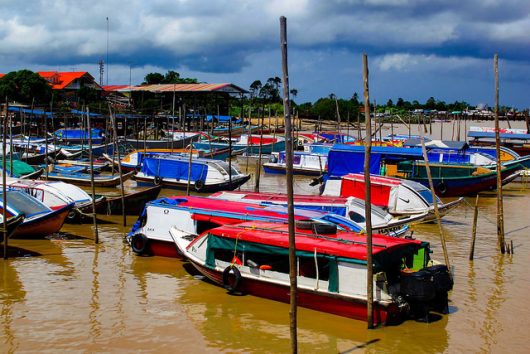
Guyana is a country abundant in coconut trees, sapodilla and spices. It is unique in its distance from the norms of the Caribbean and in not being racially unified. It also has one of the highest emigration rates in the world, partially due to high rates of poverty. Despite these downsides, the county has developed a strong sense of Indian and African cultures.
How the Media Misrepresents Guyana as Non-Caribbean
While Guyana is located at the tip of South America, the nation does not participate in Caribbean culture. One way the media misrepresents Guyana is that many Caribbean countries speak languages such as French and some form of Creole in addition to English, while Guyana citizens only speak English which is possibly why it is seen as an outcast.
In fact, Guyana is the only country in South America whose official language in English. This is due to Guyana being one of the only countries in the Caribbean that was under the rule of the British Empire. This also explains the demographics of the country: an almost even divide between Indians and Africans, stemming from the arrival of African slaves and Indian indentured servants. This means that the culture of a typical Guyanese may not specifically match that of someone from a country such as Barbados or Grenada.
However, many of the concepts of daily life in Guyana are not foreign to the Caribbean. For instance, some of the most popular genres of music listened to are calypso, chutney and soca. Among these genres are artists such as Machel Montano, Sparrow and Ravi B. Once again, although there are differences between the prominent cultures of Guyana and the rest of the Caribbean, these rhythms offer a sense of connection and community among them.
Another aspect of life connecting Guyana to the Caribbean that is overlooked is food. Famous dishes that are part of everyday life include saltfish, curry, plantains and callaloo. The main reason why the media misrepresents Guyana is because, depending on the town, village and country, foods go by different names. For example, while Guyana knows an oft-used root as cassava, the Dominican Republic knows it as yucca. The same dishes are identified differently in separate areas of the Caribbean, causing the dishes to be seen as distinguished.
How the Media Portrays the Guyanese
On the other hand, another way the media misrepresents Guyana is by claiming the population is racially homogenous and unified. What the public fails to see is that the country is almost equally divided between Indo-Guyanese and Afro-Guyanese, but is also home to many other minorities such as Amerindians and Chinese. Approximately 40 percent of Guyana’s population is of East Indian descent, 30 percent is of African descent, 20 percent is mixed and 10 percent is Amerindian.
While there are political and social tensions between the groups over issues such as land, culture and governmental rule, what this array of cultures illustrates is that the country is able to combine all of them to create one unique nationality: Guyanese. This can also be related to why Guyana is commonly not seen as part of the Caribbean.
Additionally, this allows for the country to have multiple backgrounds, making its history rich and complex. For instance, when African slaves were forcibly brought to Guyana and refused to work, those of East Indian descent were brought from India as indentured servants. Meanwhile, Amerindians share the bloodline of the indigenous people of Guyana.
How the Media Fails to Show Guyana’s Progress
Keeping in mind the several groups that reside in Guyana, it must be noted that the country has one of the highest emigration rates in world at 55 percent. What this means is that 55 percent of Guyanese citizens live abroad in countries such as the United States and the United Kingdom. Currently, approximately two-thirds of Guyana’s population lives in poverty. This is due to the fact that many people citizens live in rural areas and must work as agricultural laborers, which does not provide sufficient profit because the country’s productivity is so low.
Again, despite this negative aspect, the media misrepresents Guyana by failing to report the positive efforts of the World Bank and the United Nations, clouding the country’s progression. In fact, currently, the World Bank is working to allocate funds toward the improvement of infrastructure, quality of health, education and water services in Guyana. Additionally, while the demographics of the indigenous groups of Guyana may be low, the U.N. is working to improve their financial means and stability, aiming to better their overall quality of life.
While Guyana is struggling in some areas, the country has developed strong individual cultures while also building a national identity. Furthermore, while there are high rates of poverty throughout Guyana, the country is taking steps toward improving the quality of life for citizens. Overall, Guyana’s strong sense of culture shows persistence, resilience and community.
– Jessica Ramtahal
Photo: Flickr
