10 Facts About Third World Countries or Developing Nations
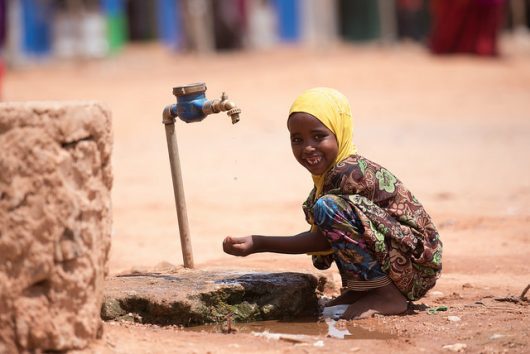
Third world countries all over the world are struggling to have their voices heard due to widespread negative perceptions and stereotypes. Many areas of the globe lack all the facts about third world countries, both knowing where such nations are located as well as efforts from within to push forward. Here are 10 facts about third world countries that will help give a better look at these developing nations.
10 Facts About Third World Countries
- The term “third world countries” was first used during the Cold War. This term was used to specify the countries that didn’t side with NATO/capitalism or at the time the Soviet Union/communism. Since the Soviet Union no longer exists, the term “third world countries” has become more open to interpretation in today’s society. The new generic meaning for third world countries are poor and underdeveloped nations. Such descriptors can refer to poor education, infrastructure, improper sanitation and/or poor access to healthcare.
- Third world countries can be categorized in different sections. Third world countries can be measured up in five different sections — political rights and civil liberties, gross national income, human development, poverty and press freedom. It is likely to see the same countries in each of these sections. For example, Somalia is listed under political and civil liberties, gross national income, poverty and press freedom.
- The term “third world” is becoming more and more out of date. Since the dissolution of the Soviet Union, the interpretation of “third world countries” has become more open. With this phrase being so open it is easier to see the holes within. In an article by NPR, Marc Silver asked, “Who is to say which part of the world is “first?” And how can an affluent country like Saudi Arabia, neither Western nor communist, be part of the Third World?” To replace the term, “third world countries,” others are using phrases such as “developing world,” “developing countries” or “majority world.” There still isn’t a global consensus on which term to use.
- There are 166 developing countries. According to the International Congress of Qualitative Inquiry, there were approximately 166 developing countries; of these 166 developing countries, 52 are African countries; currently, Africa has a total of 54 countries.
- Water pollution is a growing concern in developing countries. More people die every year from unsafe water than from any form of violence. On January 10, 2018, the head of United Nations Environment and the Director General of the World Health Organization signed an agreement to improve joint actions to tackle pollution concerns around the world. Along with this agreement, the organizations also seek to improve coordination of waste and chemicals management, water quality, and food and nutrition issues.
- Health and nutrition resources are minimal. When determining whether a country is “developing,” there are three criteria to take into account. These three criteria are low-income, human resources and economic vulnerability. At least half of the world’s population lacks access to essential health services. Along with poor access to health services WHO reported that two billion people lack key micronutrients in their diet and 88 percent of countries suffer from either two to three forms of malnutrition.
- Eighty percent of the world lives on $10 or less a day. Nearly two-thirds of the global workforce is listed under an ‘informal’ economy. Informal work means that these employees don’t have proper social protection, rights at work and adequate working conditions. In fact, the United Nations reports that “93 percent of the world’s informal employment is in emerging and developing countries.” Of this number, men, covering 63 percent, are most likely to obtain informal employment. The United Nations concluded that those living in rural areas are twice as likely to be informally employed than those in urban areas.
- There exists a higher percentage of violence against women. One in three women will globally experience physical or sexual violence by a partner or non-partner. This is true in any country, but the World Health Organization reported that those in developing countries are still more likely to experience this violence. It is reported that 36.6 percent of women in the Africa region and 37.7 percent of women in the South/East Asia region are most likely to undergo physical or sexual violence.
- Three hundred eighty-seven million children worldwide live in poverty. Of all the children in the world, 19.5 percent live in extreme poverty while the child mortality rate has improved in recent years. In 1990, there were 93 deaths per every 1,000 live births. In 2016, this amount dropped to 41 deaths per every 1,000 live births. According to UNICEF’s most recent report, about 15,000 children under five still die every day.
- Seventy-nine percent of people in third world countries live without electricity. It is seen that there is more harm than good for most who are living without electricity. Those who live without electricity are producing indoor air pollution through burning fires. This causes up to 3.5 million deaths per year.
Whether it is called “third world” or “developing,” countries all over the world are pushing to grow and move forward. Without proper funding and education, it becomes increasingly difficult to improve as stated in these 10 facts about third world countries. Visit Act Now on The Borgen Project website to find 30 ways to help those trying to overcome obstacles succeed.
– Victoria Fowler
Photo: Flickr
