Power of Technology: The Waves of Renewable Energy in Ghana
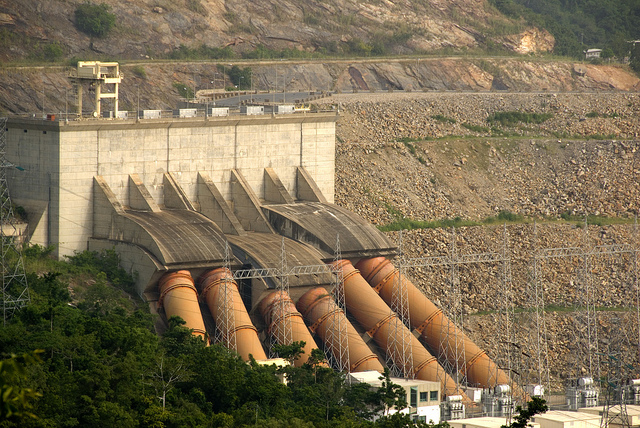
As technological advances increase and non-renewable sources depreciate, more countries have started investing in less conventional forms of renewable energy — including the extraction of wave energy. This is the case for an Israeli-based company, Yam Pro Energy (YPE), that works to increase the amount of renewable energy in Ghana.
There is a large range of wave energy technologies that each rely on different mechanisms to harness energy; three of the methods are as follows:
- Oscillating Water Column
- Oscillating Bodies
- Overtopping
Oscillating Water Columns use a horizontal front-to-back motion that extracts energy using a roll rotation, while the Oscillating Bodies use a side-to-side motion to extract wave energy using a pitch rotation. The last technology is overtopping, the mechanism used by YPE, that uses a vertical up-and-down motion to harness the energy.
Advantages
The main advantages of these systems are its simplicity, reliability and power, which make each option a promising investment. While Europe is still the main lead market for wave technology, other countries have followed the trend; for instance, Ghana works with Yam Pro Energy to bring hydropower plants to its shorelines.
Yam Pro Energy is a long-time supporter of wave energy and works to provide millions of people with clean, efficient energy and eliminate global dependency on fossil fuels. YPE accomplishes such actions with the erection of their wave-energy-harnessing plants, also known as Sea Wave power plants.
YPE recently created a prototype that harnesses the energy from crashing waves and uses it to produce renewable energy that does not harm the ecosystem; the plant is set to be built on the coastline of Ghana’s capital city, Accra.
Efficiency
This prototype is more efficient than other devices, such as buoys that can easily be destroyed and can sink in rough seas, and are easily accessible. This means that maintenance issues can easily be addressed without sending out scuba divers or boats. These machines do not emit pollution or harm wildlife, and can easily withstand the harsh environment of the sea, making them a valuable investment.
Zeev Peretz, Yam Pro Energy’s CEO, says that wave technology, specifically when using YPE’s Sea Wave plants, is more efficient as it creates up to 65 percent of energy per year compared to other sources that create between 22 and 24 percent.
According to The Solutions Project and Standford University, the top sources of renewable energy in Ghana are as follows:
- Commercial and government rooftop solar, which accounts for 23.7 percent
- Residential rooftop solar, which accounts for 19.9 percent
- Onshore wind turbines, which account for 17.8 percent
- Offshore wind turbines, which account for 14.8 percent
- Concentrating solar power plants, which account for 11 percent
- Hydropower energy, which accounts for 8.4 percent
Of note, Mark Jacobson from The Solutions Project explained that wave technology is the least utilized source of renewable energy in Ghana. By 2050, it is projected that hydropower will contribute to almost 15 percent of Ghana’s renewable energy, as water energy is meant to complement other renewable energy sources rather than be a source of its own.
With its optimistic future of endless possibilities and success, it is only a matter of time before hydropower acts as a major pillar of renewable energy for Ghana.
– Chylene Babb
Photo: Flickr
