Incremental Progress: Women’s Empowerment in Pakistan
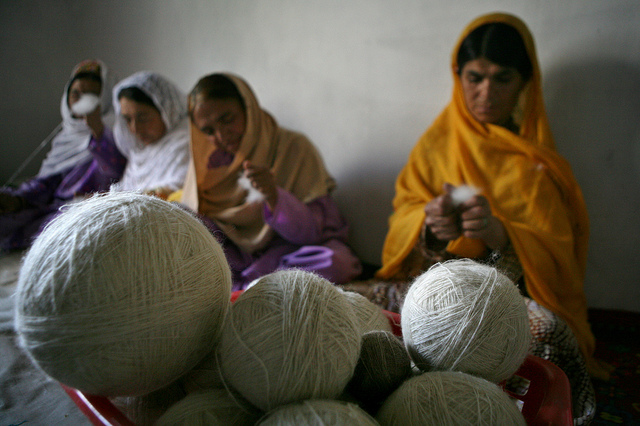 2016 was an important year for women’s empowerment in Pakistan. The Punjab Protection of Women Against Violence Act was enacted with the help of the United Nations. It is the first legislation in the history of Pakistan to provide women with protection against crimes like stalking, domestic violence, emotional and economic abuse and even cybercrimes.
In addition, Balochistan’s Protection Against Harassment of Women at the Workplace Act 2016 was also passed. The province of Sindh adopted a Home-Based Workers’ Policy to ensure fair wages, social security and basic rights for the informal workforce that comprises of millions of women.
However, Pakistan’s ranking for gender equality (130th) is still one of the lowest in the world. Only 22.7 percent of women are part of the workforce, and most of them are in the informal sector with low wages and no legal protection. Women who have been to secondary school make up less than a fifth of its female population. Even though women have about a fifth of parliamentary seats, considerable progress is required for women’s empowerment in Pakistan.
Focus Areas:
- Laws and policies have to be aligned to create a conducive environment for women’s rights.
- Strengthening capacity and resources.
- Community-level initiatives to bring about changes in practices and attitudes to promote gender equality and women’s empowerment in Pakistan.
As per the Women’s Economic Participation and Empowerment in Pakistan Status Report of 2016, the three components of participation, resources and agency need to be addressed through political commitment. Pakistan requires an institutional and legal framework such as labor regulations and economic decision making that removes barriers to owning and accessing resources, including inheritance and property.
The Social Action Program was launched to improve basic conditions like primary education, health, sanitation and population welfare. Unfortunately, it has not yielded the desired impact. The health indicators of women in Pakistan are among the worst in the world, with a high female infant mortality rate. 40 percent of women are anemic and the fertility rate is 5.4 per woman. One woman out of 38 dies from pregnancy-related causes.
Several discriminatory laws exist and women have unequal rights to inheritance, termination of marriage, natural guardianship of children and minimum age of marriage. Even polygamy has not been outlawed.
The Hudood law promulgated in 1979 that equated rape with adultery is a black mark on the status of women in Pakistan. This created a situation where women who reported a rape but were unable to prove it are charged with adultery. As per the Law of Evidence 1984, the value of a woman’s testimony is only half as good as a man’s. Women’s empowerment in Pakistan is meaningless in light of the gross violations of their basic human rights.
Last year, the chairman of Council of Islamic Ideology made a proposal that allows Pakistani husbands to “lightly beat” their wives if she disobeys him or refuses to have sex with him. This tells us the real standing of women in the country.
But there is a silver lining here, as this has finally brought about a reaction from the women themselves. Many Pakistani political leaders and journalists came forward and shamed the proposal. The powerful #TryBeatingMeLightly social network campaign has shown that women are ready to fight back against oppression.
To bring about any real change towards women’s empowerment in Pakistan, it is crucial to disassemble the patriarchal values embedded in the societal value system. A low level of resource investment combined with negative social biases that relate a family’s honor to a woman’s sexuality, and more importantly the internalization of patriarchy by women themselves are the obstacles that have to be tackled to bring about gender parity.
– Tripti Sinha
Photo: Flickr
