How to Reduce Poverty in Developing Countries
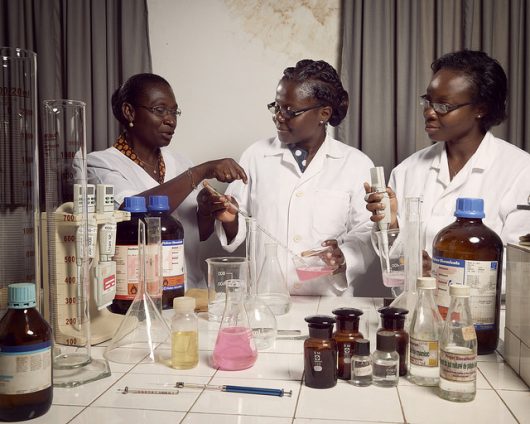
A country’s economic growth, security, development and prosperity depend on the ability of its young population to obtain proficiency in science, technology, engineering and mathematics (STEM) education. Students exposed to STEM education at an early age gain valuable experience in a consistently growing field. The skills they gain can be used to create a more innovative, efficient and productive workforce. Though most developing countries face many obstacles in affording basic education for young children, promoting STEM education can be one of the most effective ways to reduce poverty in developing countries.
As technological advancements become an inseparable part of our lives, STEM education can empower human resources with global competitiveness. UNESCO emphasizes that it is also a building block in creating “a critical mass of scientists, researchers and engineers to enable them to participate fully in the global economy.”
Obstacles in providing STEM education remain. According to the Institute of Engineering and Technology, low-quality teaching and a monotonous curriculum have been identified as two common barriers to students who end up losing interest in STEM education. Afraid of being perceived as “geeks” or “nerds,” students give in to negative stereotypes and fail to see how a STEM education can help propel them towards interesting, lucrative careers and reduce poverty in developing countries.
The perceived difficulty of STEM subjects and the ever-present pressure to obtain high scores scare off students, while a passive approach in transitioning from primary to secondary school discourages more thorough engagement. Furthermore, gender stereotypes create significant challenges for girls in developing countries to maintain an appreciable literary level, much less make strides in the STEM arena.
But there are also positive developments. In 2014, for example, 19 universities in west and central Africa received funding from the World Bank for specialized studies in STEM-related disciplines, as well as in agriculture and health.
Initiatives like Code to Hope seek to improve digital literacy and education by empowering underserved communities with the necessary computer and technical skills. Code to Hope notes that access to technology is directly related to an income increase of $21 per month.
Organizations such as the WorldFund work in Latin America and target poverty by assisting educators in devising teaching methods that can help spark students’ interests in learning STEM-related subjects.
Moreover, open source applications, which depend on the collaborative work of people all over the world, are also enhancing learning in STEM fields for students and helping to reduce poverty in developing countries. Schools utilizing the open source approach not only provide a more robust education for their students, but also help create a more sustainable future by helping people move out of poverty.
The United Nations places a special emphasis on STEM education, noting that it can empower youths and help eliminate the gender gap for young women and girls. The U.N. also notes that growing career opportunities in STEM-related fields present the best antidote to chronic youth unemployment and that STEM skills are “an ideal communication channel that enhances social engagement as well as sharing information and innovative ideas to overcome poverty and to promote peace and prosperity for all.”
By providing the necessary skill development and equal employment opportunities as part of a comprehensive strategy to reduce inequality, STEM education can help reduce poverty in developing countries.
– Mohammed Khalid
Photo: Flickr
