Attaining a Higher Quality of Life: Why Isn’t Aruba Poor?
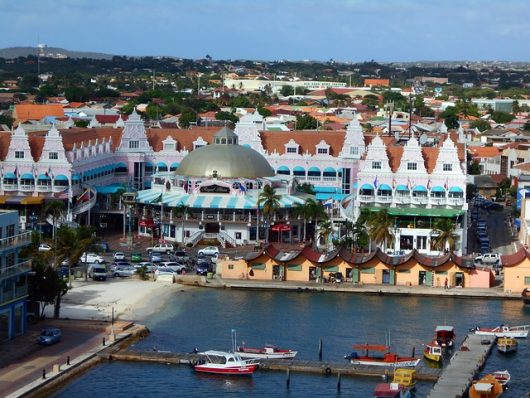 In 1985, a New York times article stated “Unlike most other Caribbean islands, there are few signs of poverty on Curaçao or Aruba.[…] Air-conditioned automobiles are everywhere, and shops are filled with new American and European products.” Today, Aruba continues to enjoy low crime and a high quality of life.
Defying the Odds
In 2010, Aruba’s unemployment rate was reportedly 10.6 percent. In 2011, the GDP per capita was $25,300, and its GDP growth rate was 1.2 percent in 2014. In 2015, its literacy rate was 97.5 percent. These statistics suggest rather positive economic and social structure compared to the rest of the Caribbean.
Knowing that the Caribbean has a history of extreme poverty and high crime rates in countries like the Dominican Republic and Jamaica, the question is worth asking: why isn’t Aruba poor?
Unlike most Caribbean nations, Aruba has little vegetation, arid heat and flat land. For this reason, Aruba’s economy could not rely on the typical cash-crop plantation model in the Caribbean during colonialism.
Countries with an economy heavily reliant on cash-crop plantations tended to experience extreme violence under slavery, and rigid social class systems intensified social inequality.
When numerous colonies became independent nations, many were left with a poor foundational political and economic structure, which perpetuated a pattern of unparalleled violence and poverty. In contrast, Aruba has had an entirely different relationship with the Kingdom of the Netherlands.
The Netherlands
The Netherlands, which acquired the island from Spain in 1636, originally used Aruba as livestock farmland for Curaçao because aloe (being the only viable agricultural export) was not in high demand. However, once gold was discovered on the island and mines opened in 1836, Aruba prospered exceedingly until 1924. Why isn’t Aruba poor? Its unique colonial history defined a new path for the Caribbean nation.
Because its economy greatly depended on gold, the country faced economic doom as the mines depleted. Fortunately, the country’s close proximity to Venezuela, a major oil exporter at the time, prompted plans to open oil refineries. Soon, the Exxon oil refinery served as a new reliable source of profit, which became inextricable with community life for many decades.
Oil and its Impacts
However, when the Exxon company closed its refinery in 1985, Aruba faced an imminent economic crisis with an estimated rise of unemployment from 15 percent to 40 percent. Amidst peaceful protest and public outcry, the country would eventually need to find another industry to sustain its economy.
While dealing with the oil refinery crisis, Aruba also pushed for independence from the Antilles Netherlands due to political and economic power struggles with a neighboring nation, Curaçao (also a member of the Antilles). Previously colonized countries across the Caribbean were either newly independent or becoming independent nations at the time, but with independence came other economic and socio-political hardships.
Path to Independence
After determining that full independence was a national security threat, the country lobbied to remain a constituent country within the Kingdom of the Netherlands instead of becoming fully independent (scheduled for 1996). This arrangement with the Netherlands secured a steady source of financing for developmental aid until 2009. Presently, the Dutch government continues to detail defense and foreign affairs while Aruba maintains complete internal independence.
Despite the benefits of its constituency status, no amount of financial and national support from the Netherlands would save Aruba from financial ruin without a new industry. So, why isn’t Aruba poor today? Aruba leveraged its beautiful beaches and perfect weather to promote tourism, which remains a sustainable primary source of income.
However, tourism isn’t the only industry that fuels Aruba’s economy. Other industries include petroleum, bunkering, hospitality and financial and business services. Aruba also exports agriculture products (mainly aloe, fish and livestock), art, machinery, electrical equipment and transport equipment. Aruba has been able to maintain economic security and peace throughout its history because of a beneficial relationship with the Netherlands and positive adaptability to the world economy.
– Cassandra Mathelier
Photo: Pixabay
