Informal Economies Quelling the Tide of Globalization
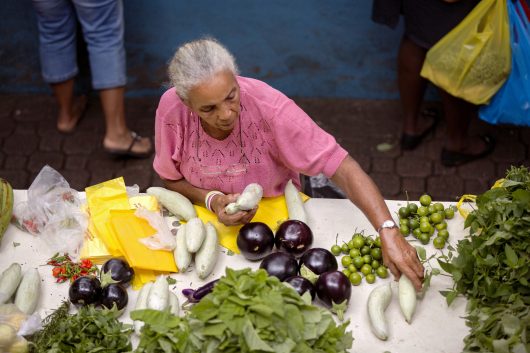 Informal economies are all too often associated with deviance and insecurity, with people making money outside of formal sectors, not paying taxes, increasing poverty and lacking labor and social protection.
However, from the floating markets of Nigeria to the burgeoning markets of India, informal economies, or what Robert Neuwirth calls “system D” economies, are filling the void left by globalization. Secure jobs are becomimg more and more scarce, as multinational corporations control ever more of the production and distribution of goods across the globe. As these practices continue to drive up economic inequality and leave people battling unrelenting poverty, informal economies are quickly reversing the course and offering alternative economic practices that are quelling the tide.
An informal economy, as defined by the International Labor Office (ILO), is “all economic activities by workers or economic units that are — in law or practice — not covered or sufficiently covered by formal arrangements.”
Informal economies are on the rise across the globe, although accurate statistical data is hard to come by. They are estimated to be worth $10 trillion a year.
Terence Jackson reports that the informal economic sector in Africa “represents about three-quarters of non-agricultural employment, and about 72 percent of total employment in sub-Saharan Africa.” In India, informal economies are estimated to generate 90 percent of jobs and half of the national output. In both Africa, Asia and the world at large, many GDPs are heavily reliant on informal economies.
As talk of new and emerging economies fill the airwaves, informal economies offer alternative means to lift local people and communities from the coercive and restricting structures of globalization. Ironically, globalization is credited as having increased the size and importance of informal economies while these very economies stand to threaten the reign of multinational corporations and globalization.
A study by Martha Alter Chen, a lecturer in public policy at the Harvard Kennedy School and international coordinator of Women in Informal Employment Globalizing and Organizing (WIEGO), explores how in today’s economy, formal jobs are not being created in sufficient quantities, and existing jobs are being made informal. “Informal employment is here to stay in the short, medium, and probably long term. It is the main source of employment and income for the majority of the workforce and population in the developing world,” her study states.
Informal economies across the globe are expanding, and increasing numbers of people are dependent on the profits generated. As informal economies seem to be here to stay, it is imperative the world embraces the revolutionary entrepreneurship pouring out of the sector. It holds the potential to not only fill the labor void left by globalization but to offer an alternative way forward that addresses local problems with local answers.
– Joseph Dover
Photo: Flickr
