• Link to X
  • Link to Facebook
  • Link to Instagram
  • Link to TikTok
  • Link to Youtube
  • About
    • About Us
      • President
      • Board of Directors
      • Board of Advisors
      • Financials
      • Our Methodology
      • Success Tracker
      • Contact
  • Act Now
    • 30 Ways to Help
      • Email Congress
      • Call Congress
      • Volunteer
      • Courses & Certificates
      • Be a Donor
    • Internships
      • In-Office Internships
      • Remote Internships
    • Legislation
      • Politics 101
  • The Blog
  • The Podcast
  • Magazine
  • Donate
  • Click to open the search input field Click to open the search input field Search
  • Menu Menu
Blog - Latest News
Politics, Women and Female Empowerment

Political Life for Women in Morocco
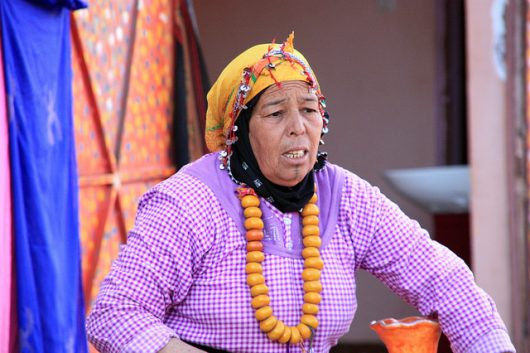
Political life for women in Morocco has long been suppressed because of law and a very conservative culture. Recently, aspects of the nation have changed for the better. After King Mohammed VI’s revisions in the Moroccan Family Code, women were allotted a larger voice.

In 2011, the Moroccan Arab Spring focused on women’s rights and issues. This movement promoted a new voice for women in Morocco.

The percentage of women holding parliamentary seats was only 1 percent in 2001, but since then, the progression of a quota for women’s parliamentary seats was first changed to a minimum of 12 percent in 2007 to 27 percent in 2010. Currently, 30 percent of women in Morocco are holding parliamentary seats.

In 2012, Nabila Mounib became the first woman ever to be elected to a major political party. She led the United Socialist Party, which is a secular and socialist party.

Mounib is also a professor at the University of Hassan II, in Casablanca. In an interview with Al Jazeera, Mounib talked about the future of her party, “Our focus will be to push for a system where people’s rights are respected. We are also pushing for the release of political prisoners and for gender equality.”

NGO’s have heavily impacted political life for women in Morocco over the past ten years. Groups like Mouvement pour la Democratie Paritaire, which is partnered with the British Government, uses the British Arab partnership fund to advocate for women’s representation within government. The group meets with parliamentary groups within the Moroccan government.

Other groups, such as the International Republican Institution, help to give a voice to groups of women in Morocco who are often overlooked. The group sets up workshops for women candidates in rural areas.

Rural areas in Morocco are known for having low rates of unemployment, education, and literacy for women. The International Republican Institution aids political life for women in Morocco by providing women with the knowledge they need to become active in government. When they learn how to campaign, women are able to mobilize what they have learned and can teach other women, creating a bigger voice for themselves.

– Maria Rodriguez

Photo: Flickr

March 22, 2017
Share this entry
  • Share on Facebook
  • Share on X
  • Share on WhatsApp
  • Share on Pinterest
  • Share on LinkedIn
  • Share on Tumblr
  • Share on Vk
  • Share on Reddit
  • Share by Mail
https://borgenproject.org/wp-content/uploads/borgen-project-logo.svg 0 0 Borgen Project https://borgenproject.org/wp-content/uploads/borgen-project-logo.svg Borgen Project2017-03-22 01:30:332024-12-13 17:57:35Political Life for Women in Morocco

Get Smarter

  • Global Poverty 101
  • Global Poverty… The Good News
  • Global Poverty & U.S. Jobs
  • Global Poverty and National Security
  • Innovative Solutions to Poverty
  • Global Poverty & Aid FAQ’s
Search Search

Take Action

  • Call Congress
  • Email Congress
  • Donate
  • 30 Ways to Help
  • Volunteer Ops
  • Internships
  • Courses & Certificates
  • The Podcast
Borgen Project

“The Borgen Project is an incredible nonprofit organization that is addressing poverty and hunger and working towards ending them.”

-The Huffington Post

Inside The Borgen Project

  • Contact
  • About
  • Financials
  • President
  • Board of Directors
  • Board of Advisors

International Links

  • UK Email Parliament
  • UK Donate
  • Canada Email Parliament

Get Smarter

  • Global Poverty 101
  • Global Poverty… The Good News
  • Global Poverty & U.S. Jobs
  • Global Poverty and National Security
  • Innovative Solutions to Poverty
  • Global Poverty & Aid FAQ’s

Ways to Help

  • Call Congress
  • Email Congress
  • Donate
  • 30 Ways to Help
  • Volunteer Ops
  • Internships
  • Courses & Certificates
  • The Podcast
Link to: Where Do the World’s Refugees Come From? Link to: Where Do the World’s Refugees Come From? Where Do the World’s Refugees Come From? Link to: Rural Bangladeshi Ambulances: Upgrade from Solar Technology Link to: Rural Bangladeshi Ambulances: Upgrade from Solar Technology Rural Bangladeshi Ambulances: Upgrade from Solar Technology
Scroll to top Scroll to top Scroll to top