Poverty in Lesotho
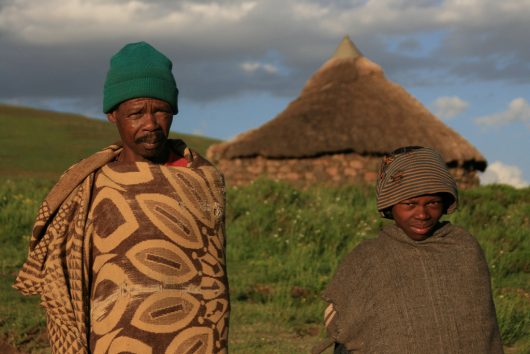
Gaining independence from the U.K. in 1966, Lesotho has aspired to develop economically, socially and environmentally. Like many African nations, however, Lesotho has also faced a difficult struggle with poverty alleviation. In fact, according to the World Bank, approximately 57 percent of the population still lives in extreme poverty, which provides an incentive to understand the factors at play. As such, here are five major aspects of persisting poverty in Lesotho today:
- Geography. Lesotho is a mountainous enclave of South Africa meaning that not only is the nation landlocked from trading ports, but it faces a difficult terrain as well. The country is also currently in the midst of a multiyear drought which has ravaged the productivity of agricultural sectors. Together, this implies poor infrastructure, rising food prices and an environment vulnerable to consequences of overgrazing and soil erosion — all of which contribute to enduring poverty in Lesotho. Related to its geography, approximately two-thirds of the workforce remains employed in agricultural sectors, which presents an additional challenge to development.
- High unemployment rates. The fact that so many laborers work in agriculture, other employment opportunities are extremely limited in Lesotho. The garment and mining industries support the highest percentages of the workforce, but profits are currently in decline for both sectors. Hence, unemployment rates are reported to be around one-third of the population with a particularly high concentration among young Basotho. The resulting disparity of prolonged unemployment also contributes to high levels of income inequality. Without adequate social transfer programs, it follows that the unemployed are inevitably trapped in extraordinarily high levels of poverty.
- Health concerns. The HIV and AIDS pandemics took root in Lesotho just the same as other states in Southern Africa. According to the U.N., in the 15 year period between 1990 and 2005, life expectancy in Lesotho plummeted by more than 15 years. Mortality rates for infants, children and mothers followed a similar trajectory. While the country is on the rebound today, figures have not yet restored to 1980 levels. Additionally, concerns are further exacerbated by a lack of quality healthcare facilities. Without a healthy population, the economy of Lesotho will be stunted by continuing poverty.
- Lesotho’s international partnership. To begin, make no mistake that Lesotho does reap major benefits from its location within South Africa. South African forces have provided stability during times of unrest, and South Africa has led international coalitions to assist Lesotho with development strategies. Lesotho even taxed South Africa for water usage following the completion of the Metelong Dam project. However, it is equally concerning how heavy reliance on South Africa hinders Lesotho’s own growth. For example, approximately 90 percent of the goods consumed in Lesotho are imported from its neighbor. Many families in Lesotho also survive on incomes from migrants who left the country looking for work. Economically, the lack of resources in Lesotho has contributed to an international dependency making it more susceptible to crises such as the recent Eskom power interruptions or the rising levels of debt.
- Infrastructure. Existing transportation networks in Lesotho may be adequate, but they are severely lacking in size. According to the CIA World Factbook, the entire country only has three paved airports and about 660 miles of paved roadways. Access to utilities was similarly absent with only 17 percent of the population receiving electricity, and only 16 percent able to access the internet and the water supply outside the capital city of Maseru. Notably, rural areas, where the majority of the population resides, are disproportionately lacking these services. All of these factors contribute to the multi-dimensional nature of poverty in Lesotho.
Lesotho’s outlook is not entirely disconcerting. Women in Lesotho boast one of the highest literacy rates in all of Africa, reflecting Lesotho’s commitment to both education and gender equality. In fact, the percentage of GDP spent on education is the largest of any country in the world. Likewise, women in Lesotho report higher human development levels than their male counterparts in all areas except overall income. While there are admittedly several factors to consider for overcoming poverty in Lesotho, it is likely that solutions will continue to build on the nation’s current strengths.
– Zack Machuga
Photo: Flickr
