Learning to Read in Tonga
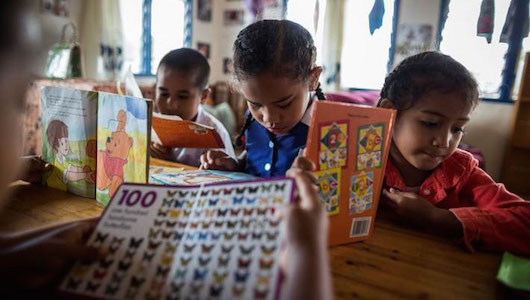 The Global Partnership for Education reported that if all students in low-income countries left school with basic reading skills, 171 million people could be lifted out of poverty. That would amount to a 12 percent cut in global poverty.
In Tonga, the Pacific Early Age Readiness and Learning (PEARL) project is driven towards preparing children for school. Funded by the Global Partnership for Education, and implemented by the World Bank, PEARL has two main goals. The first goal is to support children in developing key skills that will be useful at school. The second goal is helping more children learn to read and write well in their first years of elementary school.
According to the Global Partnership for Education, 40 percent of children in the developing world live in extreme poverty. Around 10.5 million children under the age of five die from preventable diseases each year because of extreme poverty. They also said investments in quality Early Childhood Care and Education (ECCE) can improve an individual’s well-being and close the education and poverty gap.
Early childhood is defined as the period from birth to eight years of age. Quality ECCE guides children towards fulfilling their potential and promotes social, emotional, physical and cognitive development. Young children who benefit from ECCE services are more likely to be healthy, prepared to learn, stay longer and perform better in school.

Nadia Fifita, Director at Ocean of Light International School in the Tongan capital, Nuku’alofa, said, “We see a big difference in the children who have had some early childhood [education] experience, whether that is formally through a school-based program or informally through parents.”
Tonga is not the only nation benefiting from PEARL. The project is also helping other Pacific Island countries improve policy and programming around school readiness and early grade literacy in Papua New Guinea, Samoa, Tuvalu and Vanuatu. In those countries, the World Bank and other partners are supporting each country’s Ministry of Education to make changes strengthening early education.
While early childhood education has increased globally, it is still limited and unequal in developing countries. The Global Partnership reported Sub-Saharan Africa and Arab states have shown the lowest gross enrollment ratios at 18 percent and 21 percent respectively in 2009. In some countries, children from privileged backgrounds are four times more likely to receive pre-primary education than poor children.
Tongan teacher Seini Napa’a said, “My dream is that the students in Tonga have the best future, the best readers and the best writers.”
– Kara Buckley
Sources: Global Partnership 1, Global Partnership 2, World Bank
Photo: World Bank
