UN Report Shows Progress on Poverty
This past week, the U.N. released a report on the successes and failures of the Millennium Development Goals (MDGs). The report revealed that more than one billion people have successfully broken out of poverty since 1990. It showed China and India playing key roles in this significant reduction of and progress on poverty.
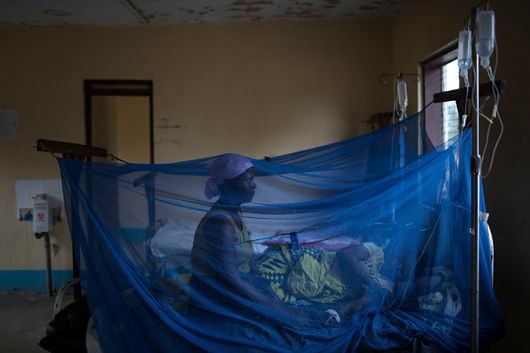
The report also showed that in addition to a sharp drop in extreme poverty, the MDGs have facilitated other major successes. Presently, just as many girls as boys are enrolled in primary schools around the globe. Simple steps like installing bed nets in parts of the developed world have prevented approximately six billion deaths from malaria.
Experts say that the most important MDG contribution has been the creation of a measuring system that depicts what countries have done for their people, and what issues they have neglected. Concrete measurements of well-being—like how many children are clinically malnourished—provide the most helpful insight on the most pressing needs.
The report stated that the world’s most populous countries, China and India, played a central role in global poverty reduction. Economic progress in China helped the extreme poverty rate in Eastern Asia fall from 61 percent in 1990 to a mere four percent in 2015.
By the same token, development in India helped extreme poverty in Southern Asia decline from 52 percent to 17 percent over the same time period. Additionally, Southern Asia’s rate of poverty reduction has accelerated over the past seven years.
While these remarkable gains should not be understated, there is still much more to be done. In India, an estimated 600 million people still defecate out in the open, which dramatically heightens risk of serious disease, especially for children. Additionally, jobs are still not keeping pace with the country’s population growth.
Despite much progress, certain MDG targets were still missed, including a two-thirds reduction of child mortality and women’s deaths in childbirth. Persisting gender inequality was acknowledged as “one of the starkest failures” in the report, as women are still more likely to be poor than men.
This is not to say that progress has not been made on both fronts, but to encourage an even greater collaborative effort in the future. The MDG target of halving the proportion of people living in extreme poverty was achieved ahead of the 2015 deadline five years ago. This is the kind of efficiency we must continually strive for.
The most recent estimates show that the proportion of people living on less than $1.25 per day fell globally from 36 percent in 1990, to just 15 percent in 2011. As of 2015, projections indicate that the global extreme poverty rate has fallen even further, to 12 percent.
At the launch of the report in Oslo, Secretary-General Ban Ki-moon proudly stated, “The report confirms the global efforts to achieve the goals have saved millions of lives and improved conditions for millions more around the world.” He encouraged the celebration of MDG successes across the global community.
Indeed, the report’s findings most certainly call for worldwide celebration. So too, however, they paint a picture of certain key areas in need of improvement. Looking ahead, findings such as these should help to pave the path for the post-2015 development goals agenda.
– Sarah Bernard
Sources: NY Times, Economic Times
Photo: NY Times
