Rosenkranz Prize Winners Dedicated to Improving Healthcare in Developing Countries
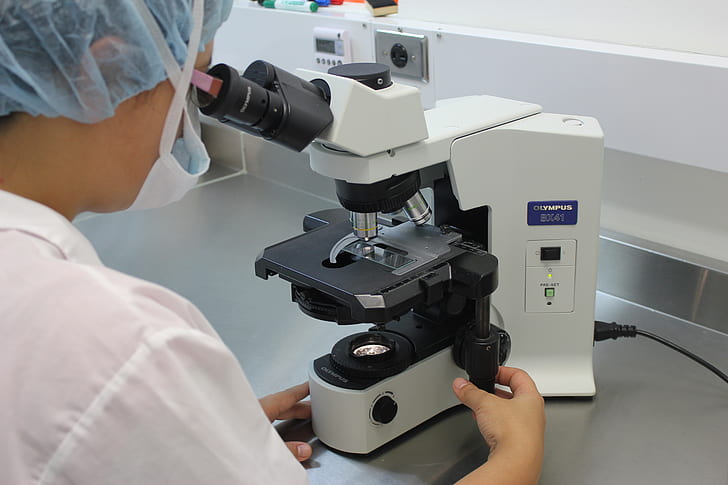
The Rosenkranz Prize aims to fund the work of Stanford University’s rising research stars who have the desire to improve healthcare in developing countries but who lack the necessary resources.
Most grants in the scientific field are awarded to established researchers. But because the Rosenkranz Prize is awarded to rising researchers, it is able to split funds between two young researchers.
Marcella Alsan, MD, PhD, is investigating how the division of labor among men and women begins at a young age in the developing world. Alsan theorizes that this is because young girls are responsible for taking care of younger siblings, missing endless days of school.
Alsan states, “Anecdotally, girls must sacrifice their education to help out with domestic tasks, including taking care of children, a job that becomes more onerous if their youngest siblings are ill.”
More than 100 million girls worldwide do not complete secondary school. Alsan will be analyzing whether medical interventions in children under the age of 5 show an increasing trend in schooling for their older sisters.
By analyzing this data, Alsan will be able to prove or disprove if sick siblings affect their older sister’s school participation. If this thesis proves true, implementing medical interventions in younger children will increase the number of girls in school. By completing school, girls will be able to not only take care of family and their own children but also have a strong background in education.
The second Rosenkranz Prize winner, Jason Andrews, an infectious disease specialist, is focusing his funds on the development of cheap, effective diagnostic tools for infectious diseases.
Andrews recalls working in rural Nepal as an undergraduate student and “founded a nonprofit organization that provides free medical services in one of the most remote and impoverished parts of the country . . . one of the consistent and critical challenges I encountered in this setting was routine diagnosis of infectious disease.”
Andrews realizes that the diagnoses are hindered by lack of electricity, limited laboratory resources and lack of trained personnel. To eliminate these obstacles, Andrews is developing “an electricity-free, culture-based incubation and identification for typhoid; low-cost portable microscopes to detect parasitic worm infections; and most recently an easy-to-use molecular diagnostic tool that does not require electricity.”
Andrews does not want to develop new diagnostic approaches. Rather, Andrews believes he can develop the diagnostic approaches already in place to function in an affordable and accessible manner.
With the Rosenkranz Prize, Andrews is also able to develop a simple, rapid, molecular diagnostic or cholera that is 10 times more sensitive than the tests currently available. Andrews plans to test this new technology in Nepal.
The Rosenkranz Prize has allowed two individuals dedicated to helping healthcare in developing countries by providing the necessary funding. With the help of Alsan, girls may be able to attend school without worrying about ill siblings, and Andrews has shed light on the problems facing many developing countries when providing medical help. But by further developing the diagnostic approaches available, healthcare will change for the better.
– Kerri Szulak
Sources: Scope, Stanford
Photo: PickPik
