How Rwanda Reduced Its Child Mortality Rate
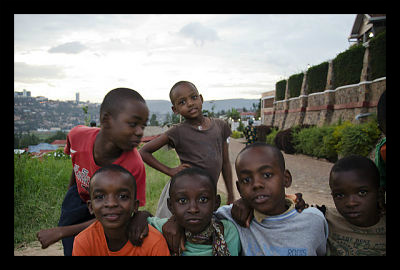
In 2000, the United Nations came up with the Millennium Development Goals, a list of things the world wanted to accomplish in impoverished countries by the year 2015. Rwanda in particular has been reported to have reached one of these goals: reducing child mortality by two-thirds. In 2000, when the goal was made, 90 children died before age five in every 1,000 live births. Now, the average is 46—the equivalent of 17,000 fewer deaths per day.
Rwandans can now say they have the highest average annual reduction of child mortality rates in comparison to other countries who are striving to reach the same goal. It is believed that in total, 590,000 children have been saved since the MDGs initiative was implemented. UNICEF has regarded this accomplishment as “one of the most significant achievements in human history.”
In order to see how this goal was met, BBC News spoke with public health researcher Claire Wagner, Jose Manuel Roche of Save the Children U.K., Randy Wilson of Management Science for Health and Dr. Fidele Ngabo, who is the head of the division for maternity, child and community health in Rwanda.
Dr. Ngabo believes that training and hiring more health workers played a significant role in reducing the rate of child mortality. “We had four top killers – malaria, diarrhea, pneumonia, and malnutrition – diseases which can be treated by simple intervention,” Ngabo explained. “So we selected 45,000 community health workers at each village so when the children are sick, instead of spending one or two hours going to a health facility, the community health workers can give the treatment in less than 10 minutes.”
Wilson hopes that his company’s introduction of a text-message system called “RapidSMS” also helped reduce the rate of child and maternal deaths. Doctors were trained to use the text-messaging system to communicate quickly and efficiently about their patients so that actions can be decided on immediately if needed. Reducing delays in treatment reduces preventable deaths.
Wagner, who works for Rwanda’s Minister for Health Dr. Agnes Binagwaho, credits Dr. Binagwaho for working hard to save lives.
“Fifteen years ago when Rwanda actually launched its community-based health insurance program, it gave the first health insurance to Rwanda’s poorest million inhabitants, which is a signal to the world that this is going to be a new health sector that is focused on local ownership of the country’s future. Ninety-eight percent of Rwandans are now covered,” said Wagner. “The minister will always say that ‘if you give me a penny to help my grandmother, I’ll make sure that it also works for my granddaughter.’ She ensures that all of the investments that are coming in should go to build a strong health system.”
This accomplishment is excellent news for Rwanda, and hopefully other countries will follow suit and take similar actions to reach the MDGs.
– Melissa Binns
Sources: BBC, United Nations
Photo: Flickr
