Why Is Poverty Among Minorities So High?
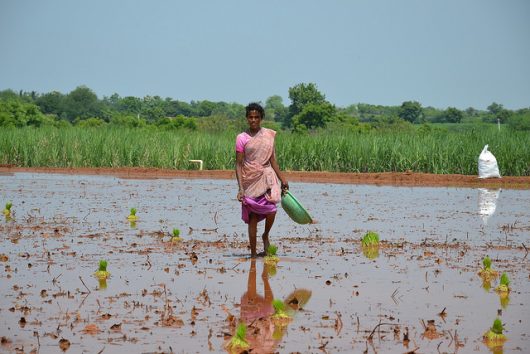
In countries all around the world, rates of poverty among minorities are distressingly high. There are many different types of minorities: racial and ethnic, national and linguistic, cultural and tribal, political and religious, gender and sexual. There are immigrants and refugees. People with disabilities and mental health disorders.
Poverty, unemployment and incarceration rates are typically much higher among these populations than among majorities. Physical and mental health is poorer. Educational attainment is lower.
Examples of Poverty Among Minorites
- Ethnic minorities account for only 15 percent of Vietnam’s population, but 70 percent of the population living in extreme poverty. There are great discrepancies in educational attainment as well: 18.8 percent of ethnic majorities have completed university or upper-secondary education, compared to 8.5 percent of ethnic minorities.
- In the United States, Latinos and Hispanics are incarcerated at 1.4 times the rate of white Americans, and African Americans at an average of 5.1 times white Americans. Though the unemployment rates for Hispanics and blacks have been declining since 2010, they are still higher than that of white Americans: the unemployment rate of blacks is nearly double that of whites.
- LGBT+ individuals are severely persecuted in many nations. In Turkey, 78 percent of people say that society should not accept homosexuality. Same-sex marriage is unrecognized, same-sex adoptions are prohibited and LGBT+ individuals face severe discrimination in obtaining employment and housing. Violence against these people is widespread and often goes unpunished.
- Indigenous people are among the most discriminated-against people in the world, and many populations experience high rates of poverty and health problems. For example, the diabetes prevalence rate among the Aboriginal and Torres Strait Islanders, indigenous people in Australia, is six times that of the national average. The suicide rates among the Inuit in Canada is 11 times the national average and one of the highest in the world.
- In many countries where a vast majority of the population belongs to a certain religion, those who practice a different faith experience strong discrimination and high rates of poverty. In Nepal, the poverty rate among Muslims, a minority in the mainly Hindu country (approximately 81 percent of Nepali are Hindu) is 41 percent, about 10 percent higher than the national average. In Bangladesh, where 89 percent of the population is Muslim, Hindus face serious barriers in obtaining education and employment and are often subject to displacement and arbitrary seizure of their property.
High Rates of Poverty Among Minorities
Why do these disparities in poverty, prison, education and employment exist? Why do minorities tend to have poorer health and experience more violence? Prejudice, discrimination, social exclusion and marginalization are major factors.
Institutional discrimination in governments, corporations and education systems, exists in countries around the world. This discrimination breeds inequality, and inequality restricts people’s ability to obtain jobs and education, to access housing and healthcare, or to enjoy judicial and legal protections.
Sociological and psychological research has demonstrated that discrimination and social exclusion can contribute to poor mental and physical health, which impact an individual’s ability to work and earn an income. All of these factors contribute to the high levels of poverty among minorities.
How We Can Solve this Problem
Eliminating institutional discrimination and individual prejudices can reduce poverty among minorities. Though not an easy task, it is vital to the pursuit of a world without poverty. Governments, educational institutions, corporations and the media, which often use prejudicial rhetoric and discriminatory practices, must be held to a higher standard.
Education should highlight instead of hiding the discrimination that exists around the world. It should teach the importance of human rights and promote equality and respect of others.
Various social movements and nonprofit organizations attempt to do this. They strive to raise awareness of discrimination and inequality and eliminate these from society. The Black Lives Matter, MeToo, Sanctuary Campus, feminist and LGBT+ movements serve as examples. The Human Rights Campaign, Equal Rights Advocates, Race Forward and Global Rights are just a few of the many organizations that fight for equality for different minorities.
All of these movements and organizations and the many others that exist are crucial to the elimination of discrimination as well as reduction of global poverty. And so are individuals.
Individuals have a prominent role to play in the fight for equality. Every person has the ability to make a difference. You can help reduce poverty among minorities by supporting movements and organizations that advocate for minorities. You can speak up when you see discriminatory actions or hear prejudicial remarks. As Nelson Mandela said, “as long as poverty, injustice and gross inequality persist in our world, none of us can truly rest”.
– Laura Turner
Photo: Flickr
