Blockchain-Driven Water Management in Tunisia
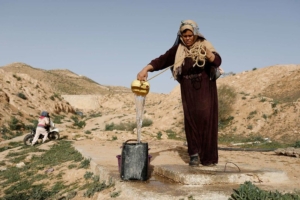
Amid the bustle and expansion of modern cities, the ancient challenge of water management is becoming an acute concern, particularly in countries like Tunisia, where it is scarce. But as technology evolves, old problems are meeting new solutions. The latest player to enter this arena is blockchain, promising a new dawn for water management in Tunisia and potentially setting a precedent for the world.
A Thirsty Nation
Tunisia, a historically rich nation situated along the Mediterranean in North Africa, grapples with significant water scarcity challenges. While the land boasts a potential water reserve of about 4.9 billion cubic meters, roughly 4.6 billion cubic meters are regularly accessible, resulting in a 74% utilization rate. The varied climate, characterized by more rainfall in the north and arid conditions in the south, contributes to the country’s water woes. The annual rainfall averages 230 mm, though this figure can fluctuate significantly. Tunisia’s water resources comprise approximately 2,700 cubic meters of surface water annually and an estimated 2,000 cubic meters of groundwater, with a significant portion in the south being nonrenewable. With each individual receiving a scant 450 cubic meters annually and agriculture consuming 84% of the total water demand, one cannot overstate the importance of water quality.
Blockchain: The Modern Aqueduct
Enter blockchain, a technology that promises to do for information what Roman aqueducts did for water — transport it efficiently, transparently and reliably. Blockchain’s decentralized nature stands in stark contrast to the centralized systems of the past. It offers unparalleled transparency, ensuring that every drop of water, and every dinar spent on it, is accounted for. The inherent traceability of blockchain means that errors, once entered, can be traced back to their source, vastly reducing the scope for manual errors or deliberate misreporting.
From Theory to Tap
But how does this all work in practice? Two initiatives in Tunisia provide a glimpse.
- SONEDE’s Blockchain Endeavour: In collaboration with the national water management entity, a system emerged that allows agents to document meter readings via GSM. Instead of these readings being logged on cumbersome and often unreliable central servers, they are now recorded on a blockchain. This not only ensures data integrity but also optimizes the process for the prevalent 4G infrastructure in Tunisia.
- The Watermeter Platform: Going a step further, the Watermeter Platform aims to put the power of monitoring water consumption in the hands of the consumers. Using just their smartphones, Tunisians can take pictures of their water meters. These images, when processed through advanced yet lightweight deep learning algorithms, yield accurate water consumption data. This data is then stored on the Ethereum Blockchain, with the heavy computational lifting done by Raspberry Pis — small computers — ensuring efficiency and reducing costs.
Conclusion
Tunisia’s foray into blockchain-driven water management is more than just a technological upgrade; it is also a hope for arid regions worldwide. It shows that with the right mix of technology and governance, even the most pressing challenges can be met head-on. As the world watches, Tunisia’s blockchain experiment could very well set the blueprint for the future of water management.
– Yudi Zhang
Photo: Flickr
