USAID Programs in Iraq
Since 2003, Iraq has experienced displacement of its population and instability due to domestic and regional conflict. In January 2014, with the so-called Islamic State of Iraq and Syria (ISIS) beginning to seize control of parts of Iraq, the conflict and displacement worsened, until ISIS was defeated in March 2019. The Ministry of Planning at the World Bank reports the poverty rate of Iraq at 24.8% in 2021. The United States Agency for International Development (USAID) programs in Iraq, with funding received from the United States government, have played a pivotal role in improving the governance system, expanding economic opportunities, providing life-saving humanitarian assistance and promoting religious and ethnic pluralism to the citizens of Iraq.
The Good News
As of September 2022, despite 1.2 million Iraqis remaining internally displaced and 5 million internally displaced population returning home, Iraq generously hosts 300,000 refugees and asylum-seekers. With Iraqis returning home, support from international organizations like the USAID has helped Iraq see positive growth in all aspects of society. USAID in collaboration with the Government of Iraq (GOI), provincial and local governments, and local communities has established a combination of short-, medium- and long-term efforts to stabilize areas that were formerly occupied by ISIS.
The following is a brief that focuses on two of the many important USAID programs in Iraq initiatives whose overall objective is to pull households and communities out of poverty and to provide life-saving humanitarian assistance for the people of Iraq.
Job Creation and Economic Diversification
According to USAID, job-creating initiatives and economic diversification in Iraq’s public and private sectors are vital for creating economic opportunity, helping households and communities out of poverty and long-term economic growth. Iraq is one of the most oil-dependent countries in the world. The over-reliance of its GDP on oil-related growth (7% in 2022 has stagnated the growth of its non-oil sectors such as agribusiness, service delivery processes (for example, technology and trade) and the industrial sector. Thus, USAID in collaboration with the GOI, economic and civil society leaders and vulnerable communities has set up projects and also funded initiatives like the Middle East and North Africa Investment Initiative (MENA II) to increase food production, improve water supply and ensure sustainable water and energy usage.
The implementation of USAID programs in Iraq that focus on economic diversification has resulted in tremendous growth and a reduction in extreme poverty for the marginalized and displaced populations. These programs have also boosted the participation of women in Iraq’s workforce thereby, making an attempt to address gender-based violence and patriarchal norms — two issues starkly visible in Iraq.
Since 2020, USAID programs have provided more than 10,000 entrepreneurs with business support services, of which approximately 50% of the entrepreneurs were women. In addition, USAID provided about 3,000 business grants and loans. This resulted in an increase in business revenue by 65%. According to USAID reports, the huge success of these programs has attracted $41 million in private investments to expand local businesses in technology, trade and the industrial sector.
Humanitarian Assistance for Producing Self-Reliant Citizens
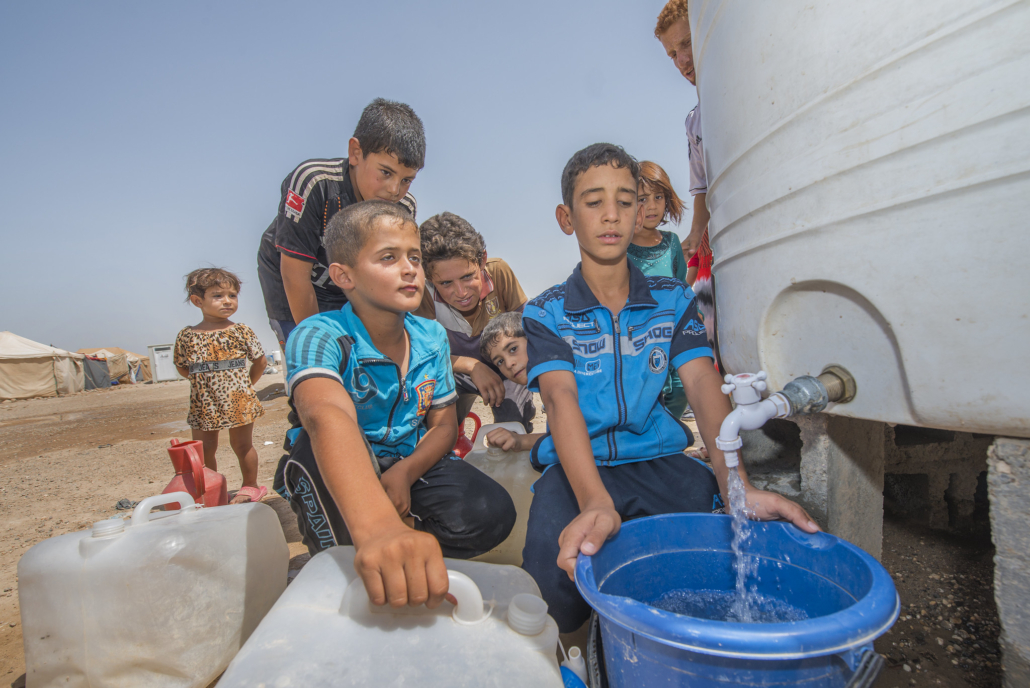
For a nation riddled with conflict for more than a decade, USAID has targeted a substantial amount of funds, $3 billion, towards providing humanitarian assistance to the citizens of Iraq. These funds have been targeted towards the most vulnerable and hardest-to-reach people. USAID’s Bureau for Humanitarian Assistance reports a positive trend in access to safe drinking water, improved health and hygiene supplies, meeting food and shelter needs and meeting critical nutritional needs. In addition, according to USAID, the funds have also helped in the prevention and quick response to gender-based violence and increasing access to psychological support. This support is particularly important for a country responding to natural disasters and complex crises.
A Promising Future
The programs and funds provided by USAID have come a long way in improving the economic condition and ensuring quality and dignified basic living conditions for the citizens of Iraq. USAID, through its programs and aid, paves the way for long-term development and the journey of self-reliance for the citizens of Iraq. This is an essential step. And, while there is still room for improvement, the country and its citizens’ commitment to solving the large human and economic capital needs bode positive signs for the future.
– Anshu Saha
Photo: Flickr
