UN Initiatives To Address Severe Drought in Zambia
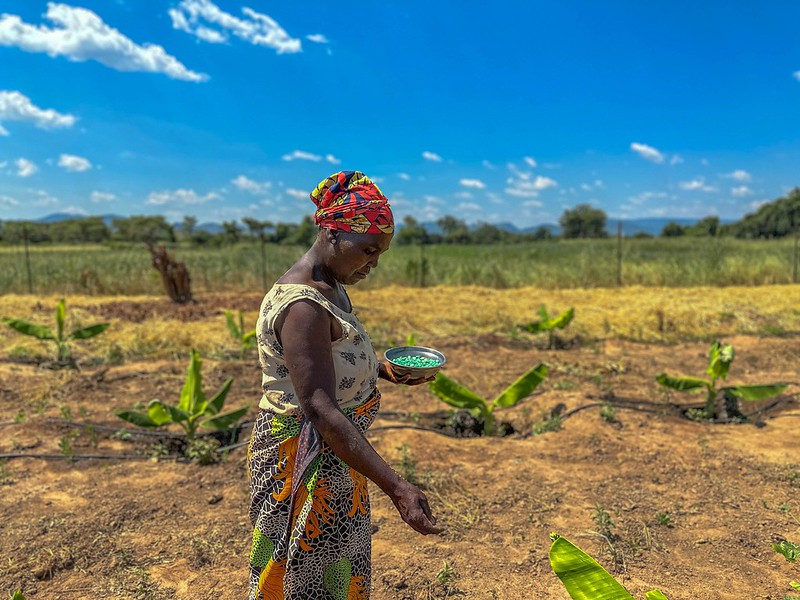 In February of 2024, the president of Zambia, Hakainde Hichilema, declared a national emergency due to significant drought and widespread hunger. The 2023-2024 rain season, which usually begins in September or October, instead began in January and lasted only one month. Since then, almost no rain has fallen. The United Nations (U.N.) estimates that the drought has destroyed more than two million hectares of crop fields and affects about 9 million people country-wide.
In response to the drought, which is considered Zambia’s worst drought in 20 years, the U.N. allocated $5.5 million in relief funding. In early May of 2024, the U.N.’s Office for the Coordination of Humanitarian Affairs (OCHA) submitted an appeal for another $228 million in funding. This additional aid, if approved, will bolster humanitarian efforts to address the drought in Zambia.
Rainfall and Crop Production
Zambia relies on rainfall for crop production and inconsistent rainfall means a serious lack of food. When subsistence farmers cannot harvest crops to feed their families, their only option is to purchase food. But even the commercial farmers who supply that food are struggling. As food production becomes more constrained, costs skyrocket, leaving millions hungry.
Alternative water collection methods, such as irrigation systems, are expensive and, therefore, not widely used in Zambia. Commercial farmers can sometimes obtain loans, which enable them to install such technology. However, subsistence farmers, without a consistent source of revenue, are often unable to receive such funding. The drought’s impact is felt most strongly among small-scale farmers who cannot water their crops, have no funding to install water technology and have limited means to purchase food.
Hydroelectricity
The drought in Zambia has extensive consequences beyond the food crisis. Zambia relies largely on hydroelectric power for its energy needs; about 80% of its total power is derived from hydroelectric sources. Low water supply has forced Zambia Electricity Supply Corporation (ZESCO), which supplies about 95% of the country’s energy needs, to limit power generation to only eight hours per day.
This widespread energy crisis has far-reaching consequences. According to the World Bank, “lack of reliable electricity severely restricts the country’s potential for improving per capita gross domestic product (GDP) and reducing poverty.” Furthermore, “increasing rural access to modern energy promotes social cohesion and assists the government in economic development initiatives.”
National Government’s Proposed Solutions
Zambia’s legislature has proposed realigning the national budget to allocate more funding toward drought relief. It also offers loans to subsistence farmers to install irrigation technology. For the most vulnerable people who simply have no access to food, Zambia plans to enhance its Social Cash Transfer Program (SCT), which aims to reduce extreme poverty.
To prevent future crises, Zambia plans to diversify its energy mix by adding other renewable sources, such as wind and solar. Relying less heavily on hydroelectric power will help mitigate the effects of future droughts on the nation’s farmers. The Zambian government has been in a debt restructuring process for three years, constraining its ability to give loans and direct cash aid to starving families. Hichilema is calling on the nation’s creditors to expedite the process, stating that “if this process does not close, it’s not just an indictment on Zambia but the global system.”
UN Initiatives
The World Food Programme (WFP), a branch of the United Nations, is working with Zambia to combat the current crisis. Its efforts include distributing food, using boreholes to find clean water and updating the country’s water technology systems. Cindy McCain, the executive director of the WFP, explains that the relief effort must focus on both long-term and short-term goals.
According to McCain, the short-term priority is increasing food availability. In contrast, long-term relief efforts would focus on preventative measures, such as installing irrigation systems and distributing drought-resilient seeds. The crucial first step is securing the additional $228 million in aid requested by OCHA. This funding infusion will greatly help the national government, the U.N. and other nongovernmental organizations meet the needs of the nation’s struggling farmers.
– Maren Fossum-Wernick
Maren is based in St. Paul, MN, USA and focuses on Technology and Global Health for The Borgen Project.
Photo: Flickr
