Updates on SDG 4 in Pakistan
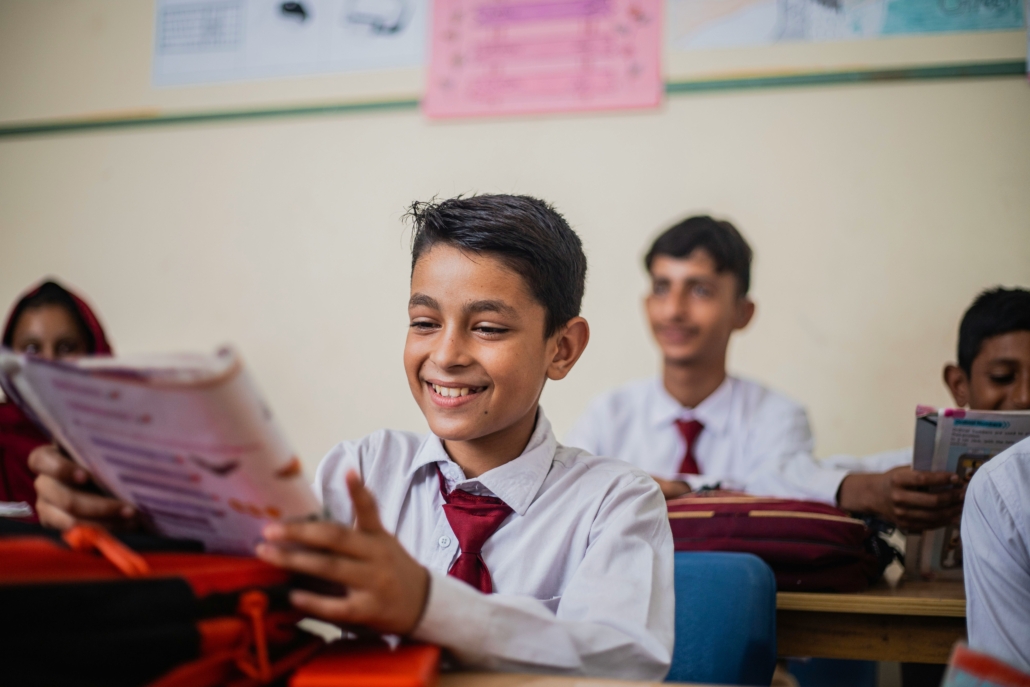 SDG 4 focuses on quality education, promoting inclusive, equitable and lifelong learning opportunities for all. Pakistan committed to the SDGs in 2015, and since then, it has made efforts to improve the quality of education for its people; however, it continues to face serious challenges due to inequality, the high number of out-of-school children and a lack of resources.
Initial Stages
Since the successful completion of the Millennium Development Goals in 2015, the UN introduced the SDGs, a global call for action that aim to eradicate poverty, protect the environment and ensure peace and prosperity around the world.
In 2016, Pakistan’s parliament officially adopted the SDGs as the National Development Goals. The Ministry of Planning, Development and Special Initiatives internalized the SDGs. The Ministry also included them in the strategic Pakistan Vision 2025 document and established a Planning Commission. The Commission issued a National Framework to achieve its sustainability goals.
Considering Pakistan’s resource and institutional constraints, the government divided the goals into tiers. The initial framework, however, mainly focused on the federal level, with minimal participation from provinces. In both the National and Provincial Frameworks, SDG 4 remained a top-tier priority goal.
Despite initiatives, challenges remain. From gender gap disparities to poor disaster management, factors hinder the basic educational right of children across Pakistan.
School Attendance and Literacy
According to a UNICEF report of Pakistan, ‘’Pakistan stands as the state with the world’s second-highest number of out-of-school children (OOSC) population, with an estimated 22.8 million children aged 5-16 not attending school, representing 44 percent of the age group.’’ Another report, UN Pakistan Annual Report 2021, states that almost 32% of children aged between 5 to 16 are out of school, one of the highest rates globally. Meanwhile, about 53% of those children are girls, signifying the gender inequality in access to education in Pakistan.
Pakistan’s literacy rate did rise to 62.3% ( as per the 2021 consensus), but considering the population growth, around 60 million people remain illiterate. Girls in Pakistan not only have lower enrollment but also have higher dropout rates, especially when they reach adolescence. UNICEF’s National Gender Strategy (2024–2027) also highlights that more than 54% of adolescent girls in Pakistan become pregnant before turning 18, and that child marriage rates are among the highest, both of which halt education.
Literacy rates within Pakistan also show a rural-urban divide, with children in urban areas having higher access to education resources compared to their rural peers. Urban districts like Islamabad (82%) and Karachi (79%) have much higher literacy rates compared to rural districts such as Rajanpur (34%), Thatta (36%), Kohistan (26%) and Dera Bugti (1%), highlighting the disparity in access to education and learning resources between urban and rural areas.
The Effects of Conflicts and Disasters
Conflict and disasters further worsen conditions for education. For example, security and displacement in conflict-affected regions like Khyber Pakhtunkhwa and Balochistan obstruct education.
A very explicit example is the 2014 attack on the Army Public School in Peshawar (A city in the Province of Khyber Pakhtunkhwa), in which militants killed 145 people, mostly children. Gunmen systematically went from class to class and killed children and teachers. Balochistan (Khuzdar) also saw one of the deadliest attacks on a school bus carrying children. Militants killed six and injured dozens.
Systemic gaps in disaster preparedness and crises also affect the educational environment of Pakistan. The 2025 floods disrupted education for 25 million children in Punjab. In Khyber Pakhtunkhwa, the floods destroyed 860 schools, affecting the education of more than 119,000 children.
Steps Toward SDG 4 in Pakistan
The government has taken comprehensive steps towards SDG 4 in Pakistan. In February 2025, the Federal Education and Professional Training (MoFE&PT) ministry, along with UNESCO and the Pakistan Institute of Education, launched the SDG-4 Midterm Review (MTR) Report, which introduced policy reforms, increased investment and data-driven approaches that would reduce regional education disparities and accelerate progress toward SDG 4 by 2030.
In May of the same year, Pakistan and UNDP co-hosted the “Pakistan SDGs Policy Dialogue for Action,” aligning with the Uraan Pakistan economic transformation plan (a roadmap to sustainable growth). This dialogue focused on enhancing institutional coordination, data governance, financing and parliamentary oversight to fast-track SDGs progress.
The government has also adopted strategies to incorporate technology in educational environments. The Education Ministry, in compliance with UNESCO, launched an initiative that set up 40 smart classrooms for 3,000 girls in primary schools of Muzaffarabad, Bagh and Neelam Valley. This initiative also trains 100 teachers in ICT, creates modern learning environments and rehabilitates school facilities.
China is also contributing to the educational development of Pakistan. On May 28th, 2025, the Federal Ministry of Education and Professional Training (FE&PT) and the Tang International Education Group of China signed a Memorandum of Understanding (MoU) to enhance educational infrastructure in Pakistan. The Tang International Education Group will modernize 20 vocational institutes in Karachi by establishing IT and smart laboratories, and will open Centers of Excellence across Pakistan.
The Way Forward
For Pakistan to achieve its targets of SDG 4, a comprehensive approach involving various strategies and initiatives is crucial. A significant increase in public investment in education is essential to addressing infrastructure, ensuring adequate teacher training and providing learning resources. Thus, the collaborative efforts that are in place between Pakistan’s government, civil society and private sector stakeholders can address the challenges in Pakistan’s educational landscape.
– Sidra Tahir
Sidra is based in Rawalpindi, Pakistan and focuses on Technology and Politics for The Borgen Project.
Photo: Unsplash
