S M Sehgal Foundation: Rural Poverty Reduction in India
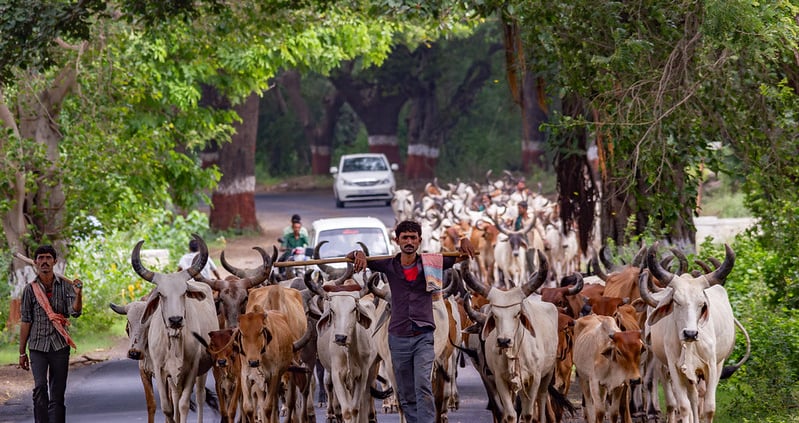 Poverty narratives in rural India continue to flood Western media and major news outlets. According to the World Bank, 16.1% of India’s population lived below the lower-middle-income poverty line of $4.20 per person per day in 2023-24, down from 57.7% in 2011-12. Yet behind the headlines lies a more complicated reality: rural poverty is rarely rooted in one single challenge. Educational accessibility influences agricultural practices; crop output depends on reliable water supply; household income levels shape health care and resource access; and inadequate educational facilities can disproportionately limit learning opportunities for young women.
S M Sehgal Foundation: An Interconnected Approach
One nonprofit taking an interconnected approach to mitigating these challenges is the S M Sehgal Foundation, a rural development NGO that has reached more than 7 million people since its inception in 1999.
In a recent interview with The Borgen Project, Board of Trustees Chairperson Jay Sehgal explained how an organization that began with agricultural reform has established itself in several areas of community advancement. According to Sehgal, the foundation’s original question was simple: how could it help poor farmers improve their livelihoods through sustainable farming and more reliable crop yields? The idea grew from the professional experiences of Dr. Suri Sehgal, whose career in seed genetics offered a firsthand view of the economic precarity facing small farmers in developing countries.
Soil health and mechanization efforts quickly exposed another constraint. Sehgal explained, “Farmers get poorer because they have to buy the water to be able to do the agriculture.” Farmers rely heavily on groundwater irrigation, with agriculture accounting for almost 90% of India’s groundwater use and extraction depleting aquifer reserves in many regions.
In response, the Sehgal Foundation works with communities on rainwater harvesting, dam installation, restoring village ponds, recharge wells and water filtration. For the foundation, addressing agricultural poverty entails looking beyond crops to the resources that make their growth possible.
Empowering Women and Education
Since the start of its water conservation efforts, the Sehgal Foundation has prioritized including women in its programs. In the process, the team encountered low literacy rates among the girls involved and started examining the barriers behind this discrepancy. Sehgal explained, “If any family had a little bit of money, they will send the boy to the private school where the girls are sent to these government schools… completely run-down schools. There is no toilet for the girls. There’s no water in the school. The roofs are leaking.”
Rather than building entirely new schools, the Sehgal Foundation zeroed in on transforming existing ones and improving conditions and literacy through its Transform Lives One School at a Time initiative. To improve technological literacy, the foundation added computer labs, printers and libraries so students can better keep pace with their urban counterparts.
Building Trust with Communities
Identifying interconnected problems was only part of the solution. Sehgal underscored that winning public trust was no easy task. Recalling considerable skepticism when the organization first approached villagers, he said it took almost nine months of working in the villages and meeting with residents before one community agreed to try a project.
Once that pilot effort was successful, Sehgal recalled, the response looked more like, “Hey, this is fantastic, let us do more.”
– Natasha Agarwal
Natasha is based in Philadelphia, PA, USA and focuses on Good News and Politics for The Borgen Project.
Photo: Flickr
