Fighting Poverty and Supporting Rural Livelihoods in Angola
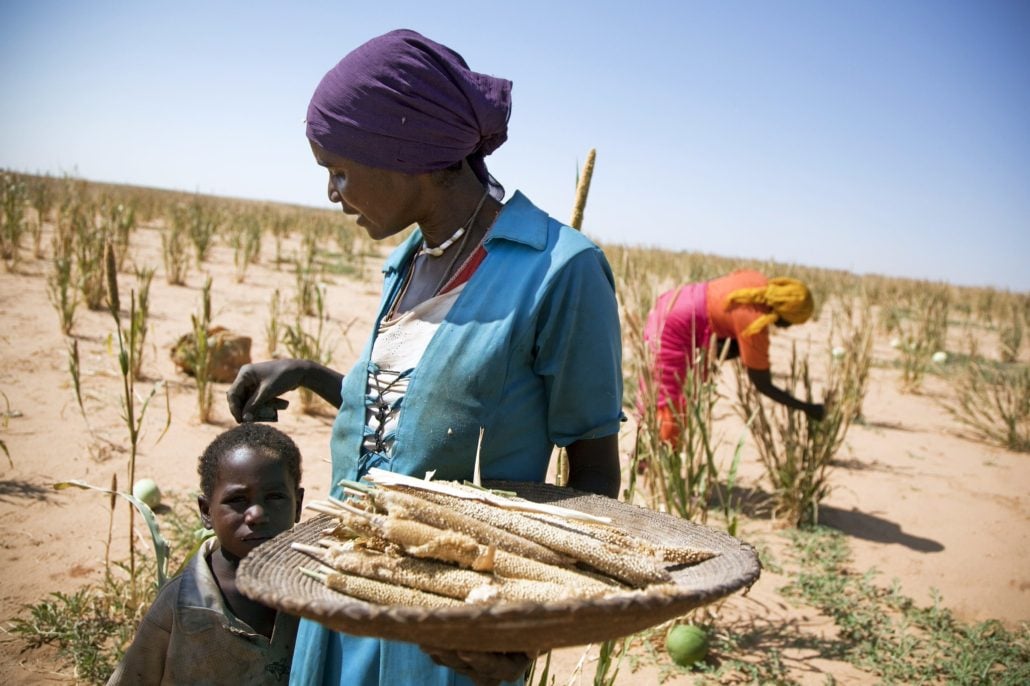
The southwestern African nation of Angola is home to a population of more than 39 million and a wealth of natural resources in the form of oil and minerals. Despite this potential, Angola battles poverty and inequality. World Bank data from 2018 indicate that 39.3% of Angolans live on the equivalent of less than $3 per day, and the country’s inequality index of 51.3 from the same year is among the highest in the world. Rural communities often struggle the most, but significant efforts have emerged to support families financially and foster sustainable rural livelihoods in Angola. The government and other organizations have responded with financial support programs, loans and grants and agricultural skills training, all of which encourage agri-entrepreneurship and combat poverty in both the short and long term.
Communities Left Behind
Angola is highly urbanized compared to its neighbors, with approximately 32% of its population living outside urban areas. World Bank estimates from the 2018-19 household survey show poverty at 17.8% in urban areas and 54.7% in rural areas, demonstrating significant regional inequality. While oil contributes to almost 30% of GDP and 95% of exports, this industry is less accessible to communities whose livelihoods have historically had ties to agriculture. According to the IPC in 2022, 1.32 million people across 17 municipalities in the south are vulnerable to high acute food insecurity. As this issue persists, effective and sustainable agri-farming remains vital.
Financial Support Through Kwenda
To support households vulnerable to poverty and enhance rural livelihoods in Angola, the Institute for Local Development, in partnership with the Angolan government and World Bank, rolled out a targeted, quarterly cash transfer program known as Kwenda. By May 2025, more than 1.3 million households had benefited from Kwenda’s direct cash transfers, while approximately 53,000 households had received support through its Productive Inclusion component. This assistance helped many financially support their families, while others were able to invest in food and agricultural production, a step toward more sustainable economic futures. Increased production among Kwenda-supported households helped the Catanha Bandi cooperative purchase a mill, creating a local job and making grain processing easier for members and nearby residents. Kwenda also funded an improved seed bank for the Cusseteca cooperative, from which 1,000 loaves of bread are produced every day to feed the community.
The program also includes a Productive Inclusion element, focusing on supporting income generation and rural livelihoods in Angola. Launched in 2021, this initiative saw the creation of integrated social action centers aimed at supporting families to improve income, as well as community-based credit banks and seed multiplication initiatives. For example, FAS invested 400 kg of beans in Chiombo, where approximately 50 community members harvested close to 1.5 tons of food, reimbursing this support to thrive independently. By 2024, 25,324 people participated in IP activities, with more than 126,000 indirect beneficiaries.
Angola Commercial Agriculture Development Project (PDAC)
The Angola Commercial Agriculture Development Project (PDAC) provides further support for rural livelihoods in Angola. The project promotes agri-business development through the sharing of skills and a grant program, as well as financing infrastructure for production and further development. Rebeca Rocha, an agri-entrepreneur, received training through PDAC on skills such as crop rotation to improve her agricultural activities. She revitalized her small farming business with a $4,000 grant, using this to improve infrastructure and expand, which created six jobs and increased output. Rocha now also supplies food to a pediatric hospital. The program fosters innovation in the agricultural industry, and the World Bank reports that it has directly invested around $2.12 million into 308 business plans, 75 of which women submitted.
Local Projects and ADRA Angola
ADRA is another organization sharing skills within communities that directly support rural livelihoods in Angola. It promotes fair and sustainable development at a community level and operates across 46 municipalities to improve local agri-production and food security. The organization has helped organize workshops on valuable industry skills such as finance and tax management, setting farmers and small business owners up for success, as well as crop multiplication training, which was shared with 50 residents in the Oshauyu community. While promoting the School in the Farmer’s Field initiative, its workshop on sweet potato multiplication and seed bank development benefited 35 community members, of whom 29 were women. As of September 2026, ADRA has reached 34,902 families with its initiatives focused on sustainable development and citizenship.
Looking Forward
These projects targeting rural communities and supporting agricultural development represent a hopeful future for Angola’s poor on two accounts. While increased agricultural efficiency will improve production and increase food security, training and investment also greatly benefit rural livelihoods in Angola, encouraging entrepreneurship and better long-term financial stability for community members.
– Hannah Rix
Hannah is based in London, United Kingdom and focuses on Global Health and Politics for The Borgen Project.
Photo: Flickr
