Inclusive and Quality Education in Ghana
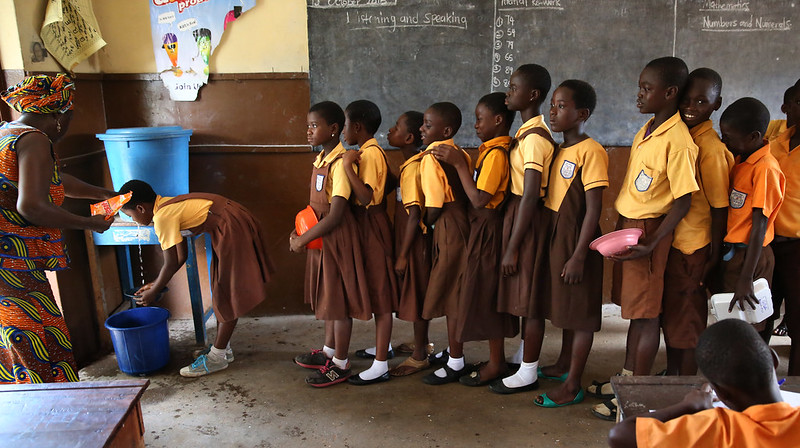 The Sustainable Development Goals (SDGs) represent a global commitment to eradicate poverty and promote peace and prosperity. SDG four focuses on quality education. It aims to ensure inclusive and equitable education for all and to foster lifelong learning opportunities. Ghana has made significant strides in its pursuit of quality education, achieving near-universal access to basic education.
Since 2000, Ghana has had a gross enrollment rate of more than 100%. It has attained gender parity in primary education, with notable, though more modest, gains in secondary education. The country has provided an effective educational environment through several policies and strategies, one of which includes its Inclusive Education (IE) policy framework.
Inclusive Education (IE) Policy Framework
Ghana’s IE policy goes beyond the concept of physical location, embodying core values that promote participation, friendship and interaction. This policy acknowledges Ghanaians’ diverse educational needs and requires all stakeholders in the education sector to address these varied needs. This policy was established to ensure the full inclusion of people with disabilities (PWD).
Ghana’s educational sector was surveyed to gauge public perception of inclusive education to measure the impact of the policy. The survey analysis revealed progress in the enrollment of children with special educational needs (SEN). Additionally, students without disabilities have become more accepting of their special needs classmates. This progress is attributed to ongoing orientation on the IE Policy, capacity-building activities related to IE practices and sensitization on inclusion and diversity at all levels.
The Free Senior High School Program
Fee removal has become a popular policy to improve access to secondary education, with Ghana being among the countries implementing this practice. The Free Senior High School (SHS) program, established in September 2017, provides new opportunities for children who previously were unable to continue their education beyond junior high school. The program is dedicated to removing cost barriers, ensuring equality and equity and expanding school infrastructure.
This initiative resulted in an 11% increase in enrolment. Before the program’s implementation, during the 2016/17 academic year, 11,336 out of 420,135 students could not enroll in senior high school due to financial constraints. After the program’s introduction in the 2017/18 academic year, this number decreased to 62,453 out of 424,224 students, indicating increased access to senior high school education.
The Secondary Education Improvement Project (SEIP)
This project was established by the World Bank in Ghana, with the Ghana Education Sector (GES) as a key development partner. The project is known as the first World Bank education initiative in Ghana and it utilizes a results-based financing strategy. It addresses limitations related to the availability and provision of educational resources and infrastructure. This is achieved by constructing new schools in districts lacking public schools. This project also addresses challenges that prevent individuals and communities from accessing education. This is achieved through scholarships and bursaries for low-income students, particularly girls; these were adapted into bursaries following the introduction of free secondary education in 2017, covering expenses such as transportation and school supplies.
Additionally, targeted in-service training for teachers enhances the quality of science and mathematics education. At the same time, performance partnerships with schools promote increased accountability. Information and Communications Technology (ICT) solutions support learning, with beneficiary schools selected using specific criteria to ensure pro-poor targeting. This project witnessed the transition rates from lower secondary to higher secondary schools in the poorest districts. Rates rose from 39% in 2014 to 72% in 2019. Also, the construction of 21 new senior secondary schools and the rehabilitation of 125 others has substantially expanded the availability of educational spaces. This has created approximately 43,000 additional seats between 2014 and May 2020. From 2014 to 2019, at least 20,000 low-income students received scholarships/bursaries, alleviating financial barriers to education.
– Teniola Yusuf
Teniola is based in the UK and focuses on World News for The Borgen Project.
Photo: Flickr
