How Public Libraries in Namibia Support Economic Opportunity
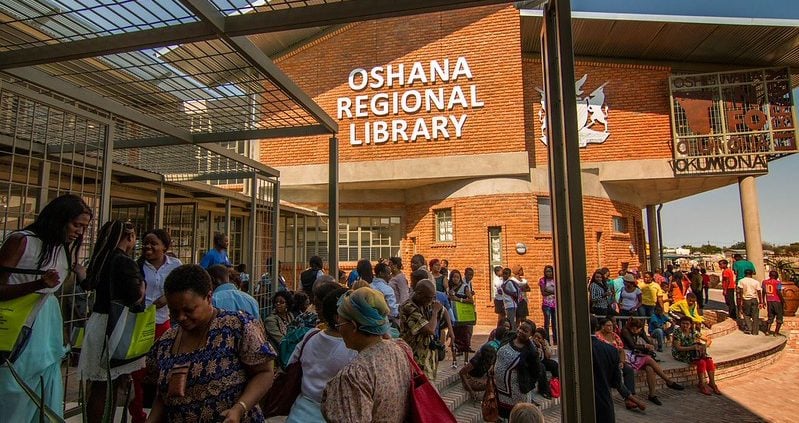 Public libraries in Namibia are doing more than lending books. By expanding access to the internet, digital skills and government services, as well as libraries, are helping residents pursue employment and build economic security in a country where poverty and unemployment remain significant challenges.
Namibia has made progress in reducing poverty, with the national official poverty rate falling from 37.5% in 2003 to 2004 to 17.4% in 2015 to 2016. However, the World Bank reports that recent census data placed unemployment at 36.9% among the working-age population in 2023, showing that many Namibians still face barriers to stable incomes.
Library Services and Support
The Namibia Library and Archives Service operates public libraries that provide residents with access to books, computers and internet services. These resources allow people to search for employment opportunities, complete online applications and access information without paying for private internet services.
Electronic Information for Libraries (EIFL) has supported Namibia’s library sector since 2013. In partnership with the Namibia Library and Archives Service, EIFL ran a two-year project that strengthened professional development for public librarians and helped establish new digital library services designed around community needs.
Practical Assistance and Impact
Public libraries also provide practical assistance with online government services. A 2022 study of Namibia’s community libraries surveyed staff at 64 of the country’s 65 community libraries and found that residents used library facilities to download and complete employment forms, access employment information and file tax returns. The study also identified limited workstations, unreliable internet connections and slow bandwidth as continuing challenges.
The libraries’ employment-related outcomes have also received independent evaluation. A Millennium Challenge Corporation study of Namibia’s regional libraries recorded nearly 250,000 patron visits in 2017, exceeding the program’s target for its third year. Among surveyed patrons, 39% of self-employed respondents and 16% of wage earners reported higher incomes, while 1% of sampled job seekers reported obtaining new employment.
These findings show that libraries can support economic opportunity while also highlighting the limits of their impact. The evaluation found that learners, business patrons and wage earners reported improvements in skills, job performance and career prospects, but libraries alone could not overcome wider barriers to employment.
Human Impact and Economic Mobility
The human impact of these services can be significant. In a study of public library users in Namibia, one woman explained that she “got my job because of the library,” describing how she typed and printed her curriculum vitae (CV) there and used the library’s internet to send an application that proved successful. The researchers found that many users visited libraries specifically to search for jobs, prepare their CV, access computers and use the internet for employment-related activities, showing how libraries can support economic mobility for low-income residents.
EIFL’s wider Public Library Innovation Programme demonstrates how libraries can provide practical tools for economic inclusion. The program has supported more than 400 public libraries in developing and transition economies, focusing on public access to information and communication technology, digital skills and services that can help people find jobs and improve their livelihoods.
Conclusion
Public libraries therefore offer a relatively low-cost way to connect low-income communities with information and digital opportunities. Namibia’s experience shows that these institutions can contribute to employment, entrepreneurship and digital inclusion, particularly when government agencies and development organizations provide the infrastructure and training needed to make those services effective.
Public libraries in Namibia are becoming important community hubs for economic inclusion. Although libraries cannot solve unemployment or poverty alone, their growing role in providing internet access, employment resources and digital skills gives residents additional tools to participate in the economy. As Namibia continues to address its high unemployment rate and persistent inequality, strengthening these community resources can help more people access opportunities that may otherwise remain out of reach.
– Archie Monton-Black
Archie is based in Bedford, UK and focuses on Business and Good News for The Borgen Project.
Photo: Flickr
