US Aid To Poverty-Stricken Areas in Libya
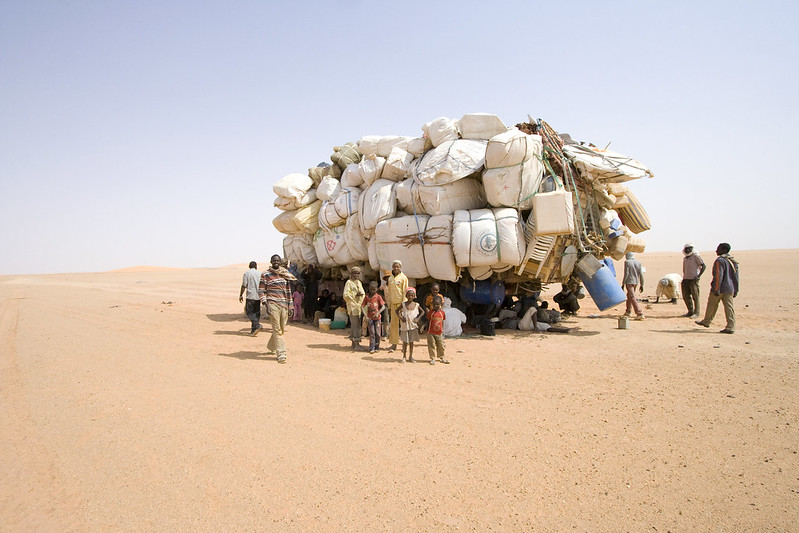
Knowing the crises faced by the Libyan population since the end of the dictatorship in 2011, poverty, development and security have continued to deteriorate. Therefore, taking into account that the U.S. is one of the countries that provides the most international aid, it is important to analyze U.S. aid to poverty-stricken areas in Libya.
How the US Operates in Libya
U.S. aid to poverty-stricken areas in Libya is mostly carried out by the USAID agency and the U.S. embassy in Libya. While the embassy identifies, selects and reports on the weak areas of development that are most in the interest of the U.S., USAID acts with intervention and direct assistance in such areas. Therefore, USAID’s aid work involves partnerships with NGOs, local institutions and international organizations, such as the World Bank.
USAID Work
The main investment focus areas for the agency are development, security and humanitarian assistance. Regarding development, USAID focuses on the country’s economic growth, and its strategies are mostly executed in partnership with the government. The project is called the Public Financial Management of Libya (LPFM) with an implementation target between 2019 and 2024 and with $55 million invested to strengthen the capacity of the Central Bank of Libya to meet the needs of the population. The main development targets are energy and banking, with the most notable key results being helping to stabilize the electricity grid at a 63% increase in electricity production and aligning the banking sector with global best practices in order to facilitate liquidity and financial services for the private sector.
With regard to humanitarian assistance from USAID to poverty-stricken areas in Libya, the work is carried out by USAID’s Humanitarian Assistance Bureau, with the largest involvement being made during the COVID-19 crisis (2020-2021) with a total investment of $21.5 million. In this sense, taking into account that one of the main causes of the need for humanitarian assistance was the conflicts and crises experienced in the country since 2011 (a moment of political instability due to the end of the dictatorship), USAID’s role is focused on assistance in such crises. Such work is focused on providing health support (including mental and emotional), protection and shelter, and from 2011 to 2022 USAID provided a total of $11.2 million in humanitarian assistance.
The Job of the US Embassy in Libya
The current work of the U.S. through the embassy is to draw attention to and cooperate with USAID’s efforts to intervene in human trafficking in Libya. This is done in partnership with the local government through records and case reports, normative evolution to prevent trafficking crimes and penalize those involved and signal and change weaknesses in the system (political or legal) and in society that lead to human trafficking.
The main laws against human trafficking are articles 418, 419 and 420 of the penal code, which criminalize forms of sex trafficking with penalties of up to 10 years imprisonment and a fine.
U.S. intervention in human trafficking encompasses aid in poverty-stricken areas in Libya and assistance in investigation and enforcement, providing support to the local government and acting in concert with the efforts and assistance of NGOs and other international organizations to stop the trafficking system more effectively.
– Letícia L. Lacerda
Photo: Flickr
