Poverty in Southern Madagascar
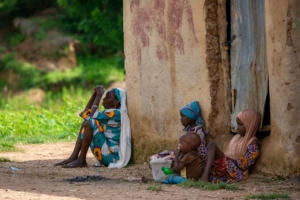 Madagascar, the world’s fourth-largest island, grapples with a humanitarian crisis brought by changing climatic conditions, persistent poverty and political instability. As of 2024, approximately 2.3 million people require urgent humanitarian assistance, with 1.6 million targeted for aid but only reaching 900,000.
Drought in the Deep South
The southern region of Madagascar, known as the Deep South, is experiencing one of its worst droughts in four decades. Rainfall levels dropped by as much as 75% in 2016 and the region only received 60% of normal rainfall between 2019 and 2021.
As a result of the drought, a severe famine began and resulted in widespread hunger. The lack of rain decimated staple crops like maize, cassava and rice. Nearly a third of the region’s population requires emergency food assistance.
Alice Rahmoun, WFP’s Communications Officer in Madagascar, says, “So, what we can say is that impacts of climate [crisis] are really stronger and stronger…so harvests fail constantly, so people don’t have anything to harvest and anything to renew their food stocks.”
Food Insecurity
The WFP estimated that 1.35 million people in the Deep South were food insecure in 2021. Frequent cyclones add to the drought, which displaces thousands of water sources. These climate events destroy homes and infrastructure and devastate agricultural lands, further increasing food shortages.
Children in rural poverty communities in southern Madagascar are among the most affected by the crisis. The United Nations Children’s Fund (UNICEF) reports that about 950,000 children are in need of humanitarian assistance, facing threats from malnutrition, lack of clean water and limited access to education.
Malnutrition rates among children aged below 5 have soared, with global aid groups reporting that nearly half a million kids are at risk of severe acute malnutrition. In remote villages, families have resorted to extreme measures to survive by eating cactus or locusts.
Humanitarian Aid and Climate-Smart Solutions
In response to the poverty in southern Madagascar, UNICEF, which is heavily involved in providing humanitarian assistance, is intensifying its efforts. In 2025, the organization aims to provide treatment for severe wasting to 84,967 children 6-59 months and 114,000 women with multiple micronutrient supplementation.
Additionally, the Food and Agriculture Organization (FAO) has taken an innovative approach to using resistant crops. The organization introduced an initiative called the Climate Change Adaptation Programme and Mitigation in the Eastern and Southern Africa Region. The program aims to help smallholder farmers adapt to global heating by promoting drought-tolerant crops, conservation agriculture and sustainable land management practices.
Furthermore, Medair, an international humanitarian organization, is restoring water supplies to regions with the most water displacement due to cyclones. It is also providing essential housing hygiene items to prevent the spread of disease outbreaks and providing temporary shelters, disaster-resilient homes and supporting infrastructure to health centers.
Despite these efforts, challenges persist. Limited infrastructure complicates aid delivery to remote areas. Additionally, the frequency and intensity of climate-related disasters outpace humanitarian response. Comprehensive strategies that address immediate needs and long-term resilience are crucial to understanding the nation’s complex crisis.
– Sebastian Llerena
Sebastian is based in Edison, NJ, USA and focuses on Global Health for The Borgen Project.
Photo: Pexels
